




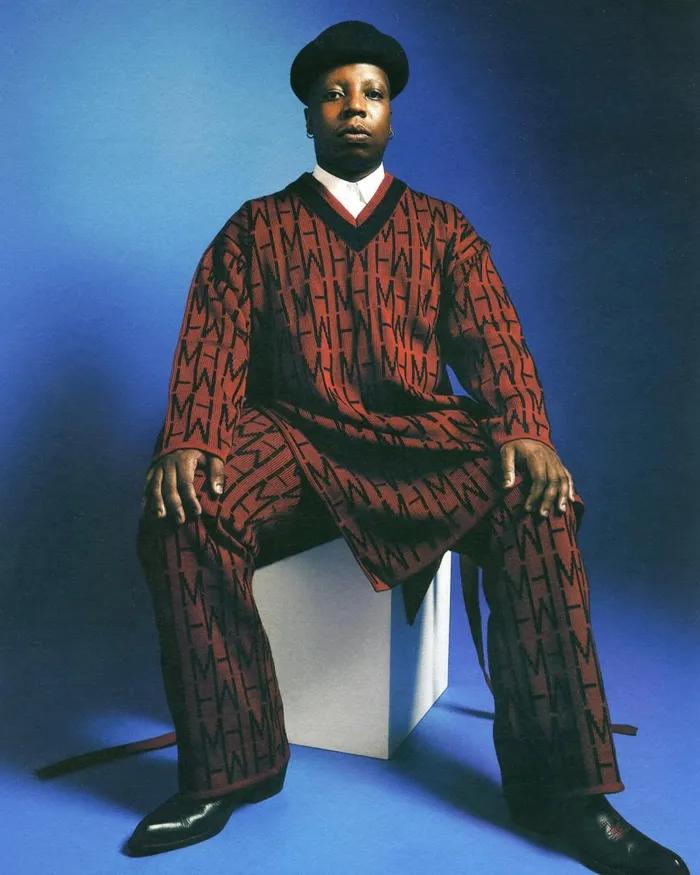
“South African fashion is increasingly being shaped by a trend that goes beyond colours, silhouettes and seasonal styling: the use of cultural memory and storytelling as a core design language. A recent report on Johannesburg designer Wanda Lephoto highlights how African fashion can create value through inherited knowledge, craft, collaboration and everyday objects, rather than relying only on raw materials or manufacturing capacity.”
South African fashion is increasingly being shaped by a trend that goes beyond colours, silhouettes and seasonal styling: the use of cultural memory and storytelling as a core design language. A recent report on Johannesburg designer Wanda Lephoto highlights how African fashion can create value through inherited knowledge, craft, collaboration and everyday objects, rather than relying only on raw materials or manufacturing capacity. Published on September 25, 2026, the report is the latest qualifying South African fashion-trends story I found in the sources checked for this article.
The development is significant because it points to a wider change in how South African designers can position fashion. Instead of treating heritage as decoration added to contemporary clothing, designers are increasingly using history, identity, archives and community experience as part of the creative process itself. Lephoto’s work provides a useful example of this approach, while recent fashion coverage and creative-industry projects show that the conversation is spreading across the local industry.
A trend built around stories
The central idea in the latest reporting is that fashion value can begin before fabric is cut. Lephoto describes cultural knowledge, inherited craft and human collaboration as resources that can shape a garment’s meaning. Family photographs, street posters, church clothing and old household objects can become starting points for contemporary design. In this approach, a garment does more than follow a seasonal trend; it carries references to people, places and experiences.
That approach is particularly relevant in South Africa, where fashion exists alongside a complex history of migration, urbanisation, cultural exchange and social change. Johannesburg, Cape Town and other creative centres have produced designers who work across fashion, art, photography, music and research. The result is a fashion vocabulary that can draw from everyday life as readily as from international runways.
Lephoto’s own brand describes its work as ready-to-wear menswear based in Johannesburg and focused on culture, tradition, identity, history and storytelling. The brand says it aims to combine Western practices with an African spirit while exploring cultural plurality and representation. This provides context for why the current trend is not simply a marketing theme for the label; storytelling is presented as part of its design philosophy.
From inspiration to design method
One of the clearest changes in current South African fashion is the movement from using African references as visual motifs toward treating cultural research as a design method. A pattern inspired by heritage can be attractive, but research can create a deeper relationship between a garment and the story behind it.
CEC recently profiled Lephoto’s design principles and history, including his role in The Sartists, a Johannesburg creative collective associated with fashion, photography and cultural research. The profile links his practice to South African creatives who sought to represent local identity through their own images and ideas. That history helps explain why current conversations about African fashion increasingly involve authorship and representation.
This also changes how audiences may understand originality. In a global fashion market where trends can move rapidly across social platforms, designers can distinguish their work by developing ideas that are rooted in specific communities and histories. Cultural context becomes part of the intellectual property of a collection, even when the final product is a modern suit, knit, coat or accessory.
Sustainability and the value of longevity
The storytelling trend also connects with sustainability. The latest report on Lephoto points to a fashion philosophy that questions speed, novelty and constant replacement. If garments are connected to memories and histories, they can be viewed as objects intended to last, be repaired, reused and passed on.
That idea matters as consumers and brands continue to examine the environmental and social consequences of fashion. Sustainability is often discussed in terms of materials, production processes and waste, but cultural longevity adds another dimension. A garment that has emotional or historical significance may be less disposable because its value is not limited to its immediate appearance.
South African creative organisations are also placing more attention on sustainability and circularity. Recent African fashion industry coverage has highlighted programmes that consider artisan livelihoods, circular design and lower-impact production. These developments suggest that the future of local fashion may involve a combination of cultural storytelling, responsible production and stronger relationships between designers and communities.
Heritage without becoming trapped in the past
A major challenge for designers working with heritage is avoiding the idea that African fashion must look historical. Contemporary South African designers can use archives and traditions without reproducing the past literally. Lephoto’s work illustrates this possibility by combining cultural research with modern tailoring, ready-to-wear construction and contemporary styling.
This balance is important because fashion is a living language. South African consumers are not choosing between tradition and modernity as separate worlds. They often move between global streetwear, local designers, sports culture, music, formal clothing and inherited traditions. The most relevant fashion stories can therefore be those that reflect this mixture rather than trying to place people inside a single cultural category.
The same principle can be seen in growing international interest in African luxury. HUE Magazine has discussed designers including Lephoto, Rich Mnisi and Thebe Magugu as part of a broader movement in which African designers build global brands around heritage, craft and distinctive visual languages. The significance is not simply that international audiences are paying attention. Designers are increasingly shaping the terms of that attention themselves.
South African fashion gains a wider platform
The trend is also appearing through exhibitions and collaborations. The French Institute of South Africa has supported projects examining fashion histories and museum collections, including work involving Lephoto and researchers focused on overlooked Black South African fashion histories. Such projects show how clothing can function as an archive, preserving experiences that conventional historical collections may overlook.
Meanwhile, the Week of Fashion South Africa has expanded its platform beyond menswear to include womenswear, emerging designers and broader industry initiatives. Its stated goal includes helping local designers grow, improve quality, increase sales and reach international markets while remaining connected to South African identity. This broader ecosystem gives designers more opportunities to turn cultural ideas into commercially sustainable practices.
For South African fashion, this creates an important bridge between creativity and business. Storytelling can attract attention, but designers still need production capacity, distribution, pricing strategies, retail relationships and international networks. The strongest cultural concepts will have greater impact when they are supported by sustainable business models.
What the trend means for consumers
For consumers, the rise of story-led fashion may change what makes a garment desirable. Instead of asking only whether an item looks fashionable, shoppers may increasingly ask where its inspiration comes from, who made it, what techniques were used and what story it represents.
This does not mean every buyer will prioritise heritage or sustainability in the same way. Fashion remains personal, and price, comfort, quality and availability continue to influence purchasing decisions. However, the growing visibility of local designers gives consumers more opportunities to connect clothing with South African creative identity.
Social media is likely to accelerate this development. A compelling story can travel alongside an image, allowing designers to explain references that might otherwise be overlooked. At the same time, digital platforms can create pressure for constant novelty, making it important for brands to protect the depth and accuracy of the cultural stories they use.
The direction of South African fashion
The latest reporting suggests that one of the most notable fashion trends in South Africa is not a single garment or colour. It is a shift toward fashion as a vehicle for memory, identity, research and cultural authorship.
Wanda Lephoto’s work provides a strong case study because his practice connects clothing with objects, images, community and history. His brand’s stated philosophy and recent profiles show a consistent interest in using fashion to explore how South Africans see themselves and how African stories can be communicated through contemporary design.
As the local industry develops, this approach may continue to influence collections, exhibitions, collaborations and retail strategies. It also places responsibility on designers and media to present cultural references with context rather than reducing them to aesthetic trends.
For South African fashion, the opportunity is broader than creating clothes that look different. The direction is about creating clothes that carry meaning. In a global industry where visual trends can be copied quickly, stories rooted in lived experience can offer designers a distinctive foundation. Heritage becomes a way to research, remember, communicate and imagine fashion’s future.



