




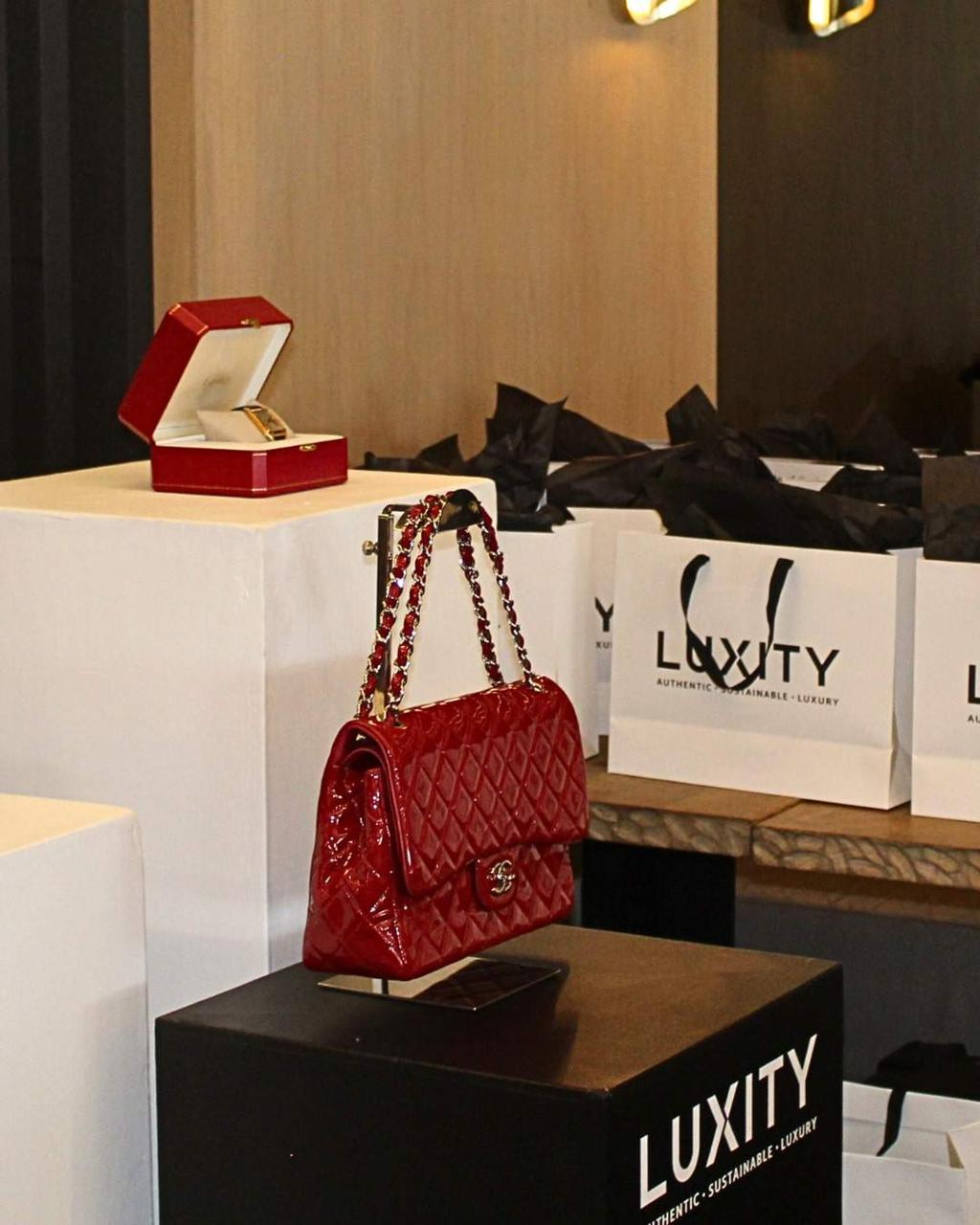
“South Africa’s luxury fashion market is increasingly being shaped by authenticated pre-owned designer goods, with Louis Vuitton, Gucci, Chanel and Hermès among the brands attracting strong local demand. New data from luxury reseller Luxity shows that South African shoppers are becoming more knowledgeable about authenticity, collections, production years and resale value, while shoes, clothing and watches expand the luxury resale market.”
South Africa’s luxury fashion market is changing beyond the traditional image of customers buying new designer goods from international boutiques. A report published on September 26, 2026, and attributed to City Press, examines a decade of data from luxury reseller Luxity and shows how South African shoppers are increasingly turning to authenticated pre-owned designer goods while becoming more knowledgeable about brands, collections, colours, production years and resale value. Louis Vuitton, Gucci, Chanel, Hermès and luxury watches are among the names shaping demand, while shoes, clothing and accessories are becoming larger parts of the country’s secondary luxury economy.
The development matters because luxury is no longer defined only by a new-season purchase. Consumers are increasingly considering authenticity, heritage, scarcity, condition and potential resale value. The trend suggests that South Africa’s luxury fashion market is becoming more sophisticated, with specialist resale platforms playing a larger role in how shoppers discover, buy and sell premium products.
A decade of changing luxury habits
According to the City Press report, Luxity co-founder Michael Zahariev describes a significant change since the company began operating in 2016. In earlier years, buying pre-owned designer goods could involve uncertainty. Shoppers searching for Louis Vuitton, Gucci or Chanel on general classified platforms had to consider whether an item was genuine, where it came from and whether the seller could be trusted.
Today, the questions are more specific. Buyers may search for a particular collection, colour, model or production year. That shift indicates a move from simply wanting a designer label to understanding the details that make individual luxury products desirable.
Authentication has therefore become central to resale. Buyers are purchasing products whose value depends partly on authenticity and condition. Luxity says its business is built around authenticated pre-owned luxury, with an authenticity guarantee and boutiques in Johannesburg, Pretoria, Durban and Cape Town.
Rising prices push consumers toward resale
One of the clearest forces behind the expansion of luxury resale is the cost of new designer goods. The City Press report says prices for new classic designer handbags have increased by 50% to 70% since 2019, according to Luxity. The average pre-owned handbag sold by the company has risen to R28,238, compared with R12,599 a decade earlier.
Those figures show that pre-owned luxury is not simply a low-cost segment. A second-hand designer item can still command a substantial price when its brand, model, condition and demand support it. At the same time, resale can provide another entry point for shoppers who want internationally recognised brands without necessarily buying the newest version at full retail price.
Louis Vuitton and Gucci remain major names
The latest report identifies Louis Vuitton and Gucci as particularly influential in South African resale demand. Zahariev says the two brands together account for about one in three Luxity sales. Louis Vuitton represents slightly more than 20% of sales, while Gucci has increased its share over time.
Gucci’s growth is notable. The figures cited in the report show the brand moving from about one in seven sales in 2017 to about one in five today. That trajectory illustrates how fashion cycles and changing consumer tastes can influence demand in the secondary market.
The strength of these brands also shows that resale does not necessarily reduce the importance of established fashion houses. Instead, resale can extend the life of products and create additional opportunities to participate in a brand’s history. A handbag purchased years after its original release can remain relevant because of design, recognition and scarcity.
Hermès and high-value luxury
At the upper end of the market, Hermès remains associated with very high-value purchases. The report notes that some Hermès bags available through Luxity are priced above R600,000.
These figures underline the breadth of South Africa’s luxury market. It includes shoppers looking for more accessible pre-owned designer products, but also collectors and buyers interested in rare, expensive pieces. In this segment, model, material, condition, provenance and scarcity can affect price.
Luxury watches are another growing part of the market. Luxity did not stock watches when it began in 2017, but the category has since become established, with the report placing the average price at R49,999. The expansion suggests that consumers are increasingly viewing luxury as a broad category encompassing fashion, jewellery, timepieces and lifestyle goods.
The rise of smaller luxury houses
The market is also becoming more diverse. The report identifies growth for brands such as Dolce & Gabbana, Montblanc and Versace. Their expanding presence suggests that South African consumers are not exclusively focused on the largest global luxury names.
Luxity’s current range reflects that wider approach, covering bags, watches, jewellery, shoes, clothing and accessories. Its online marketplace and physical boutiques allow customers to browse different categories rather than treating luxury resale as a handbag-only business.
Shoes, clothing and homeware expand the market
Another important change is the movement away from handbags as the dominant resale category. The latest report says handbags accounted for two out of three purchases a decade ago, while shoes now represent nearly one in three sales. Apparel has also grown since being introduced in 2021, and customers have begun buying pre-owned designer homeware.
This broadening changes the meaning of luxury resale. It becomes less about acquiring one famous handbag and more about building a wider relationship with designer products. A shopper might buy shoes, sell clothing that is no longer being worn, search for a particular accessory and later explore watches or homeware.
Trust and the professionalisation of resale
The sector’s evolution is also connected to professionalisation. GQ’s September 2026 profile of Zahariev describes Luxity as having grown from a garage-based start-up into a business with annual turnover exceeding R100 million, while highlighting its authentication-focused model and physical retail network.
Business Day has also examined South Africa’s secondary luxury market, describing Luxity’s role in buying and selling authenticated goods and discussing the wider opportunity around premium products.
What the trend means for South African fashion
The latest figures point to a luxury market becoming more knowledgeable, diversified and comfortable with pre-owned products. The change is not simply about paying less. It is about access, authenticity, product history and the ability to find pieces that may no longer be available through traditional retail.
Zahariev predicts that at least one in ten luxury items bought in Africa could be pre-owned by 2027. That is a forecast from a market participant rather than an independently verified outcome, but it illustrates the scale of ambition within the sector.
For luxury brands, the growth of resale creates both opportunities and questions. Pre-owned products can keep brand heritage visible, introduce consumers to older collections and sustain interest in enduring designs. At the same time, secondary markets operate partly outside traditional retail structures, giving brands less control over pricing and product circulation.
For South African consumers, the central change is already visible. Luxury shopping is becoming less focused on whether an item is newly released and more focused on whether it is authentic, desirable, well preserved and meaningful to the buyer. Louis Vuitton, Gucci, Chanel, Hermès and other luxury names continue to command attention, but the way South Africans access them is evolving.
Resale is therefore becoming a distinct part of the luxury ecosystem, connecting buyers, sellers and collectors through products that can have several chapters in their lives. The September 26 report provides a timely snapshot of that transformation: South Africa’s appetite for luxury remains strong, but the definition of luxury ownership is becoming broader, more informed and increasingly connected to the secondary market.



