




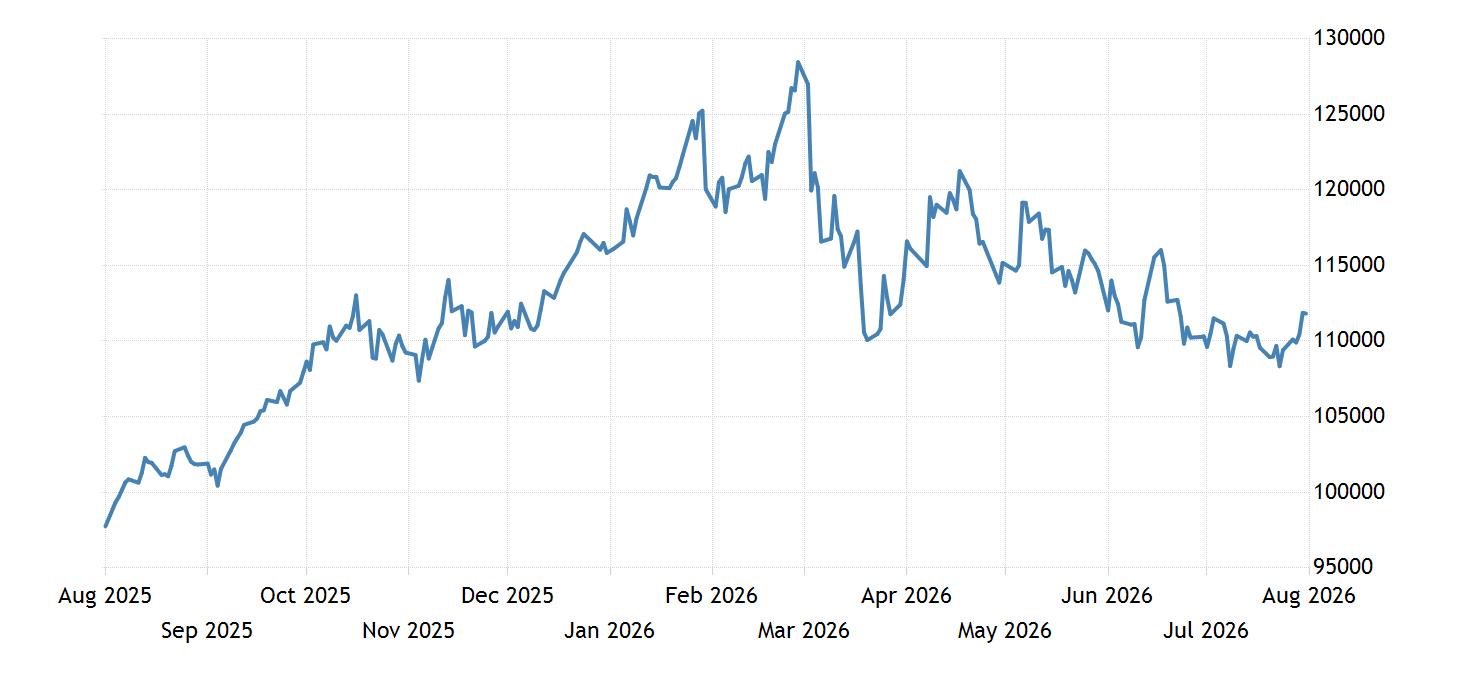
“South Africa’s FTSE/JSE All Share Index (SAALL) fell 0.34% to 111,493 points on July 31, 2026, marking a modest pullback after weeks of gains. However, the index remains 14% higher compared to the same period last year, underscoring investor confidence despite volatility in mining and telecom sectors.”
The South African stock market closed lower on July 31, 2026, as the FTSE/JSE All Share Index (SAALL) slipped 0.34% to 111,493 points. While the decline reflects short-term investor caution, the broader picture remains positive, with the index up 14% year-on-year. This performance highlights the resilience of South Africa’s equity markets amid global headwinds, including commodity price fluctuations, inflationary pressures, and geopolitical uncertainty.
Market Performance Overview
- SAALL Index: Closed at 111,493 points, down 379 points (-0.34%).
- Monthly Trend: Up 1.72% in July.
- Yearly Trend: Up 14.07% compared to July 2025.
The market’s trajectory reflects a balancing act between strong corporate earnings in banking and retail sectors and sharp declines in mining and telecom shares.
Sector Highlights
- Banking: Standard Bank (+0.67%) and Capitec (+1.17%) posted gains, buoyed by strong lending activity and consumer demand.
- Telecoms: MTN plunged 10.85%, reflecting investor concerns over regulatory challenges and declining subscriber growth.
- Mining: AngloGold Ashanti fell 5.39% as global gold prices softened, while Gold Fields dropped 1.67%.
- Luxury Goods: Richemont rose 0.78%, benefiting from robust international demand for luxury products.
Macroeconomic Context
South Africa’s economy continues to face structural challenges:
- Unemployment: 32.7% in Q2 2026.
- Inflation: 5% in June 2026.
- Interest Rates: Held steady at 7%.
Despite these hurdles, investor sentiment remains cautiously optimistic, supported by forecasts of moderate GDP growth (1.5% in Q4 2026).
Investor Sentiment
Analysts suggest the market’s resilience stems from:
- Strong corporate earnings in financial services.
- Diversification of South African companies into global markets.
- Investor confidence in long-term reforms aimed at stabilizing fiscal policy.
However, risks remain, particularly in commodity-dependent sectors vulnerable to global price swings.
Global Influences
South Africa’s markets are deeply tied to global trends:
- Commodity Prices: Fluctuations in gold and platinum directly impact mining stocks.
- Currency Movements: The rand’s volatility against the US dollar affects export competitiveness.
- Geopolitical Risks: Global trade tensions and energy market instability weigh on investor confidence.
Outlook
Trading Economics forecasts the SAALL index to decline to 106,832 points by Q3 2026, with a further drop to 96,248 points over the next 12 months.
This projection reflects expectations of tighter monetary policy, slowing global demand, and persistent domestic challenges. Yet, the long-term outlook remains cautiously optimistic, with reforms in energy, infrastructure, and financial inclusion expected to bolster growth.
Conclusion
South Africa’s markets ended July on a cautious note, with the SAALL index slipping modestly. Yet, the broader trend remains positive, with strong yearly gains underscoring resilience in the face of economic challenges. Investors will be watching closely as the country navigates inflationary pressures, high unemployment, and global volatility, with banking and retail sectors offering a counterbalance to weakness in mining and telecoms.



