




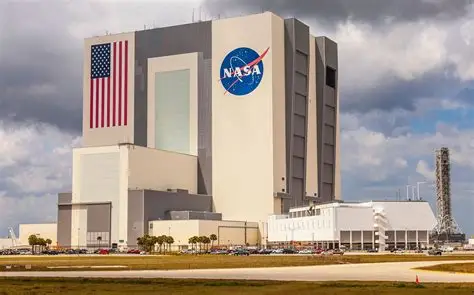
“Team ZA, composed of seven South African high school students, won the prestigious International Space Settlement Design Competition at NASA’s Kennedy Space Center, marking the first time an African team has achieved this feat. Their winning design, Hermes, envisioned a spacecraft capable of transporting thousands across the Solar System, showcasing Africa’s growing role in global space innovation.”
South Africa has once again demonstrated its rising influence in the global space arena. On August 8, 2026, Team ZA, a group of seven high school students from across the country, achieved a groundbreaking victory at NASA’s International Space Settlement Design Competition (ISSDC) held at Kennedy Space Center in Florida. This triumph not only marks South Africa’s first win at the competition but also establishes the team as the first African representatives to secure the top spot in this prestigious global event.
Background of the Competition
The ISSDC is an annual event that challenges students worldwide to design futuristic space settlements capable of sustaining human life. Participants are tasked with integrating engineering, economics, biology, and social sciences into their proposals. This year’s competition brought together teams from the United States, United Kingdom, Australia, Brazil, China, and other nations, making Team ZA’s victory even more significant.
Team ZA’s Journey
Team ZA was formed through the inaugural South African Space Design Competition hosted at the University of Cape Town. The team included:
- Zayaan Abdurahman (Mondale High School, Mitchells Plain)
- Joseph Allderman (Westerford High School)
- Benjamin Honigwachs and Dean Weich (Bishops Diocesan College)
- Alaya Kaplen and Qaylah Omar (Cannons Creek Independent School)
- Ethan Schoombee (Fairmont High School)
These students represented diverse regions and schools, united by their passion for space exploration.
The Winning Proposal: Hermes
Their design, Hermes, was a visionary spacecraft concept intended to transport 3,000 people across the inner Solar System. Key features included:
- Advanced propulsion systems for long-distance travel.
- Sustainable life-support systems integrating hydroponics and closed-loop recycling.
- Artificial gravity modules to ensure human health during extended missions.
- Economic frameworks for trade and resource management in space.
The proposal was praised for its technical depth, creativity, and feasibility.
Global Collaboration
Team ZA joined international participants to form Rockdonnell, a multinational group representing every inhabited continent. Together, they refined Hermes and defended their design before a panel of judges composed of NASA engineers and industry experts.
Significance of the Victory
This win is monumental for several reasons:
- First African victory at ISSDC.
- Boost to South Africa’s space reputation, aligning with SANSA’s growing role in global space research.
- Inspiration for African youth, proving that innovation and determination can overcome resource limitations.
Voices from the Team
Zayaan Abdurahman expressed his excitement: “Getting to say that we were the first African team to represent as well as win is mind-blowing. We worked so hard to get gold and our hard work paid off.”
Other team members echoed similar sentiments, highlighting the camaraderie and shared vision that fueled their success.
Broader Impact on South Africa
This achievement comes at a time when South Africa is investing heavily in space research, including projects like the Square Kilometre Array (SKA) and Africa2Moon. Team ZA’s victory complements these initiatives by showcasing the country’s talent pipeline.
Challenges Overcome
Despite limited resources compared to wealthier nations, Team ZA leveraged creativity, collaboration, and resilience. Their success underscores the importance of nurturing STEM education in Africa.
Future Prospects
The victory opens doors for:
- Scholarships and international collaborations for the team members.
- Increased government support for space education programs.
- Potential partnerships with NASA and other agencies for future projects.
Conclusion
Team ZA’s triumph at NASA’s ISSDC is more than a competition win—it is a symbol of Africa’s potential in space exploration. By designing Hermes, these young innovators have proven that South Africa is ready to contribute meaningfully to humanity’s journey beyond Earth.



