




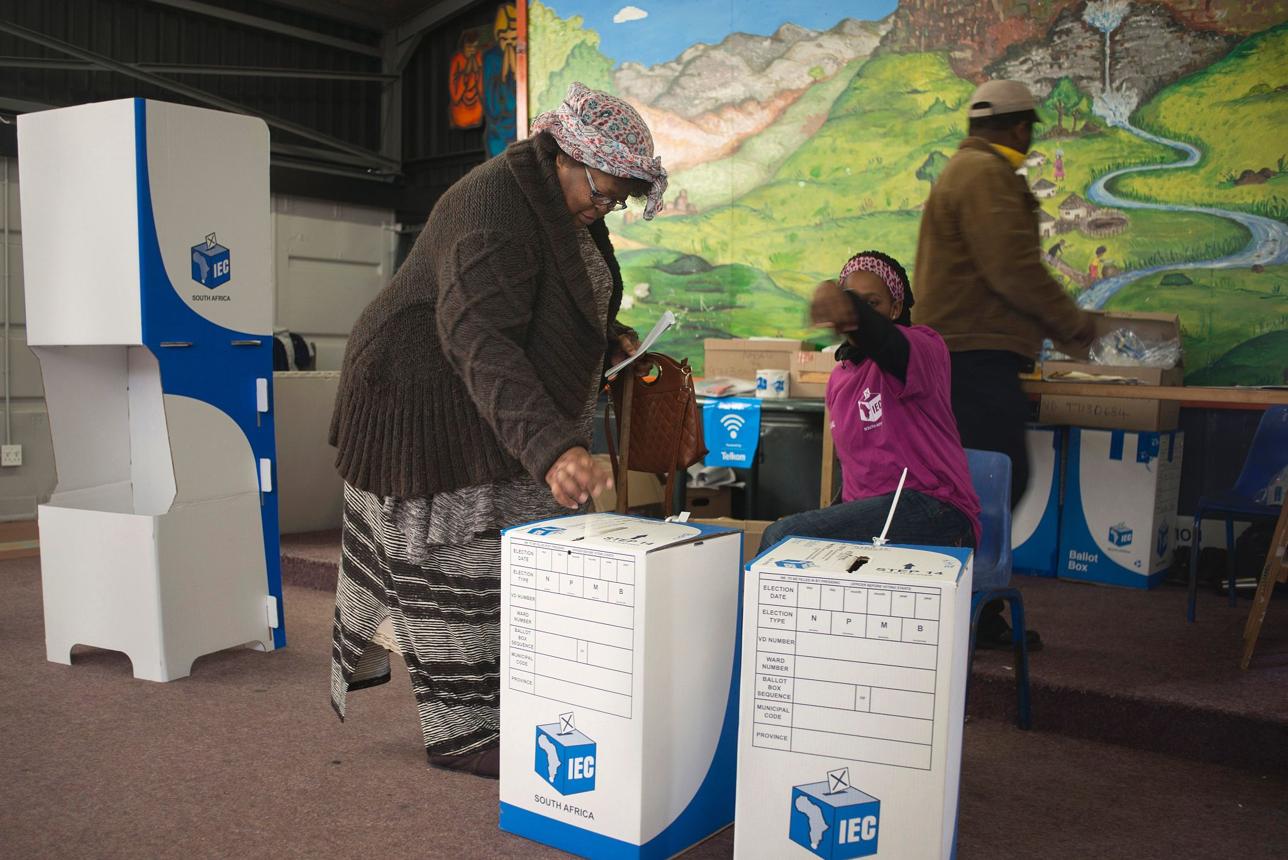
“South Africans are voting in the 2026 local government elections on 4 November, with widespread frustration over unemployment, corruption, crime, electricity shortages and deteriorating municipal services placing the African National Congress (ANC) under renewed electoral pressure. The contest is expected to reshape municipal leadership across the country, strengthen opposition parties in major urban centres and increase the likelihood of coalition governments, particularly in Johannesburg and Durban.”
South Africans Vote in Local Elections as ANC Faces Fresh Electoral Test Amid Service Delivery Anger
South Africa’s Municipal Elections Become a Defining Political Moment
South Africans headed to polling stations on Wednesday, 4 November 2026, in municipal elections widely regarded as a decisive test of the African National Congress (ANC), the party that led the country out of apartheid in 1994 but has experienced a sustained decline in electoral support over the past decade.
The elections are taking place against a backdrop of widespread public frustration over unemployment, corruption, crime, water shortages, electricity disruptions and deteriorating municipal infrastructure. Millions of voters are expected to use their ballots to express dissatisfaction with local government performance while demanding more accountable leadership and improved service delivery.
According to the Electoral Commission of South Africa (IEC), approximately 29.2 million registered voters are eligible to participate at 23,696 voting stations nationwide. Polling stations opened at 07:00 and are scheduled to close at 21:00, with final results expected on Sunday.
The elections will determine political representation in eight metropolitan municipalities, 44 district municipalities and 205 local municipalities. Councillors elected through the voting process will subsequently determine municipal leadership, including mayors.
The contest represents another important stage in South Africa’s evolving multiparty democracy, following the ANC’s loss of its parliamentary majority during the 2024 national elections.
ANC Faces Growing Electoral Pressure
The ANC enters the municipal elections confronting significant political challenges. The party, which historically enjoyed overwhelming electoral dominance, has struggled to maintain public confidence amid persistent economic difficulties and dissatisfaction with government performance.
In the 2021 local government elections, the ANC secured less than 50% of the national vote for the first time. Opinion polls ahead of Wednesday’s elections suggest that its support could decline further, potentially falling below 40%.
The development would represent another substantial setback for a political organisation whose electoral strength has traditionally been associated with its role in ending apartheid and establishing democratic governance.
President Cyril Ramaphosa has acknowledged that municipal failures have contributed to declining public trust in democratic institutions. Nevertheless, he has expressed confidence that the elections provide an opportunity for the governing party to rebuild confidence through improved governance.
The ANC’s electoral performance will therefore be closely examined by political analysts, opposition parties and supporters seeking evidence of whether the party can reverse its declining popularity.
The outcome could also influence internal political discussions surrounding leadership succession ahead of the ANC’s December 2027 conference.
Johannesburg Emerges as the Biggest Electoral Battleground
Johannesburg remains one of the most closely watched municipalities in the elections.
South Africa’s commercial capital has experienced persistent water shortages, electricity interruptions, infrastructure deterioration and concerns about public safety. Political instability has also affected municipal administration, with the city changing mayors five times over four years.
The Democratic Alliance (DA) has identified Johannesburg as a major opportunity to expand its political influence. Former DA leader Helen Zille has campaigned prominently for the city’s mayoral position, highlighting infrastructure failures and municipal service delivery problems.
Her campaign has included highly publicised demonstrations intended to draw attention to water leaks and deteriorating infrastructure.
However, the electoral contest remains complicated by the fragmented political environment. Although the DA is expected to compete strongly, no party is widely anticipated to secure an outright majority in several major metropolitan municipalities.
Consequently, coalition negotiations could determine Johannesburg’s future administration.
The city’s political direction will have implications beyond municipal politics because Johannesburg plays a central role in South Africa’s financial, commercial and employment activities.
Coalition Politics Become Increasingly Important
South Africa’s political landscape has increasingly shifted towards coalition government as electoral support becomes fragmented among multiple political parties.
The ANC’s loss of its parliamentary majority in 2024 demonstrated that voters are increasingly willing to support alternative political organisations.
At municipal level, coalition arrangements have already become common. By February 2026, approximately 74 of South Africa’s 257 municipalities were governed through coalitions or minority administrations, according to the Mapungubwe Institute for Strategic Reflection.
The municipal elections are expected to increase the number of councils requiring negotiations between political parties.
Coalition governments can create opportunities for cooperation between parties representing different communities and political interests. However, disagreements over leadership positions, budgets and policy priorities can also create instability.
Residents in municipalities experiencing frequent political changes have often expressed frustration that leadership disputes distract attention from infrastructure maintenance and essential services.
The challenge facing political parties will therefore extend beyond winning votes. They must demonstrate their ability to negotiate workable agreements and establish stable municipal administrations.
Durban and Tshwane Face Important Political Decisions
Johannesburg is not the only municipality attracting national attention.
Durban, within the eThekwini metropolitan municipality, is another important electoral battleground. Former president Jacob Zuma’s uMkhonto weSizwe (MK) party is seeking to strengthen its influence in the region following its strong performance during the 2024 national elections.
The elections represent the MK party’s first major opportunity to contest local government leadership across the country.
Political competition in Durban has been shaped by debates about unemployment, municipal performance, immigration and economic opportunities.
Meanwhile, Tshwane, which includes Pretoria, is another municipality where fragmented electoral support could complicate the formation of a stable governing coalition.
Cape Town presents a different political environment, with the Democratic Alliance widely favoured to retain control of the metropolitan municipality.
The contrasting political dynamics across these cities illustrate how South Africa’s municipal elections are increasingly characterised by regional competition rather than a single dominant national political trend.
Service Delivery Remains Central to Voter Decisions
The elections have highlighted the importance of municipal service delivery in shaping electoral behaviour.
Residents across South Africa have repeatedly raised concerns about unreliable electricity, water shortages, waste collection failures, deteriorating roads and inadequate housing.
Unemployment and crime remain particularly significant issues, especially among young people and communities facing economic hardship.
These challenges have contributed to declining confidence in political institutions and growing demands for practical solutions.
For many voters, the municipal elections provide an opportunity to hold councillors accountable for local conditions.
Unlike national elections, municipal elections directly influence the composition of councils responsible for services affecting residents’ daily lives.
Municipalities oversee responsibilities including water distribution, sanitation, local roads, refuse collection, land-use planning and other essential services.
The performance of municipal administrations therefore has immediate consequences for households, businesses and communities.
Political parties campaigning ahead of the elections have increasingly emphasised promises to improve governance, strengthen financial management and restore infrastructure.
However, voters will ultimately assess whether elected representatives translate campaign commitments into measurable improvements.
Electoral Participation and Democratic Accountability
The IEC has urged registered voters to participate in the elections and exercise their constitutional democratic rights.
The commission reported that more than 1.4 million special votes were cast during the two-day special voting process on Monday and Tuesday.
Government representatives have encouraged citizens to familiarise themselves with candidates and political parties before making electoral decisions.
Participation remains an important concern because turnout during the 2021 municipal elections was approximately 46% of registered voters.
Low participation can weaken the representativeness of elected councils and create challenges for democratic accountability.
The government has also warned against misinformation, fabricated election results and manipulated videos intended to undermine public confidence in the electoral process.
The IEC has clarified that political campaigning within voting station boundaries is prohibited on election day, while certain political activities outside those boundaries remain permissible under applicable regulations.
Authorities have emphasised the importance of maintaining peaceful voting conditions and protecting the integrity of the electoral process.
Security and Election Administration
Security preparations have been strengthened ahead of the elections following reports of election-related incidents.
Authorities recorded 21 election-related cases before election day, with six suspects reportedly arrested in connection with incidents under investigation.
KwaZulu-Natal has been identified as having particularly significant security requirements, with 165 voting stations classified as high risk.
Police and election officials have been deployed to support peaceful voting and respond to potential disruptions.
The IEC has also encouraged voters to verify their registration details and voting stations before travelling to polling locations.
These preparations are intended to ensure that eligible voters can participate without unnecessary obstacles while protecting the credibility of the elections.
Implications for South Africa’s Political Future
The municipal elections are expected to influence political developments well beyond local government.
The results could reshape the balance of power between the ANC, DA, MK party and smaller political organisations.
A further decline in ANC support would intensify discussions about political renewal, leadership accountability and the party’s strategy ahead of the 2029 national elections.
Meanwhile, opposition parties will face pressure to demonstrate that electoral gains can translate into improved governance.
Coalition negotiations are likely to become increasingly important in determining how municipalities are administered and how public resources are allocated.
Political analysts will also examine whether voters are rewarding parties for service delivery performance or primarily expressing dissatisfaction with established political leadership.
The results could provide important indications of how South Africans view coalition government and multiparty cooperation following the establishment of the national government of unity in 2024.
Conclusion
South Africa’s 4 November 2026 municipal elections represent a significant moment for the country’s democratic institutions and political leadership.
The ANC faces mounting pressure as voters demand stronger accountability, better infrastructure and improved municipal services. Opposition parties are seeking to capitalise on dissatisfaction, while fragmented electoral support is expected to create additional coalition negotiations across several municipalities.
Johannesburg, Durban and Tshwane remain particularly important battlegrounds, with their political outcomes likely to influence national discussions about governance and leadership.
Ultimately, the elections will determine more than municipal council representation. They will provide a powerful indication of public confidence in South Africa’s political parties and the country’s evolving democratic direction.
The immediate challenge for elected representatives will be translating electoral mandates into tangible improvements in communities, restoring confidence in municipal institutions and ensuring that democratic participation delivers meaningful benefits for residents.
As voters cast their ballots, the central message emerging from the elections is clear: South Africans increasingly expect political leadership to demonstrate its value through effective governance, accountability and reliable public services.



