




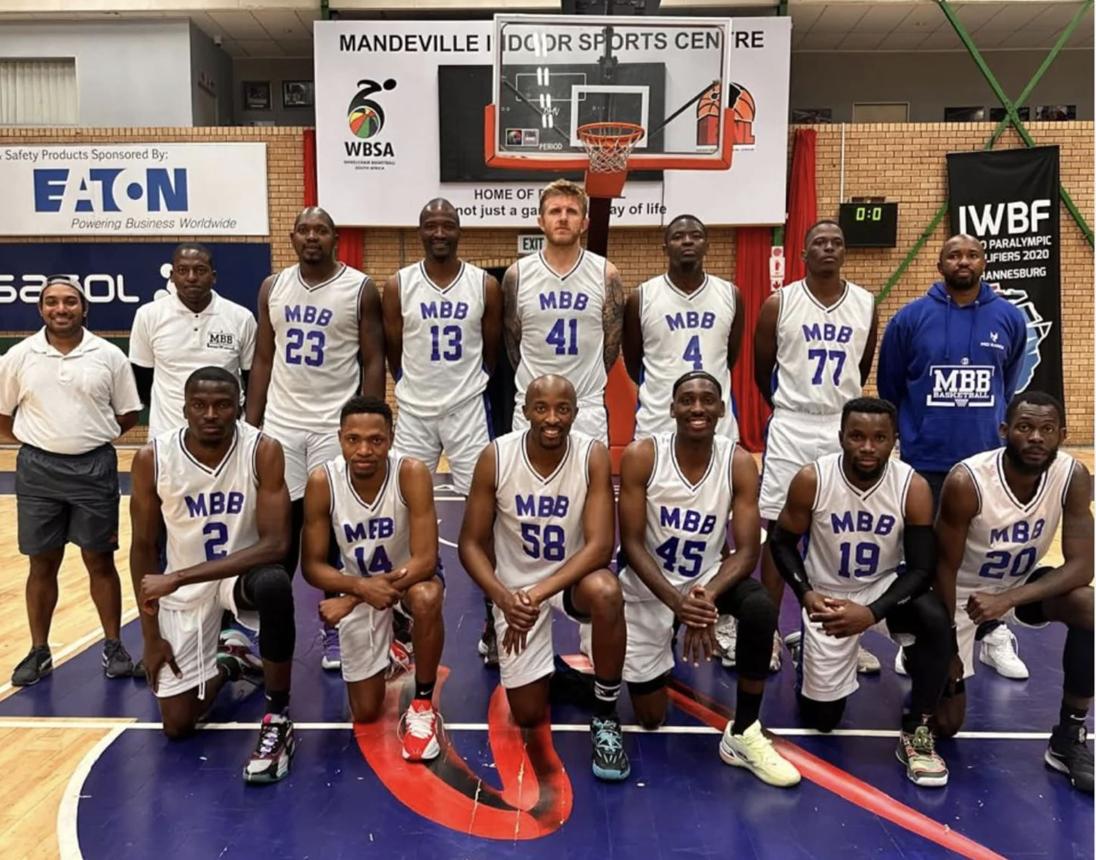
“South African basketball enters a major week as the 2026 National Club Championships tip off on 6 October at Mandeville Indoor Sport Center in Johannesburg, with the competition scheduled through 11 October. The tournament arrives at an important moment for the sport as South Africa works to strengthen domestic basketball, improve governance and create stronger pathways toward continental competition.”
South Africa’s 2026 National Club Championships Tip Off in Johannesburg
South African basketball enters a significant week on Tuesday, 6 October, as the 2026 National Club Championships get underway at the Mandeville Indoor Sport Center in Johannesburg. The tournament is scheduled to run until 11 October and represents the country’s most important national club competition, bringing elite provincial and club basketball into one national contest.
The championship’s timing gives it added importance. Basketball South Africa confirmed the new dates and venue on 21 September after difficulties securing a suitable host venue had placed the event at risk. The competition was moved to Mandeville after the Gauteng organising committee faced challenges finding a venue, while Basketball South Africa also faced pressure to meet continental deadlines connected with the Road to the Basketball Africa League and women’s continental competition.
A National Stage Under Pressure
The decision to proceed is important because South African basketball is rebuilding its structures while trying to maintain a pathway for players and clubs to compete internationally. Earlier this year, the Department of Sport, Arts and Culture said it had begun a process to rebuild and stabilise basketball governance following the de-recognition of Basketball South Africa. The department said the work, undertaken with FIBA Africa and SASCOC, is intended to establish a properly governed national federation and restore confidence in the administration of the sport.
Against that background, the National Club Championships are about more than a trophy. They offer clubs a national platform while administrators work to strengthen the game’s foundations.
Mandeville Becomes the Centre of Attention
Mandeville Indoor Sport Center is a familiar setting for South African basketball. The Johannesburg venue has hosted major domestic competitions and has also been associated with professional basketball events. The Basketball National League’s 2026 season, for example, included numerous fixtures at Mandeville, underlining the venue’s importance to the local basketball ecosystem.
This familiarity could benefit the championship. The six-day schedule gives form, depth, coaching and consistency time to determine which clubs are best prepared.
The Stakes Beyond the Championship
The National Club Championships also carry continental significance. South Africa’s national club competition has historically provided a route toward the Basketball Africa League’s qualifying pathway, making success at home potentially the beginning of a much bigger journey. The 2026 Road to BAL system is scheduled to bring clubs from across Africa into a qualification process, with the group phase running from 17 to 29 October before the Elite 16 round in November.
That timing makes the October championship important. The eventual champion can use domestic success as a launchpad toward stronger opposition, wider exposure and continental opportunities.
Lessons From the Previous Champion
The 2025 national championship provides a useful illustration of what can follow. The Johannesburg Giants defeated the KwaZulu-Natal Marlins 79–76 in the 2025 final at the University of Cape Town. Joshua Ozabor was named tournament MVP, while the Giants’ success helped launch the club onto the continental stage.
The Giants then competed in the Road to BAL, showing how a domestic championship can become a platform for international ambitions. FIBA records the Giants as a South African club that won the 2025 national championship before progressing into continental competition.
That pathway raises expectations for this year’s field. The eventual champion will have the opportunity to build on the momentum generated by previous South African representatives and demonstrate that the country can produce clubs capable of competing beyond its borders.
A Test of Depth and Preparation
National club tournaments are often decided by more than star players. Over six days, coaches must manage rotations, fatigue, injuries, tactical adjustments and the pressure of elimination games. Teams with deeper benches and clearer systems can gain an advantage as the competition progresses.
The tournament is therefore likely to test the overall depth of South African basketball. Domestic leagues such as the Basketball National League have continued to provide regular competition, with the 2026 men’s season ending with the Soweto Panthers defeating the Western Cape Mountaineers 74–70 and completing an unbeaten campaign. In the women’s competition, the Tshwane Suns defeated Egoli Magic 51–45 and also completed an unbeaten season.
Those results show that South African basketball has competitive structures and talented teams across different regions. The National Club Championships now provide another opportunity for that talent to meet under a national banner.
More Than a Competition
There is also a development dimension. Basketball South Africa has previously described club championships as a way of connecting district, provincial and national competition while encouraging sustainable club structures. A strong club system gives young players a clearer pathway from local basketball to higher-level competition.
That pathway matters because the BAL has increased visibility for African players and clubs, while development programmes have helped young athletes gain international exposure.
South Africa has already demonstrated that its players can operate at high levels. The challenge is to create consistent domestic structures that allow more players to progress and more clubs to survive long enough to compete internationally.
The Governance Challenge
The tournament also arrives during a period when governance remains central to South African basketball’s future. The government’s January statement acknowledged prolonged administrative and governance failures and said the rebuilding process would focus on integrity, transparency and credible leadership.
For that reason, the successful delivery of the 2026 championships could carry symbolic value. Reliable scheduling, clear communication, competent officiating, appropriate facilities and transparent administration are essential to a professional sporting system.
Supporters will judge the tournament not only by the games but also by how smoothly it is delivered. Reliable scheduling, clear communication, competent officiating and transparent administration are essential to a professional sporting system.
What Supporters Should Watch
On the court, attention will naturally focus on the leading clubs, emerging players and tactical battles. Supporters should also watch for players who can use the tournament as a breakthrough moment. National championships often provide younger athletes with opportunities to compete against experienced players and demonstrate that they belong at a higher level.
The coaching battles will be equally important. The best teams will need to adjust to different opponents rather than rely on one style of play. Defensive organisation, transition basketball, rebounding and late-game decision-making can become decisive as the tournament reaches its final stages.
The broader question will be whether the competition produces another club ready to make an impact in Africa.
A Defining Week for South African Basketball
The 2026 National Club Championships arrive at a crucial moment. South African basketball is rebuilding governance, strengthening domestic competition and pursuing greater continental relevance. The tournament cannot solve every structural problem, but it can demonstrate what the sport can achieve when clubs, players, coaches, officials and administrators work together.
With the championship scheduled for 6–11 October at Mandeville Indoor Sport Center, Johannesburg becomes the focal point of South African basketball this week. The winner will earn more than a national title: it will gain momentum, credibility and potentially a route toward continental competition.
The most important story, therefore, is not simply who lifts the trophy. It is whether this championship helps South African basketball take another step toward a more stable, competitive and internationally respected future.



