




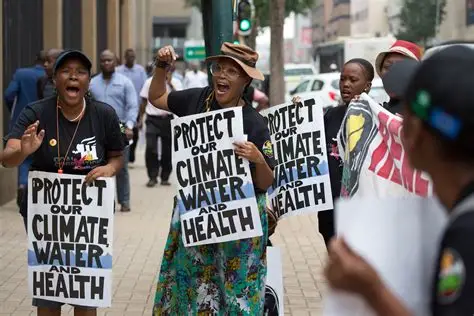
“South Africa’s Constitutional Court has struck down Shell and Impact Africa’s rights to explore for oil and gas along the Wild Coast, ending a five-year legal battle. The ruling prioritizes environmental protection, community dignity, and climate responsibility, setting a precedent for stronger sustainability governance across Africa.”
South Africa’s Constitutional Court delivered a historic judgment that permanently blocked Shell’s offshore oil exploration plans along the Wild Coast. This decision, hailed as one of the most significant environmental victories in Africa, underscores the country’s commitment to balancing economic growth with ecological sustainability. It also highlights the growing role of judicial systems in enforcing climate obligations.
Background of the Case
The dispute dates back to 2021, when Shell and its partner Impact Africa sought to conduct seismic surveys along the Eastern Cape coastline. Local communities, environmental organizations, and civil society groups opposed the project, citing risks to marine biodiversity, cultural practices, and livelihoods dependent on fishing and tourism. The case evolved into a protracted legal battle, with multiple appeals and rulings before reaching the Constitutional Court.
Court’s Ruling
Justice Jody Kollapen, writing for the majority, emphasized that community consultation is not a bureaucratic checkbox but a matter of human dignity. The court found that regulators failed to meaningfully engage affected communities, ignoring both cultural traditions and environmental risks. The ruling permanently revoked Shell’s exploration rights, effectively halting fossil fuel development in one of South Africa’s most sensitive coastal regions.
Environmental Significance
The Wild Coast is renowned for its rich marine ecosystems, supporting whales, dolphins, and diverse fish species. It also sustains thousands of households whose livelihoods depend on fishing and eco-tourism. Seismic blasting posed a severe threat to these ecosystems, potentially disrupting migration patterns and damaging fragile habitats. The ruling thus represents a major step toward safeguarding biodiversity.
Community Victory
For local communities, the judgment is more than an environmental win—it is a recognition of their rights and dignity. Many residents argued that extractive industries have historically dispossessed them of land and resources. The court acknowledged this history, framing the case as part of a broader struggle against exploitation and for equitable development.
Climate Responsibility
The decision aligns South Africa with global trends where courts increasingly intervene to enforce climate commitments. By blocking offshore oil exploration, the country signals its intent to reduce reliance on fossil fuels and accelerate its Just Energy Transition. President Cyril Ramaphosa has already announced reforms unlocking over R100 billion in renewable energy investments, reinforcing this trajectory.
Economic and Industry Impact
Energy companies face stricter compliance hurdles, while investors are urged to pivot toward renewables. Although critics argue that halting oil exploration could limit job creation and revenue, proponents highlight the long-term benefits of sustainable industries such as wind, solar, and green hydrogen. The ruling may also deter future fossil fuel projects across Africa, reshaping the continent’s energy landscape.
Regional and Global Implications
The case sets a precedent for African nations grappling with the tension between resource exploitation and climate responsibility. It demonstrates that courts can play a decisive role in ensuring governments and corporations uphold environmental standards. Globally, the ruling resonates with the International Court of Justice’s advisory opinion on climate obligations, reinforcing the principle that environmental decisions must consider impacts on future generations.
Public Reaction
Environmental groups celebrated the ruling as a “watershed moment,” while community leaders expressed relief that their voices were finally heard. Protests and campaigns that had persisted for years culminated in this victory, energizing grassroots movements across the country. Conversely, industry stakeholders warned of potential economic setbacks, highlighting the ongoing debate over balancing growth with sustainability.
Conclusion
South Africa’s Constitutional Court ruling against Shell’s Wild Coast oil exploration is a defining moment in the country’s environmental history. It affirms the rights of communities, protects fragile ecosystems, and strengthens climate governance. As South Africa accelerates its renewable energy transition, this judgment will likely be remembered as a turning point in the nation’s pursuit of sustainable development.



