




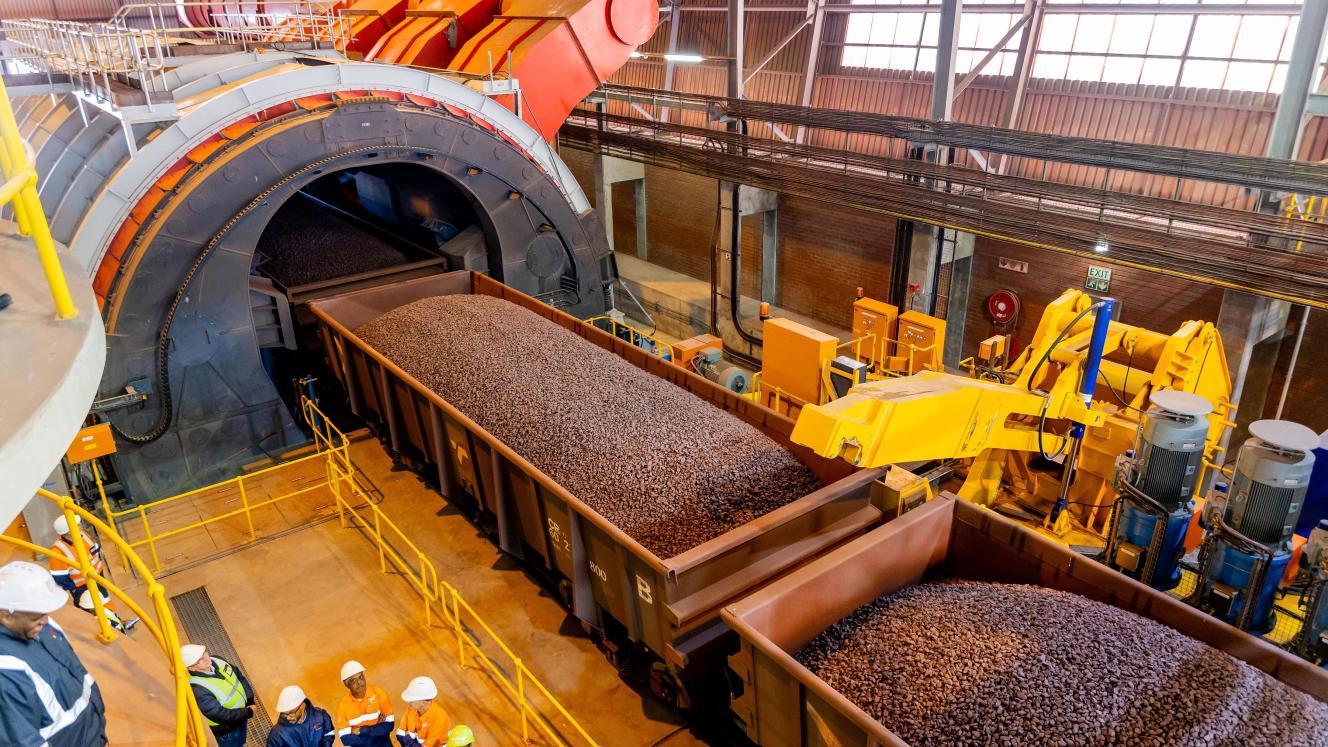
“South Africa recorded a R169 billion trade surplus during the first nine months of 2026, compared with R117.5 billion during the same period in 2025. However, economists warn that the improvement is heavily dependent on higher commodity prices and weaker imports rather than broad-based export growth, exposing structural weaknesses in the country’s international competitiveness.”
South Africa’s R169 Billion Trade Surplus Raises Questions About Export Competitiveness and Economic Growth
Introduction
South Africa’s growing trade surplus during 2026 has provided an encouraging indication of the country’s position in international markets. However, beneath the positive figures, economists are raising concerns about the sustainability of the country’s export performance, the concentration of export earnings in mineral commodities and the challenges facing local manufacturers.
According to figures reported by the South African Revenue Service (SARS), South Africa recorded a merchandise trade surplus of R169 billion between January and September 2026. This represents a significant increase from the R117.5 billion surplus recorded during the corresponding period in 2025.
Although the improvement suggests that South Africa is generating more export revenue relative to its imports, analysts caution that the country’s stronger trade position does not necessarily reflect a broad improvement in industrial competitiveness.
Higher international prices for precious metals and minerals have played an important role in supporting export earnings. At the same time, relatively weak import growth has contributed to the widening surplus.
The development raises important questions about whether South Africa is building a stronger export economy or benefiting primarily from favourable conditions in international commodity markets.
Understanding South Africa’s improving trade balance
A country’s trade balance measures the difference between the value of goods exported and the value of goods imported.
When exports exceed imports, the country records a trade surplus. When imports exceed exports, it records a trade deficit.
South Africa’s R169 billion surplus during the first nine months of 2026 represents an improvement of approximately 44% compared with the same period in 2025.
The figures demonstrate that the country continues to generate considerable international demand for its mineral resources, agricultural products and manufactured goods.
Nevertheless, the composition of the surplus is particularly important.
The National’s reporting indicates that export earnings increased by 7.2%, while imports increased by 4.1%. This difference contributed to the stronger trade balance.
However, the improvement has been concentrated in mining products, precious metals and selected mineral exports rather than being distributed evenly across the economy.
This distinction matters because sustainable international trade performance depends on a country’s ability to produce competitive products, increase export volumes, attract investment and establish reliable international customers.
Mining and precious metals remain central to export growth
South Africa’s mining industry continues to play an important role in supporting the country’s export economy.
Platinum-group metals, gold and zinc ores were among the important contributors to export growth during September 2026.
The country’s extensive mineral resources provide access to international markets and support industries that depend on raw materials for manufacturing, infrastructure development and industrial production.
Gold and platinum-group metals are particularly important because international demand and commodity prices can significantly influence export earnings.
According to economist Sanisha Packirisamy, mining, precious metals and stones generated approximately R130 billion in additional export earnings, while earnings from other exports collectively declined by approximately R20 billion.
This highlights a significant challenge: the country’s overall export performance can improve even when several other industries are experiencing difficulties.
Mining remains an important source of foreign currency, government revenue, employment and investment. However, dependence on a relatively small group of export commodities exposes the economy to international price fluctuations.
If global commodity prices decline, South Africa could experience reduced export earnings even if production volumes remain relatively stable.
The challenge of export diversification
Export diversification is one of the most important priorities for South Africa’s long-term economic development.
A diversified export economy sells a wider range of products to multiple international markets. This reduces dependence on individual commodities, industries and trading partners.
South Africa has opportunities to strengthen exports across agriculture, automotive manufacturing, chemicals, machinery, processed food, renewable energy technologies and industrial equipment.
However, increasing the contribution of these industries requires investment in production capacity, infrastructure, technology, workforce development and international marketing.
Manufacturing diversification is particularly important.
Unlike raw mineral exports, manufactured products can create additional economic value through processing, assembly, engineering, packaging and specialised production.
For example, developing stronger local mineral-processing industries could allow South Africa to export higher-value products rather than relying predominantly on unprocessed mineral commodities.
This approach could create opportunities for small businesses, industrial suppliers, manufacturers and skilled workers.
However, expanding manufacturing requires competitive electricity prices, dependable water supplies, efficient transportation networks and a predictable regulatory environment.
Without these conditions, local producers may struggle to compete with international manufacturers.
Manufacturing faces significant competitiveness challenges
The country’s manufacturing sector remains central to the objective of developing a more balanced economy.
Manufacturing creates employment opportunities across different skill levels and supports numerous related industries, including transportation, construction, mining services, engineering and retail distribution.
However, the latest trade figures raise questions about the performance of manufactured exports.
The National’s report highlights weaknesses in several non-mining export categories. Base-metal export values declined by approximately 3% during the first nine months of 2026.
Other industries have also faced pressure from international competition, production costs and logistical constraints.
Manufacturers must compete with companies operating in countries where electricity, transportation and production inputs may be more affordable.
Consequently, South Africa needs to strengthen the conditions that allow domestic businesses to produce competitively.
Improving industrial productivity, encouraging technology adoption and supporting investment in modern manufacturing facilities will be important steps.
The government also needs to consider how trade policies can encourage local production without unnecessarily increasing the cost of essential imported inputs.
International commodity prices create opportunities and risks
International commodity prices have contributed significantly to South Africa’s improved trade position.
When the prices of gold, platinum and other minerals increase, mining companies can generate higher export revenues from the same or similar production volumes.
This can improve corporate profitability, strengthen foreign currency earnings and increase tax contributions.
However, commodity markets are influenced by international economic conditions, geopolitical developments, industrial demand and investor behaviour.
A slowdown in major economies could reduce demand for particular minerals.
Similarly, changes in international interest rates, currency movements and global investment patterns can influence precious-metal prices.
South Africa therefore needs to distinguish between export growth resulting from favourable prices and growth resulting from increased production and improved competitiveness.
The second type of growth is particularly important for long-term economic resilience.
A country that consistently increases production efficiency, develops new products and secures additional international customers is better positioned to withstand commodity market volatility.
The importance of international trade relationships
South Africa’s export economy depends on maintaining strong relationships with international trading partners.
China, the European Union, the United States, India and other African economies provide important opportunities for South African exporters.
However, changing international trade policies have created additional uncertainty.
One significant development is the planned withdrawal of South Africa’s preferential access under the African Growth and Opportunity Act (AGOA).
The United States announced its intention to withdraw South Africa’s benefits, effective from 1 January 2027.
The South African government has acknowledged the potential implications for exporters and workers while emphasising the importance of diversifying international markets.
According to the Department of Trade, Industry and Competition, South African exports benefiting from AGOA were valued at approximately US$1.7 billion in 2025.
Although AGOA represents only a portion of the country’s overall international trade, it remains important for certain agricultural, automotive and manufacturing supply chains.
The government has identified alternative opportunities through the African Continental Free Trade Area, the European Union, India, the United Kingdom, China and other international markets.
South African Government+2
Logistics infrastructure remains essential
South Africa’s ability to increase exports depends heavily on the efficiency of its transportation and logistics infrastructure.
Railways, ports, roads and border facilities connect local producers with international customers.
Mining companies require dependable rail transportation to move minerals from production areas to export terminals. Agricultural exporters also depend on efficient logistics to transport fresh produce while maintaining product quality.
Port delays, inadequate rail capacity and operational disruptions can increase business costs and reduce the competitiveness of South African exports.
Improving logistics infrastructure is therefore essential to converting the country’s natural-resource advantages into sustainable trade growth.
The government and Transnet have been pursuing partnerships with private-sector operators to improve port operations and expand export capacity.
Such investments could support higher cargo volumes, reduce transportation bottlenecks and improve the reliability of international shipments.
However, successful implementation will require transparent agreements, effective oversight and measurable improvements in operational performance.
Agricultural exports offer additional opportunities
Agriculture is another important sector capable of supporting South Africa’s export diversification objectives.
The country has established international markets for citrus, apples, grapes, avocados, wine and other agricultural products.
These industries provide opportunities for farmers, exporters, packaging businesses, transport operators and food-processing companies.
Expanding agricultural exports could also support rural economic development and create employment opportunities outside major industrial centres.
However, agricultural exporters face challenges involving international market access, sanitary requirements, production costs, water availability and transportation.
South Africa needs to maintain high food-safety standards while negotiating access to additional international markets.
Investment in agricultural technology, irrigation, cold-storage facilities and export logistics could strengthen the sector’s contribution to national trade performance.
What the trade surplus means for businesses and employment
The R169 billion surplus is an important economic indicator, but its benefits will depend on how effectively export earnings translate into investment and economic activity.
Mining companies may benefit from stronger commodity prices, while government could receive additional revenue through taxes and royalties.
However, businesses operating outside the mining sector may not experience the same improvement.
Small and medium-sized enterprises need access to finance, technology, affordable inputs and international distribution networks to participate meaningfully in export markets.
Greater participation by these businesses could strengthen domestic supply chains and spread the benefits of international trade more widely.
Employment creation should also remain a priority.
Export-oriented manufacturing, agriculture and mineral beneficiation can support jobs across production, transportation, administration, engineering and professional services.
The objective should therefore be to increase not only the value of exports but also the number of businesses and workers benefiting from international trade.
Conclusion
South Africa’s R169 billion trade surplus during the first nine months of 2026 demonstrates the importance of international trade to the national economy.
However, the concentration of export gains in minerals and precious metals highlights the need for a more diversified and competitive export structure.
Higher commodity prices have supported the country’s trade performance, but long-term economic progress will require stronger manufacturing, improved logistics, agricultural expansion and greater participation in international markets.
South Africa must also respond strategically to changing international trade relationships, particularly the uncertainty surrounding AGOA.
Ultimately, a sustainable export economy will depend on the country’s ability to produce competitive goods, develop higher-value industries, improve infrastructure and create opportunities for businesses of different sizes.
The R169 billion surplus is an encouraging development, but the more important objective is ensuring that future trade growth reflects stronger production capacity, industrial competitiveness and sustainable employment.



