




“South Africa’s political parties are intensifying preparations for the November 2026 local elections, which will determine control of municipalities across the country. With the ANC weakened after losing its majority in 2024, coalition politics will dominate, making these elections pivotal for service delivery and governance.”
South Africa is entering a decisive political moment as the country prepares for the local government elections on 4 November 2026. These elections will not only determine who governs municipalities but will also serve as a litmus test for the strength of political parties in the era of coalition politics. Since the ANC’s loss of its outright majority in 2024, the political landscape has shifted dramatically, forcing parties to rethink strategies and alliances.
The ANC’s Position
The African National Congress (ANC), once dominant with over 60% of the vote in past decades, now commands just above 40%. This decline has forced the party into a Government of National Unity (GNU) with ten other parties. At the local level, however, the ANC faces fragmented councils where coalition negotiations will determine control. The ANC’s challenge lies in convincing voters that it can still deliver services such as water, electricity, and infrastructure maintenance despite its weakened majority.
The Rise of Opposition Parties
- Democratic Alliance (DA): With 21.8% of the vote in 2024, the DA remains the strongest opposition party. It is positioning itself as a credible alternative, emphasizing governance reforms and anti-corruption measures.
- uMkhonto weSizwe (MK): Led by Jacob Zuma, MK secured 14.6% in 2024 and has become a disruptive force, particularly in KwaZulu-Natal. Its populist rhetoric appeals to disaffected voters, but its ability to govern in coalitions remains uncertain.
- Economic Freedom Fighters (EFF): With 9.5%, the EFF continues to push radical economic policies, including land expropriation without compensation. Its influence in coalition negotiations could be decisive in metros like Johannesburg and Tshwane.
- Inkatha Freedom Party (IFP): Though smaller at 3.8%, the IFP has regional strength in KwaZulu-Natal and could play a kingmaker role in municipal councils.
Coalition Politics and Governance
Coalition politics is now the defining feature of South African democracy. In municipalities, parties must secure more than half the seats to elect mayors and executives. This means that even smaller parties like the Patriotic Alliance (PA), Freedom Front Plus (FF+), and ActionSA could wield outsized influence. The challenge is that coalition governments often struggle with instability, policy disagreements, and service delivery failures.
Voter Concerns
For ordinary South Africans, these elections are not abstract political contests. They directly affect pothole repairs, water supply, electricity reliability, and municipal budgets. Voters are increasingly frustrated with poor service delivery, corruption, and political infighting. The 2026 elections will test whether coalition politics can produce stable governance or exacerbate dysfunction.
Strategic Campaigns
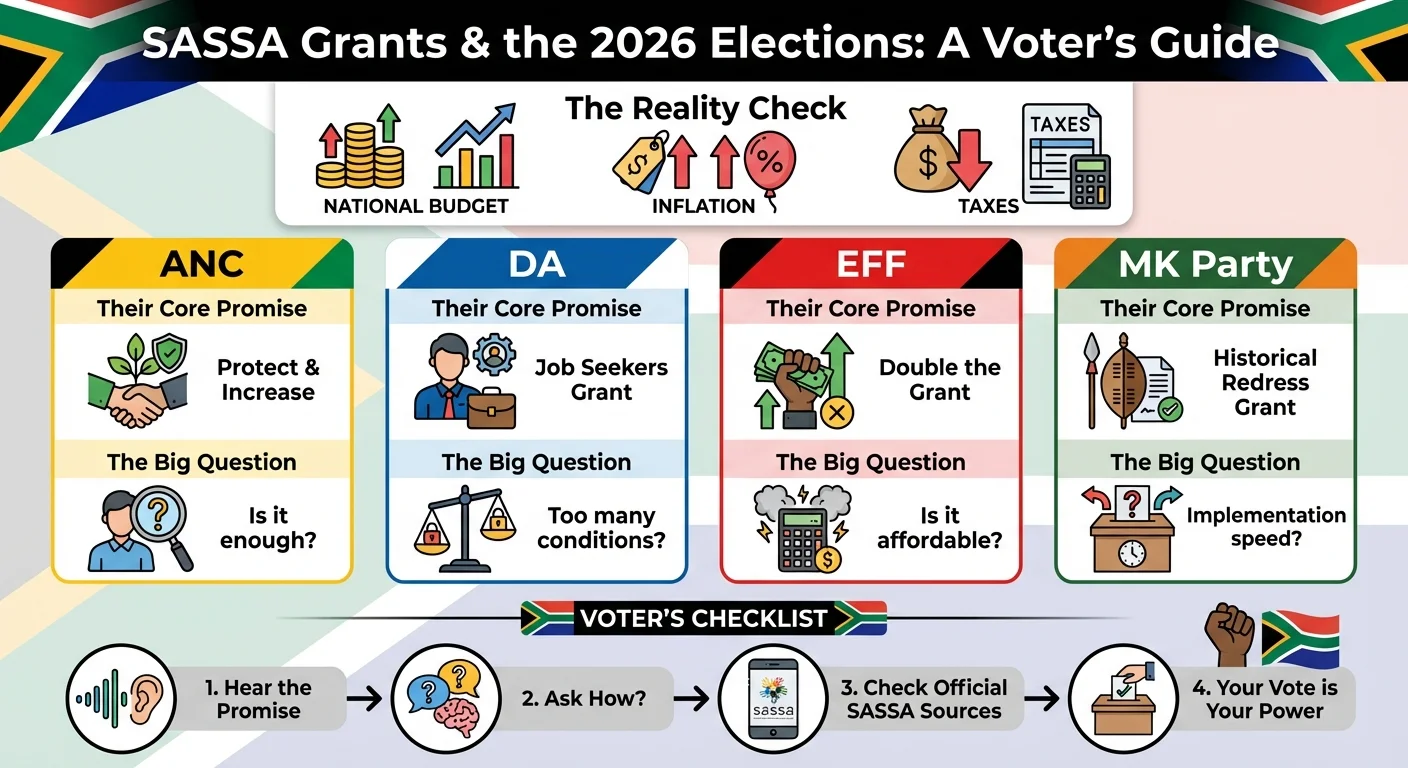
- The ANC is focusing on grassroots mobilization, reminding voters of its liberation legacy while promising renewal.
- The DA is emphasizing clean governance and efficiency, hoping to expand its urban base.
- The EFF is targeting young voters with radical economic promises.
- The MK Party is leveraging Zuma’s populist appeal, particularly in rural areas.
Implications for Democracy
The 2026 elections represent a turning point. If coalition politics stabilizes, South Africa could see a more inclusive democracy where multiple voices shape governance. However, if instability persists, voters may lose faith in the system, deepening political cynicism.
Conclusion
As South Africa heads toward November 2026, the stakes could not be higher. The ANC’s weakened majority, the rise of opposition parties, and the uncertainty of coalition politics make these elections one of the most consequential since 1994. For voters, the choice is not just about ideology but about who can deliver reliable services and restore trust in local governance.



