




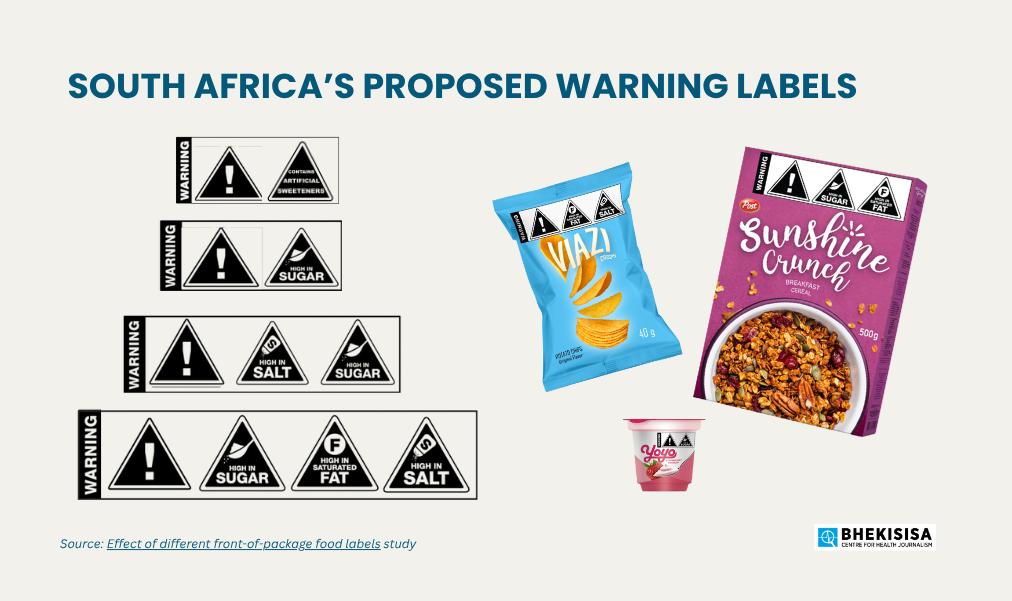
South Africa’s proposed mandatory warning labels for foods high in sugar, salt and saturated fat remain stalled more than three years after the draft regulations were first published, with the revised proposals now being discussed through Nedlac. The delay comes as the country faces increasing nutrition-related challenges, including diabetes, obesity, food affordability pressures and unequal access to healthier diets.
South Africa’s Nutrition Warning-Label Regulations Remain Unfinished
South Africa’s long-running debate over how packaged food should communicate its nutritional risks has entered another important phase, but consumers are still waiting for the regulations to become law. A report published on 7 October 2026 says proposed warning labels for foods high in sugar, salt and saturated fat remain under discussion at the National Economic Development and Labour Council, or Nedlac, more than three years after the regulations were first published for public comment.
The issue is significant because food labelling is not simply a matter of packaging design. It is increasingly viewed as a public-health intervention at a time when South Africa is experiencing a growing burden of non-communicable diseases. Diabetes, high blood pressure, obesity and cardiovascular disease are increasingly affecting households, while poor diet is recognised as one of several important risk factors.
The latest developments therefore place nutrition policy, consumer information and public health at the centre of an ongoing national debate.
Proposed Warning Labels Designed to Make Nutrition Information Clearer
South Africa’s Draft Regulation 3337, formally known as the Regulations Relating to the Labelling and Advertising of Foodstuffs, was published on 21 April 2023. The public-comment period was subsequently extended, eventually closing in September 2023.
The proposed framework includes front-of-package warning labels intended to make it easier for consumers to identify products containing excessive levels of nutrients associated with health risks.
Instead of requiring shoppers to study detailed nutritional tables on the back of packages, warning symbols would provide an immediate visual signal. Proposed labels have included warnings relating to high sugar, salt and saturated fat, as well as other nutritional concerns.
The principle behind the approach is straightforward: consumers should be able to understand important information quickly when deciding what to purchase.
For many shoppers, particularly those with limited time or nutritional knowledge, a prominent warning on the front of a package could be easier to understand than a complicated ingredients list or nutrition panel.
Why the Issue Matters for Public Health
The timing of the debate is particularly important because South Africa is undergoing a major change in its disease profile.
Health Minister Aaron Motsoaledi said this week that Statistics South Africa’s latest mortality figures showed diabetes was the country’s leading underlying natural cause of death in 2024 for the third consecutive year. The figures recorded 28,767 diabetes-related deaths as the underlying cause.
Motsoaledi linked the growing burden of non-communicable diseases to several shared risk factors, including poor diet, physical inactivity, smoking and excessive alcohol consumption. He also highlighted the difficulty many households face in accessing healthier food because less nutritious processed foods can be cheaper and more readily available.
This means nutrition policy cannot be considered separately from the country’s wider healthcare challenges.
If consumers are surrounded by inexpensive products containing high amounts of sugar, salt or unhealthy fats, governments face a difficult challenge in encouraging healthier eating. Education campaigns can help, but advocates argue that consumers also need clear information and an environment that makes healthier choices realistic.
More Than 6,000 Pages of Submissions
One of the reasons given for the lengthy regulatory process is the enormous volume of submissions received during consultation.
According to the Department of Health, substantive comments from 179 companies and organisations amounted to more than 6,000 pages. A four-member technical team was tasked with reviewing and analysing the submissions, including technical material and legal opinions.
The Department says that review has now been completed and that amendments have been made to the draft.
According to the department, some of the changes are intended to clarify definitions and wording while preventing unnecessary compliance costs for businesses. Other issues considered during the review include nutrient declarations, front-of-package labelling, food marketing directed at children, health and nutrition claims, date marking and the alignment of food regulations with other standards.
However, civil society organisations say they have not yet been given sufficient visibility into the revised document or how submissions influenced the changes.
That lack of transparency has become one of the most contentious aspects of the process.
Nedlac Process Raises Further Questions
The proposed regulations are now being considered through Nedlac, which brings together government, business, labour and community constituencies to discuss major socioeconomic policies.
The Department of Health says the regulations were tabled following a request from the Nedlac Trade and Industry Chamber. A task team subsequently began substantive discussions in August 2026.
Nedlac says it will eventually produce a report identifying areas of agreement, disagreement and issues requiring further engagement before the report is submitted to the health minister.
However, the discussions are not currently open to the public.
That has raised concerns among civil society groups that have supported stronger food-labelling rules.
Health advocates argue that communities affected by diet-related diseases should have meaningful participation in decisions that could influence what information appears on supermarket shelves. They are also calling for greater transparency about how the original public submissions were considered.
The Department, meanwhile, says it has completed its review and is moving through the required regulatory process.
Food Affordability Adds Another Dimension
Warning labels alone cannot solve South Africa’s nutrition problems.
Food affordability remains a major obstacle to healthy eating, particularly for low-income households.
A report published on 7 October found that food and non-alcoholic beverage inflation had slowed considerably, reaching 1.1% year-on-year in August, compared with headline inflation of 4.4%. However, the cost of a healthy diet remains a major concern for many households.
Another report published this week highlighted the pressure on household food budgets. The Pietermaritzburg Economic Justice and Dignity Group found that the average national household food basket increased to R5,488.06 in September 2026. The organisation also warned that rising prices for staple foods could leave families with less money for nutritionally rich products such as vegetables, fruit, eggs, dairy, meat and fish.
This creates an important policy challenge.
It is not enough to tell families to eat healthier if healthier choices remain financially difficult. Effective nutrition policy may therefore need to combine clear food labelling, nutrition education, food affordability measures, social protection and stronger access to nutritious foods.
Children Are a Particular Concern
Children are another important part of the debate.
Food advertising and packaging can strongly influence children’s preferences. Products high in sugar, salt and unhealthy fats are often marketed using colourful packaging, familiar characters, promotions and other techniques designed to attract attention.
South Africa’s proposed regulations also include provisions concerning the marketing of food to children.
The objective is not simply to tell children which foods are healthy or unhealthy. It is also to consider the commercial environment in which children make food choices.
The importance of this issue is reinforced by international developments. On 7 October, the World Health Organization issued its first global guideline on childhood obesity, emphasising diet, physical activity and counselling as fundamental interventions before relying on weight-loss medication for children and adolescents.
Although the WHO guidance is global rather than specifically South African, it highlights the growing international focus on nutrition, obesity prevention and healthier environments for children.
Industry and Government Face a Difficult Balance
Food manufacturers and other businesses have legitimate concerns about regulatory costs, product reformulation, packaging changes and competitiveness.
The Department of Health says part of its review was intended to ensure that compliance would not impose unintended or unnecessary costs on industry.
Industry representatives have also argued for an approach that balances public health with economic sustainability, food security, competitiveness and innovation.
The challenge for policymakers is therefore to establish regulations that provide consumers with meaningful protection while remaining practical and enforceable.
At the same time, public-health advocates argue that economic considerations should not undermine measures designed to prevent avoidable disease.
What Happens Next?
The Department of Health says another feedback session involving food industry representatives, academia, civil society and consumer advocacy organisations is expected. After the Nedlac process, the draft will undergo further legal consideration before being submitted to the health minister for publication.
There is currently no firm date for when the final regulations will be published.
For consumers, that means the wait continues.
The debate over South Africa’s proposed food warning labels is ultimately about more than symbols on packets. It raises broader questions about how much responsibility should rest with individual consumers, how food companies should market their products, how governments should regulate unhealthy food environments and whether healthier diets are genuinely affordable for ordinary households.
As diabetes and other non-communicable diseases place increasing pressure on the healthcare system, nutrition policy is becoming an increasingly important part of South Africa’s public-health strategy.
The next stage of the R3337 process will therefore be closely watched by government, industry, health professionals, civil society and consumers alike. After years of consultation and review, the central question is now whether South Africa can move from debate to implementation while ensuring that the final rules are transparent, evidence-based and capable of improving the nation’s nutritional health.



