




“The South African Reserve Bank increased its benchmark repo rate by 25 basis points to 7.25%, effective 25 September 2026, as renewed fuel-price pressures, geopolitical disruptions and elevated inflation risks complicated the economic outlook. The increase takes the prime lending rate to 10.75%, raising borrowing costs for households and businesses, while the SARB projects South Africa’s 2026 economic growth at 1.2%.”
South Africa’s Reserve Bank Raises Repo Rate to 7.25% as Inflation Risks Intensify
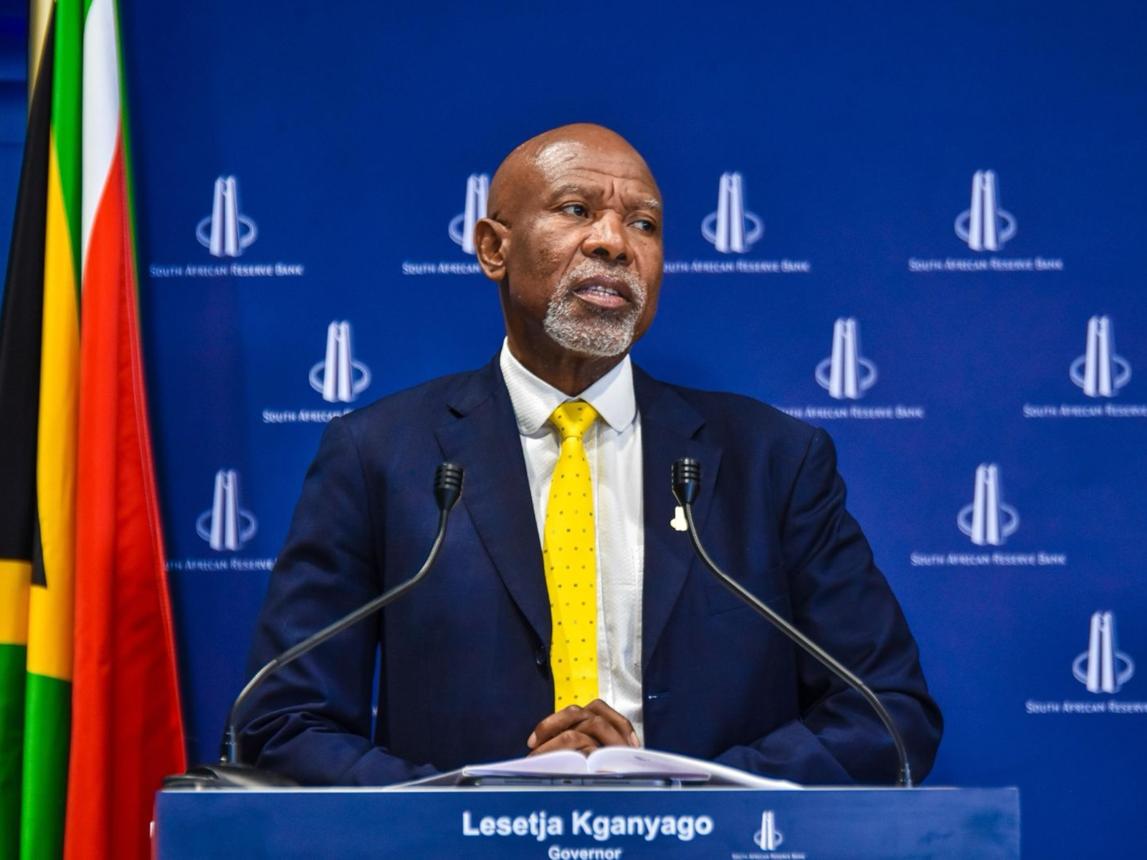
South Africa’s financial markets and households entered the final week of September under increased interest-rate pressure after the South African Reserve Bank (SARB) raised its benchmark policy rate by 25 basis points to 7.25%. Governor Lesetja Kganyago announced the decision on 23 September, effective from 25 September, marking the second rate increase of the year. It lifts the commercial banks’ prime lending rate from 10.50% to 10.75%.
The move has become the dominant finance story affecting South African consumers, businesses, lenders and investors because it comes at a time when inflation has accelerated, fuel costs have increased and economic growth remains relatively weak. The SARB’s Monetary Policy Committee (MPC) unanimously supported the 25-basis-point increase.
The central bank said the decision reflected growing upside risks to inflation. According to the September MPC statement, headline consumer inflation had reached 4.4%, while inflation expectations remained above the SARB’s preferred 3% midpoint. The central bank said the current global environment was being affected by significant supply shocks, including disruptions linked to geopolitical conflicts and international energy markets.
Why the Reserve Bank raised rates
The principal issue facing the central bank is the possibility that temporary increases in fuel and other input costs could spread through the wider economy.
South Africa is a net importer of fuel, meaning international oil-price movements can have a direct effect on domestic transport and production costs. When fuel becomes more expensive, the consequences can extend beyond motorists. Transport companies face higher operating expenses, businesses can face increased distribution costs, and consumers can ultimately encounter higher prices for goods and services.
The SARB said the global supply shock had intensified rather than eased. According to the central bank, disruptions surrounding the Middle East and the Russia-Ukraine war were affecting oil supplies, refinery capacity and food exports. These developments have made the inflation outlook more uncertain.
The MPC therefore decided to tighten monetary policy to prevent temporary price increases from becoming embedded in broader inflation expectations.
Governor Kganyago said the SARB remained focused on bringing inflation back to the 3% target over time. The central bank currently expects inflation to return to that target toward the end of 2027.
Higher borrowing costs for households
For South African households with variable-rate debt, the rate increase means higher borrowing costs.
The increase affects products such as home loans, vehicle finance, overdrafts and some credit facilities whose interest rates are linked to the prime lending rate. IOL reported that the increase from a 7% repo rate to 7.25% would place additional pressure on households already dealing with higher fuel, transport and living expenses.
The effect will vary according to the size and type of a person’s debt. A household with a large mortgage, for example, will generally experience a greater rand increase in monthly interest costs than a household with a relatively small outstanding balance.
Higher interest rates can also affect household spending decisions. Consumers may postpone large purchases, reduce discretionary spending or allocate more of their monthly income to debt repayments.
This is one of the main channels through which monetary policy affects the broader economy. By increasing the cost of borrowing, the central bank can reduce demand and potentially slow the pace at which businesses and consumers increase spending.
However, higher interest rates also create challenges for an economy that is already experiencing relatively limited growth.
Economic growth remains under pressure
The rate decision comes against a backdrop of weak economic activity.
The SARB reported that South Africa’s economy contracted by 0.2% in the second quarter. The central bank nevertheless expects a rebound during the second half of 2026, although it lowered its full-year growth forecast from 1.4% to 1.2%.
The combination of weaker growth and higher interest rates creates a difficult environment for companies.
Businesses that rely heavily on borrowing may face increased financing costs. Companies considering expansion, property purchases, equipment investment or working-capital facilities may need to reassess their financing requirements.
At the same time, businesses face higher operating costs from fuel and other imported inputs. The result is an environment in which companies may have to manage both financing pressures and rising production or distribution expenses.
The SARB acknowledged these tensions, saying global shocks were hurting the South African economy and that growth risks were tilted to the downside.
Impact on the rand and financial markets
The interest-rate decision also influenced South Africa’s financial markets.
Reuters reported that the rand weakened after markets absorbed the rate increase, with the currency trading around R16.40 to the US dollar in early trading on 25 September. Reuters also reported that investors were assessing the implications of higher South African rates alongside expectations for elevated US interest rates.
Currency movements are particularly important for South Africa because a weaker rand can increase the local-currency cost of imported goods, including energy.
Conversely, higher domestic interest rates can influence international investors’ assessment of South African assets because interest-rate differentials form part of the factors considered when allocating capital between markets.
The relationship is not straightforward, however. Global risk sentiment, commodity prices, geopolitical developments and US interest rates can all affect the rand at the same time.
Inflation remains the central concern
The latest rate increase demonstrates the SARB’s continued focus on inflation.
Consumer inflation rose to 4.4% in August, compared with 4.3% in July. Moneyweb reported that the latest reading was above the SARB’s 3% target midpoint.
The central bank’s September statement also highlighted differences between inflation categories. Fuel and services inflation remain important sources of pressure, while food inflation has been considerably more favourable. The SARB said food inflation had reached its lowest level since 2010, supported by strong harvests and more stable meat prices.
This distinction is important because monetary policy cannot directly produce more food or oil. Instead, the Reserve Bank is attempting to prevent temporary supply-side shocks from generating broader and persistent inflation.
The bank is particularly concerned about what it describes as second-round effects, where an initial increase in one group of prices eventually contributes to wider price increases across the economy.
What the rate means for savers and investors
The rate increase does not affect all South Africans in the same way.
Borrowers generally face higher interest costs, while savers and investors with interest-bearing assets can potentially receive higher returns, depending on the products they hold and the rates offered by financial institutions.
Banks may adjust deposit rates, lending rates and other financial-product pricing in response to changes in the policy environment. However, the exact effect depends on the product, institution and contractual terms.
For investors, higher interest rates can also influence valuations across asset classes. Higher bond yields can alter the relative attractiveness of fixed-income investments, while higher borrowing costs can affect companies whose earnings are sensitive to financing conditions.
The broader investment environment is also being shaped by global developments. Reuters noted that longer-term US yields and expectations surrounding US monetary policy were among the factors influencing emerging-market currencies and financial markets.
The outlook for 2027
The SARB’s latest projections indicate that inflation is expected to remain elevated into 2027 before moving toward the 3% target toward the end of that year.
The bank’s policy approach will therefore depend heavily on how fuel prices, global interest rates, exchange rates and domestic inflation evolve.
The September MPC statement said its model projects the policy rate to remain broadly stable through the remainder of 2026. That projection is not a guarantee of future decisions; subsequent rate decisions will depend on incoming economic data and the evolution of inflation risks.
For South African consumers and businesses, the immediate issue is therefore the higher cost of credit, while the longer-term question is whether inflation pressures moderate sufficiently to allow financial conditions to become less restrictive.
Conclusion
South Africa’s latest interest-rate increase places the financial system at an important point in the country’s inflation and growth story. The SARB has raised the repo rate to 7.25%, while the prime lending rate has moved to 10.75%, increasing the cost of variable-rate borrowing.
The central bank’s decision reflects its assessment that renewed fuel-price pressures, geopolitical supply disruptions and above-target inflation expectations pose risks to price stability. At the same time, the economy contracted in the second quarter and the SARB has reduced its 2026 growth forecast to 1.2%.
The coming months will therefore be closely watched by households, banks, companies and investors. Inflation, fuel prices, the rand, global interest rates and economic-growth data will all help determine how financial conditions develop as South Africa moves toward 2027.



