




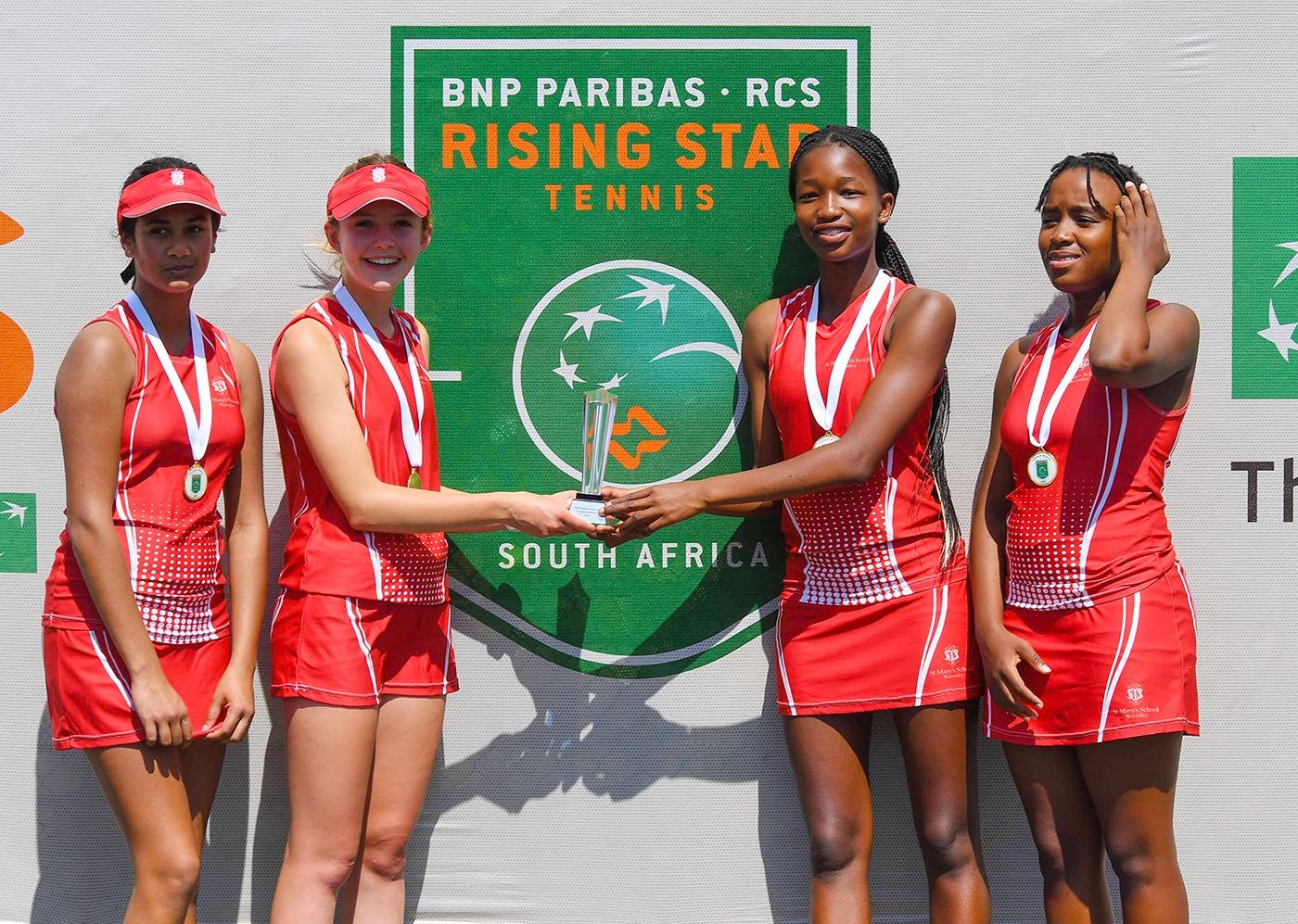
“South Africa’s RCS Rising Star Tennis programme is bringing the country’s leading qualifying primary-school teams together in Benoni for its seventh National School Finals, taking place from 30 October to 1 November 2026. The competition recorded 891 school-team entries during 2026, representing 6.7% growth compared with the previous year, while its free participation model, wheelchair tennis inclusion and expansion into previously unrepresented communities highlight its growing importance to the development of South African tennis.”
South Africa’s Rising Star Tennis National Finals Showcase the Next Generation of Tennis Talent in Benoni
South African tennis is turning its attention towards the next generation of sporting talent as the 2026 RCS Rising Star Tennis National School Finals bring together qualifying primary-school teams in Benoni, Gauteng. The three-day competition, running from 30 October to 1 November, represents an important opportunity for young players from different provinces to demonstrate their abilities, develop their competitive experience and compete for national school tennis honours.
The seventh edition of the RCS Rising Star Tennis programme arrives at an encouraging moment for school tennis in South Africa. Participation has continued to increase, with the programme recording 891 school-team entries during 2026. This represents a 6.7% increase compared with the previous year and demonstrates the growing interest in organised tennis among primary-school learners and educational institutions.
The national finals are being held at the Gauteng East Tennis Association (GETA) complex in Lakefield, Benoni. Qualifying teams have progressed through district and provincial competitions to earn their places at the national championship. Consequently, the event provides an opportunity for promising young athletes to compete against some of the strongest school teams from across the country.
According to reporting published by the Boksburg Advertiser on 30 October, the programme has more than doubled in scale since its introduction during the 2019/20 season, when it attracted 361 entries. Its continued expansion highlights the importance of accessible sporting opportunities in developing young athletes and strengthening South Africa’s tennis foundations.
A national platform for emerging tennis players
One of the most important aspects of the RCS Rising Star Tennis National Finals is the opportunity it provides young players to experience national-level competition.
For many participating learners, reaching the finals represents the culmination of months of training, dedication and competitive participation. Players have progressed through different stages of the programme, beginning with district-level tournaments before advancing through provincial competitions.
This development structure gives schools a clear pathway towards national recognition. Furthermore, it encourages learners to take tennis seriously as a sporting discipline while providing opportunities to develop confidence, discipline and teamwork.
The national finals also bring together different sporting communities. Schools from all nine provinces have representatives participating in the competition, creating an environment where young athletes can exchange experiences, establish friendships and learn from competitors with different sporting backgrounds.
The importance of this opportunity extends beyond winning trophies. For developing athletes, competing against unfamiliar opponents helps improve match awareness, concentration, tactical decision-making and the ability to manage pressure.
In addition, national competitions allow coaches and school sporting programmes to assess developing talent. Young players who demonstrate strong performances may become candidates for further development opportunities within South Africa’s broader tennis structure.
Participation reaches new heights in 2026
The 2026 participation figures provide one of the clearest indications of the programme’s progress.
With 891 school-team entries, the competition has established itself as an increasingly important part of the country’s school tennis landscape. The 6.7% year-on-year increase also represents the programme’s third consecutive year of growth.
These figures are significant because tennis participation has historically faced accessibility challenges in communities where sporting facilities, equipment and professional coaching opportunities are limited.
The Rising Star initiative seeks to address some of these challenges by providing free participation for primary-school learners and learners at special schools.
Removing entry fees helps schools participate without placing additional financial pressure on families. As a result, learners who might otherwise struggle to access organised tennis competitions can gain opportunities to experience the sport.
Importantly, the programme is not exclusively focused on schools traditionally associated with established sporting facilities. Its development approach seeks to reach communities across different provinces and educational environments.
The 2026 competition also recorded participation from previously underrepresented districts, including Xhariep, Thabo Mofutsanyana and Harry Gwala. Their involvement illustrates the potential of structured school sporting programmes to expand participation beyond established tennis centres.
More importantly, increased participation creates opportunities for previously undiscovered talent to emerge. South Africa’s future tennis champions may come from communities that have not traditionally enjoyed extensive access to the sport.
Wheelchair tennis strengthens inclusion
Another important feature of the RCS Rising Star Tennis programme is its commitment to inclusive sporting opportunities through wheelchair tennis.
The inclusion of wheelchair tennis within the competition pathway is an important development for South African sport. It recognises that young athletes with disabilities should have opportunities to compete, develop their sporting abilities and experience the benefits of organised competition.
Rather than treating wheelchair tennis as an unrelated activity, the programme integrates it into its wider school tennis development structure.
This approach helps promote equal sporting recognition and encourages schools to understand that tennis can accommodate athletes with different physical abilities.
Wheelchair tennis also demonstrates the importance of accessible facilities, suitable equipment, coaching support and inclusive competition structures.
For young participants, the opportunity to compete at a national event can provide valuable motivation. It also allows athletes to demonstrate their skills before a wider sporting audience.
The programme’s continued commitment to wheelchair tennis is particularly important because sporting inclusion requires more than encouraging participation. It requires practical opportunities, organised competitions and sustained investment.
Through its national development approach, Rising Star Tennis is helping demonstrate how school sport can create a more inclusive environment for young South Africans.
New opportunities for schools and communities
The expansion of the programme has also been supported by the introduction of additional competition opportunities.
During 2026, the programme included its established Green Ball category and wheelchair tennis division. It also introduced a new Orange Ball category at district level for younger players born in 2015 or later.
The Orange Ball category represents an important development because it creates an earlier introduction to organised competition for children who are still developing their tennis skills.
Meanwhile, the Green Ball category accommodates players born in 2014 or earlier, providing a structured environment for young competitors to develop their abilities.
These different stages are important because children develop sporting skills at different rates. Providing age-appropriate competition helps create a more supportive pathway into tennis.
The programme therefore has the potential to benefit learners who are encountering organised tennis for the first time, as well as those who already have experience competing at school and club levels.
Furthermore, district-level competition creates opportunities for schools to participate closer to their communities before attempting to qualify for provincial and national events.
The expansion of these categories demonstrates an understanding that long-term sporting development requires opportunities at different ages and ability levels.
Western Cape schools carry strong competitive expectations
The Western Cape enters the 2026 competition with an impressive record from the previous season.
During the 2025 national finals, Durbanville Primary School won the boys’ national championship, while Courtrai Primary School claimed the girls’ title.
Those achievements established strong expectations for the province’s school tennis representatives.
However, the 2026 championship provides a new opportunity for schools from across South Africa to challenge the previous winners and establish themselves among the country’s leading primary-school tennis programmes.
The national finals feature qualifying teams from Gauteng, KwaZulu-Natal, Mpumalanga, the Free State, North West, Western Cape, Eastern Cape, Limpopo and the Northern Cape.
The boys’ and girls’ competitions provide separate opportunities for schools to pursue national honours.
Among the listed qualifying schools are St Stithians Prep, Kathu Primary School, Highbury Primary School, Laerskool Kanonkop, Eunice Primary School, Laerskool Mooirivier, Courtrai Primary School, George Suid Primary School, Cradock Primary School and Jeffreys Bay Primary School.
Wildcard entries also provide additional opportunities for schools to participate in the national championship.
The geographical diversity of the participating schools demonstrates the programme’s national reach and the importance of developing tennis beyond traditional centres of sporting excellence.
Private-sector investment supports school tennis
The continued partnership between RCS and Tennis South Africa is another important element behind the programme’s development.
Sustained sponsorship can make a significant difference in school sport because organising national competitions requires resources, equipment, administration, facilities and logistical support.
RCS has supported the initiative since its introduction, helping it expand into additional schools and communities while maintaining free entry for participating learners.
This partnership demonstrates how private-sector investment can contribute to sporting development when financial support is connected to long-term participation objectives.
For South African tennis, such partnerships are particularly valuable because the development of future professional players requires a strong foundation at grassroots level.
Children need opportunities to discover tennis, receive appropriate coaching, participate in competitions and develop their skills over time.
Without accessible entry points, talented young athletes may never receive the opportunity to demonstrate their potential.
The Rising Star programme addresses this challenge by connecting schools with a structured competition pathway.
Anthony Moruthane, General Manager of Tennis South Africa, has highlighted the importance of expanding opportunities for schools and communities. The programme’s continued growth reinforces the organisation’s objective of identifying talent wherever it exists.
Regan Adam, RCS chief executive, has similarly emphasised creating opportunities for young people to develop confidence, establish connections and discover their potential through sport.
What the competition means for the future of South African tennis
The importance of the 2026 national finals extends beyond the immediate competition.
South Africa has a proud tennis history, with internationally recognised players contributing to the country’s reputation in professional tennis. However, maintaining that tradition requires consistent investment in grassroots development.
School competitions are particularly important because they introduce children to organised sport at an early age.
They also create opportunities for teachers, coaches, parents and sporting organisations to work together in identifying and supporting emerging athletes.
A successful school tennis programme can help establish a foundation for participation at club, provincial, national and eventually international levels.
Nevertheless, developing professional players requires more than participation in one national tournament. Young athletes need continued coaching, access to facilities, financial support and opportunities to compete regularly.
Therefore, the long-term success of Rising Star Tennis should be measured not only by annual entry numbers but also by the opportunities created for learners after the national finals.
The integration of wheelchair tennis and the introduction of the Orange Ball category are encouraging developments because they broaden the programme’s potential reach.
Similarly, the increasing participation of no-fee schools indicates that the programme is reaching communities where sporting opportunities may otherwise be limited.
Maintaining this momentum will require continued cooperation between Tennis South Africa, schools, sponsors, coaches, provincial associations and local sporting communities.
The national finals place young athletes in the spotlight
As the competition continues through 1 November, attention remains on the performances of the qualifying schools and the young athletes representing their provinces.
For participants, the experience of reaching a national championship can become an important milestone in their sporting journeys.
Winning a national title would represent a major achievement, but the opportunity to participate also carries considerable value.
Learners gain experience, build relationships and develop an understanding of competitive sport. Schools receive an opportunity to showcase their sporting programmes, while coaches can evaluate the progress of their players.
The event also gives South African tennis an opportunity to demonstrate the importance of investing in children and creating inclusive pathways for future generations.
Ultimately, the RCS Rising Star Tennis National Finals represent more than a school sporting competition. They demonstrate how accessible opportunities, sustained partnerships and organised development structures can contribute to the future of tennis in South Africa.
With 891 school-team entries recorded in 2026, the programme’s growth provides encouraging evidence that interest in school tennis is expanding.
The challenge now is to convert that participation into sustainable development opportunities, ensuring that more young South Africans can continue playing, improving and pursuing their sporting ambitions long after the national finals have concluded.
For South African tennis, the future may begin with a young learner picking up a racquet at school. The Rising Star programme is helping make that first opportunity possible.



