




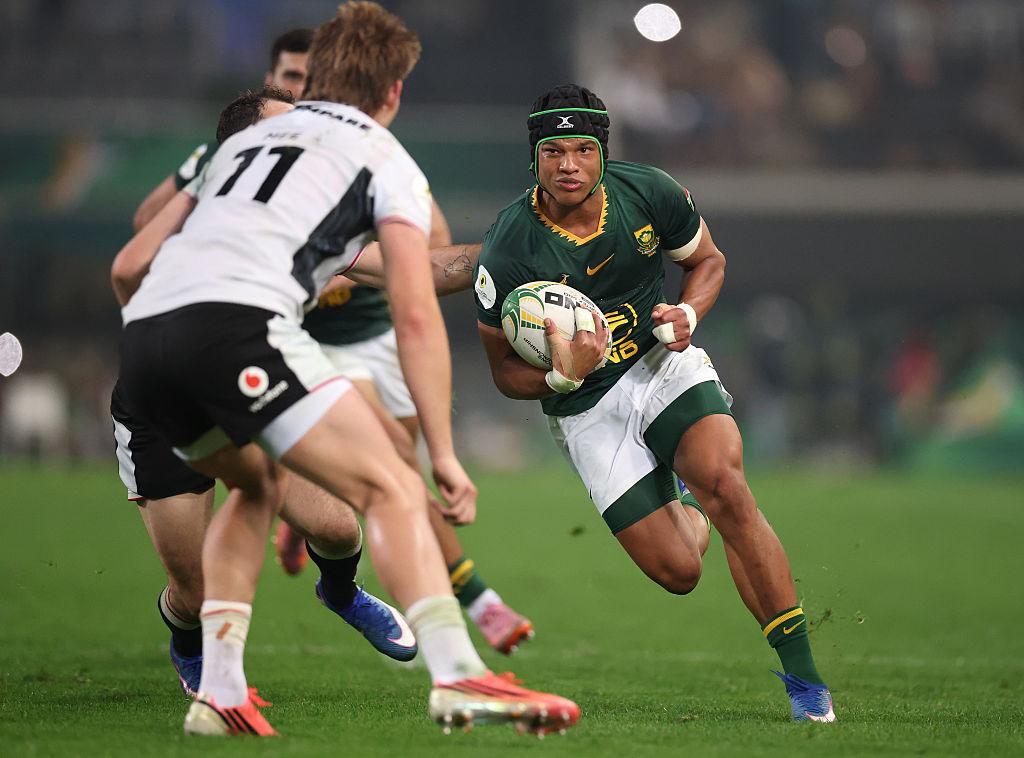
“South Africa’s considerable squad depth could give the Springboks a decisive advantage in the Nations Championship as several leading international teams prepare for November fixtures without key players. With the Springboks targeting a strong start against Italy in Turin on 7 November, the ability to combine experienced World Cup winners with emerging talent could become central to their championship ambitions.”
Springboks’ Superior Squad Depth Could Prove Decisive in Nations Championship Title Race
South Africa’s impressive player depth is emerging as one of the strongest advantages in the Nations Championship as the Springboks prepare for a demanding November international rugby programme. With several leading international teams facing significant injury challenges, the defending Rugby World Cup champions have an opportunity to strengthen their position in the competition through experience, tactical flexibility and the quality of their available squad.
The Springboks begin their Northern Hemisphere campaign against Italy in Turin on Saturday, 7 November 2026. The encounter represents an important opportunity for South Africa to establish momentum before facing France and Ireland in subsequent fixtures.
According to Daily Maverick rugby writer Jon Cardinelli, the Springboks’ ability to maintain competitiveness despite injuries to established players could become decisive in the Nations Championship title race.
Springboks Prepare for a Crucial November Campaign
South Africa enter the November international programme with substantial expectations following their previous performances against major rugby nations.
The Springboks have built a reputation for combining physical intensity, tactical discipline and exceptional squad management. However, their current campaign presents another challenge, particularly because several established players are unavailable.
Among the injured players identified in the reporting are RG Snyman, Kwagga Smith, Eben Etzebeth, André Esterhuizen, Handré Pollard and Cheslin Kolbe.
Their absence represents a significant loss of experience and quality. Nevertheless, South Africa’s selection resources remain considerable, with several internationally experienced players available to fill important positions.
This situation illustrates the importance of building a competitive squad beyond the starting fifteen. International rugby requires teams to maintain performance across multiple matches, particularly during demanding tours involving consecutive fixtures against highly ranked opponents.
For South Africa, the challenge is therefore not simply replacing individual players. It is ensuring that the collective structure remains effective despite personnel changes.
Italy Provides the First Major Test
The Springboks’ opening November fixture against Italy will provide an important assessment of their preparation and competitive readiness.
Italy have developed into increasingly dangerous opponents under coach Gonzalo Quesada. Their recent victories against established international teams have demonstrated the progress of Italian rugby and its growing confidence against traditional powerhouses.
South Africa must therefore approach the encounter with discipline rather than relying exclusively on historical superiority.
Italy’s injury situation has also influenced expectations. Daily Maverick reports that the hosts are missing 17 players, including captain Michele Lamaro and prominent centres Tommaso Menoncello and Juan Ignacio Brex.
Although these absences could affect Italy’s attacking combinations and defensive organisation, they do not automatically guarantee a South African victory.
The Springboks must still execute their tactical plans, maintain accuracy in possession and control the physical exchanges.
The Turin encounter will consequently test both teams’ preparation, depth and ability to respond to changing match situations.
Experience Remains Central to South Africa’s Strategy
One of the defining characteristics of the Springboks’ current squad is the availability of numerous Rugby World Cup winners.
Experience becomes particularly valuable during international tours because players must respond to unfamiliar conditions, hostile crowds and opponents with different tactical approaches.
South Africa’s matchday selection for Italy includes 13 Rugby World Cup winners and collectively represents more than 1,000 Test caps, according to Daily Maverick.
This level of experience provides important advantages in leadership, communication and decision-making.
Experienced players understand how to manage difficult periods during matches, particularly when opponents gain momentum or when defensive pressure increases.
Their presence also supports younger players who may be experiencing international rugby at the highest level for the first time.
The Springboks’ challenge is to use this experience effectively without overburdening their senior players during a demanding programme.
Squad Depth Creates Opportunities for Emerging Players
The November campaign also provides opportunities for emerging Springbok players to demonstrate their readiness for international competition.
South Africa’s touring squad includes six uncapped players who could potentially receive opportunities during the European fixtures.
Although not every newcomer is expected to make an international debut, their inclusion reflects the coaching team’s interest in developing additional options across different positions.
Such opportunities are important for the long-term sustainability of the national team.
International rugby demands a continuous supply of players capable of performing under pressure. Injuries, retirements and changing tactical requirements can quickly create selection challenges.
By introducing emerging players into a competitive international environment, South Africa can evaluate their technical abilities, decision-making and physical readiness.
This development process also helps establish stronger competition for places within the squad.
Managing Player Workloads Will Be Essential
The Springboks face an important balancing act during the November programme.
Their immediate objective is to secure victories and strengthen their position in the Nations Championship. However, maintaining player fitness across consecutive matches is equally important.
Coach Rassie Erasmus has previously used different squad-management approaches, including rotation and carefully controlled playing minutes.
The effectiveness of these strategies depends on several factors, including opposition strength, match circumstances and the availability of replacements.
South Africa’s previous international campaigns have demonstrated the value of maintaining competitive depth throughout a tournament.
A carefully managed squad can reduce fatigue while ensuring that experienced players remain available for decisive encounters.
However, extensive rotation also introduces risks. Changes to combinations may affect communication, defensive coordination and attacking continuity.
Consequently, the coaching team must determine when experience is most valuable and when emerging players should receive additional opportunities.
France and Ireland Present Additional Challenges
The Springboks’ November programme extends beyond Italy, with subsequent fixtures against France and Ireland presenting additional challenges.
Both teams possess established international systems and considerable attacking quality.
France have continued developing their squad under a long-term programme, while Ireland remain recognised for their tactical organisation and consistency.
However, Daily Maverick reports that both nations are also dealing with significant player absences.
France could be without several prominent players, while Ireland face difficulties involving influential members of their squad.
These circumstances could affect the competitive balance of the Nations Championship.
South Africa’s opportunity lies in maintaining consistency while adapting to different opponents.
The coaching team must also consider how the results of earlier fixtures influence subsequent selection decisions.
A strong opening against Italy could provide confidence and flexibility, whereas a difficult encounter might require tactical adjustments.
The Nations Championship Title Race
The Nations Championship provides South Africa with an opportunity to strengthen its position among the leading international rugby teams.
The Springboks reportedly hold a narrow advantage over New Zealand in the southern conference standings, with points difference contributing to their position.
Maintaining that advantage will require consistent performances throughout the remaining fixtures.
Bonus-point victories could become especially valuable because they provide additional competition points and improve the team’s overall standing.
Nevertheless, South Africa must remain focused on individual matches rather than attempting to calculate the championship outcome prematurely.
Every encounter presents different tactical requirements and competitive pressures.
The coaching staff will therefore need to maintain a balance between immediate objectives and the broader tournament strategy.
Tactical Discipline Will Determine Success
Although squad depth provides an important advantage, it cannot replace accurate execution on the field.
The Springboks must maintain their effectiveness in the scrum, lineout, breakdown and defensive organisation.
Their attacking approach will also require precision, particularly when opportunities arise near the opposition’s try line.
Against Italy, South Africa will need to manage possession carefully while preventing the hosts from establishing attacking momentum.
Defensive communication will be equally important because Italy have demonstrated their ability to challenge established international teams.
The Springboks must therefore avoid unnecessary penalties and maintain concentration throughout the encounter.
A disciplined performance could provide the foundation for a successful November campaign.
Leadership Remains Important During the Tour
Leadership will play a central role in maintaining South Africa’s competitive standards.
Experienced players must provide direction during difficult moments while supporting younger teammates as they adapt to international rugby.
The coaching staff will also need to communicate clearly regarding tactical responsibilities, player workloads and selection expectations.
Strong leadership can help reduce uncertainty during a tour involving several difficult fixtures.
It also creates an environment in which players understand their responsibilities and remain prepared to contribute when opportunities arise.
The Springboks’ combination of experienced leaders and emerging talent could therefore become one of their most valuable strengths.
Conclusion: Depth Could Become South Africa’s Greatest Advantage
The Springboks enter the November Nations Championship programme with significant expectations and considerable challenges.
Injuries have reduced the availability of several established players, but the depth of South Africa’s squad remains an important competitive advantage.
The opening encounter against Italy will provide the first opportunity to demonstrate how effectively the team has prepared for the European campaign.
Beyond Turin, fixtures against France and Ireland will test the Springboks’ tactical flexibility, physical preparation and ability to manage their resources.
If South Africa maintain discipline, manage workloads effectively and use their available players intelligently, their squad depth could prove decisive in the championship race.
Ultimately, the Nations Championship will be determined by performances rather than reputations. The Springboks must translate their considerable resources into consistent results while remaining focused on the challenges presented by every opponent.
Their November campaign therefore represents both an opportunity to compete for international honours and a valuable test of the depth that has become a defining feature of South African rugby.



