




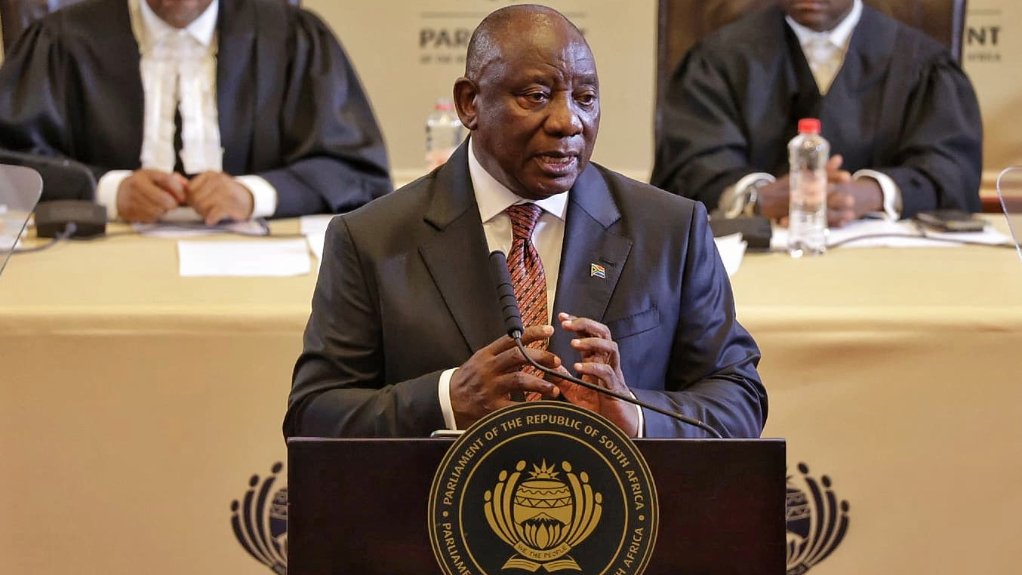
“South Africa’s Speaker of Parliament has declared that there is “no conflict” in the decision to allow an impeachment motion against President Cyril Ramaphosa to move forward. The ruling sets the stage for a contentious parliamentary process that could reshape the country’s political and policy environment.”
The South African political landscape entered a new phase of uncertainty today as the Speaker of Parliament announced that there is “no conflict” in the decision to permit an impeachment bid against President Cyril Ramaphosa. This ruling, delivered on June 22, 2026, comes amid mounting pressure on the presidency and intensifies debates about accountability, governance, and the future of policy-making in the country.
The impeachment motion, initiated by opposition parties, centers on allegations of misconduct and failures in governance. Critics argue that Ramaphosa’s administration has struggled to deliver on promises of economic reform, anti-corruption measures, and energy stability. Supporters, however, contend that the impeachment effort is politically motivated and risks destabilizing South Africa at a time when the nation faces pressing challenges, including unemployment, energy shortages, and social unrest.
The Speaker’s ruling is significant because it clears procedural hurdles that could have stalled the impeachment process. By declaring that there is “no conflict” in Parliament’s decision, the Speaker has effectively legitimized the motion and ensured that it will be debated in the National Assembly. This decision underscores the importance of parliamentary independence and highlights the role of institutional checks and balances in South Africa’s democratic system.
Policy implications of the impeachment bid are profound. If Ramaphosa were to be removed from office, South Africa could face a leadership vacuum that would delay or derail key policy initiatives. These include ongoing reforms in the energy sector, efforts to stabilize Eskom, and measures to address inequality and unemployment. Investors and international observers are closely monitoring the situation, as political instability could affect South Africa’s economic outlook and its role in regional affairs.
The ruling also raises questions about the future of governance in South Africa. Opposition parties see the impeachment process as an opportunity to hold the executive accountable, while the ruling African National Congress (ANC) faces internal divisions over how to respond. Some ANC members have expressed concern that pursuing impeachment could weaken the party’s standing ahead of the 2026 elections, while others argue that transparency and accountability are essential to restoring public trust.
Public reaction has been mixed. Civil society organizations have welcomed the Speaker’s ruling as a step toward strengthening democratic institutions, while ordinary citizens express frustration over the political turmoil. Many South Africans are more concerned with immediate issues such as rising living costs, unemployment, and service delivery failures. For them, the impeachment debate risks becoming a distraction from urgent policy priorities.
Internationally, the ruling has drawn attention from regional partners and global stakeholders. South Africa is a key player in the African Union and BRICS, and political instability could have ripple effects across the continent. Analysts warn that prolonged uncertainty could undermine South Africa’s ability to lead on issues such as trade, climate policy, and regional security.
In conclusion, the Speaker’s declaration that there is “no conflict” in Parliament’s decision to allow an impeachment bid against President Ramaphosa marks a turning point in South Africa’s political trajectory. The ruling reinforces the principle of parliamentary independence but also opens the door to heightened political contestation. As the impeachment process unfolds, South Africa faces critical questions about governance, accountability, and the resilience of its democratic institutions. The outcome will not only shape the country’s immediate political future but also determine the trajectory of policy-making in the years ahead.



