




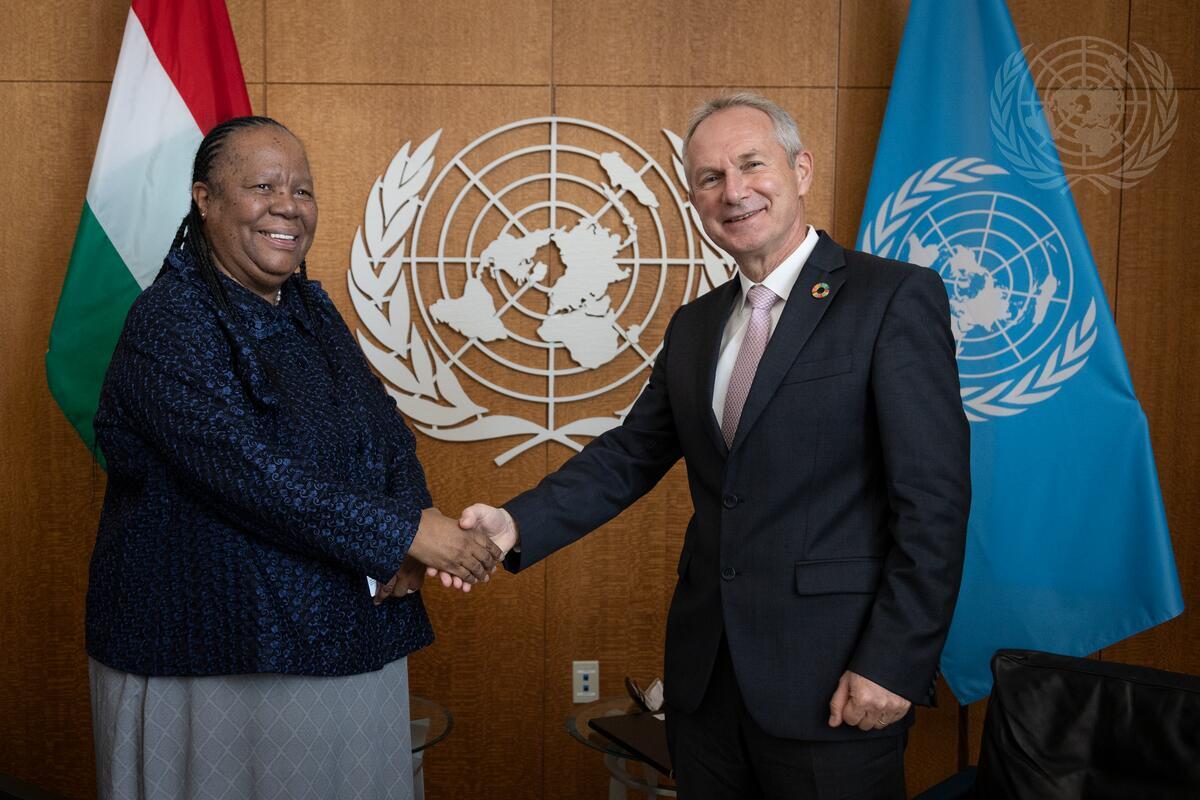
“South Africa is hosting the 17th Meeting of the South Africa–European Union Joint Cooperation Council (JCC) today in Pretoria, co-chaired by DIRCO Director-General Zane Dangor and EEAS Managing Director Patricia Llombart Cussac. The meeting focuses on strengthening cooperation in peace, security, trade, multilateralism, and the just energy transition.”
The 17th South Africa–European Union Joint Cooperation Council (JCC) convenes today, 22 June 2026, at the OR Tambo Building in Pretoria, marking a significant milestone in the long-standing strategic partnership between South Africa and the European Union. Co-chaired by Zane Dangor, Director-General of South Africa’s Department of International Relations and Cooperation (DIRCO), and Patricia Llombart Cussac, Managing Director for Africa at the European External Action Service (EEAS), the meeting brings together senior officials, diplomats, and policy experts to deliberate on pressing global and bilateral issues.
Strategic Priorities
The JCC is designed to deepen dialogue and cooperation across several critical areas:
- Peace and Security: Addressing instability in Africa, particularly in the Sahel and Horn of Africa, while reinforcing South Africa’s role as a mediator in regional conflicts.
- Multilateralism: Strengthening collaboration within the United Nations and other global institutions to defend rules-based international order.
- Trade and Investment: Enhancing economic ties, with emphasis on sustainable growth and equitable market access.
- Just Energy Transition: Supporting South Africa’s shift from coal dependency to renewable energy, with EU technical and financial backing.
Geopolitical Context
This meeting comes at a time of heightened geopolitical tensions, including the ongoing war in Ukraine, shifting alliances in the Middle East, and debates over global energy security. For South Africa, balancing its BRICS membership with its EU partnership is a delicate diplomatic act. The JCC provides a platform to reaffirm South Africa’s commitment to constructive engagement with Western partners, while maintaining its independent foreign policy stance.
Economic and Energy Cooperation
The EU remains one of South Africa’s largest trading partners, with bilateral trade exceeding €40 billion annually. The JCC discussions are expected to highlight opportunities in green hydrogen, solar, and wind energy projects, aligning with South Africa’s Nationally Determined Contributions (NDCs) under the Paris Agreement. The EU’s Global Gateway initiative is likely to feature prominently, offering infrastructure investment that complements South Africa’s development agenda.
Peace and Security Engagement
South Africa’s leadership in peacekeeping missions, particularly under the African Union framework, will be a focal point. The EU has expressed interest in expanding cooperation on conflict prevention, counter-terrorism, and maritime security, especially in the Indian Ocean region. This aligns with South Africa’s broader ambition to position itself as a continental anchor for stability.
Broader Implications
The outcomes of today’s meeting will reverberate beyond Pretoria. For the EU, strengthening ties with South Africa is part of a broader strategy to consolidate partnerships in Africa amid growing competition from China and Russia. For South Africa, the JCC offers a chance to leverage EU support for domestic priorities, including job creation, industrialization, and climate resilience.
Conclusion
The 17th SA–EU JCC is more than a diplomatic formality; it is a strategic dialogue shaping the future of Africa–Europe relations. By addressing peace, trade, and energy transition, the meeting underscores South Africa’s role as a bridge between Africa and Europe in an increasingly fragmented global order. The deliberations today will set the tone for deeper cooperation, reinforcing Pretoria’s position as a key player in international diplomacy.



