




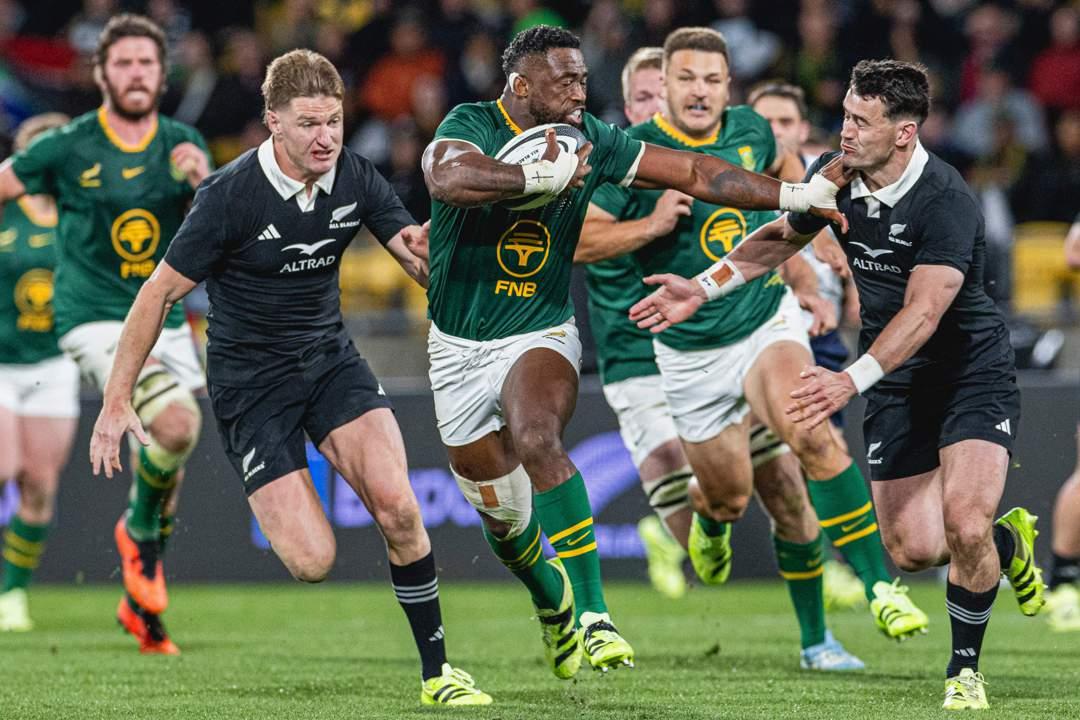
“South African rugby franchises enjoyed three victories in the latest URC round, with the Sharks beating Cardiff 36–21, the Stormers defeating Scarlets 52–40 and the Bulls overcoming Ulster 34–26. However, injuries to several players, including Springbok centre André Esterhuizen, have raised concerns about squad depth and preparations for the national team’s upcoming end-of-year tour.”
Springbok injury crisis casts a shadow over South Africa’s URC victories
South African rugby enjoyed a productive but physically demanding weekend in the United Rugby Championship, as the Sharks, Stormers and Bulls claimed important victories while the Lions suffered defeat in Scotland. However, the results were accompanied by a growing list of injuries that could complicate preparations for the Springboks’ end-of-year international campaign. The combination of encouraging franchise performances and worrying player setbacks has become one of the major talking points in South African rugby on Monday, 26 October 2026.
The weekend demonstrated the competitiveness of South Africa’s leading provincial sides, but it also highlighted the physical demands of professional rugby. With international commitments approaching, coaches must balance the immediate need for league points with the longer-term responsibility of protecting players and maintaining squad depth.
Three victories provide encouragement for South African rugby
The Sharks produced one of the weekend’s strongest performances, defeating Cardiff 36–21 in Wales. The Durban-based franchise secured a bonus-point victory despite losing several players to injury during the contest.
The result was particularly encouraging because the Sharks had to adapt under difficult circumstances. They led 17–7 at half-time, but Cardiff responded strongly after the break and moved ahead 21–17. Rather than allowing the setback to determine the outcome, the Sharks recovered their attacking momentum and scored three tries during the final quarter to complete the win.
The victory reflected the importance of composure, tactical flexibility and effective use of replacements. Touring matches can be challenging because visiting teams must manage unfamiliar surroundings, opposition pressure and travel demands. Nevertheless, the Sharks found a way to respond when Cardiff threatened to take control.
Their performance also showed that a team’s depth is not measured only by the names on its starting team sheet. It is demonstrated by how effectively the remaining players respond when injuries force changes to the original plan.
However, the physical cost of the victory was substantial, and the medical condition of several players will be important in determining the team’s options for its next fixtures.
Stormers survive a remarkable contest against Scarlets
In Cape Town, the Stormers defeated Scarlets 52–40 in a high-scoring encounter that tested both their attacking quality and their defensive organisation.
The hosts initially appeared to be moving towards a comfortable victory. They established a 33–14 half-time advantage, using their attacking opportunities to build a substantial lead. Scarlets, however, returned with renewed determination and exploited defensive weaknesses to bring the match level at 40–40.
The late stages became decisive. Replacement flyhalf Yaqeen Ahmed scored twice during the final ten minutes, helping the Stormers regain control and secure the victory. His contribution was particularly important because the home side needed fresh attacking energy at a time when the opposition had recovered much of its lost ground.
Although scoring 52 points represented an impressive attacking achievement, conceding 40 points will give the Stormers coaching staff plenty to review. Successful teams need more than the ability to score tries; they must also manage territory, defend under pressure and prevent opponents from building momentum.
The match also raised serious concerns about the team’s forward resources. The Stormers experienced significant disruption among their hookers, affecting their ability to maintain their usual lineout and scrum arrangements. The injury problems forced them to consider unusual positional solutions, illustrating how quickly a match plan can change when specialist players become unavailable.
For the Stormers, the challenge now is to preserve the confidence generated by the win while addressing the defensive and personnel issues exposed during the contest.
Bulls overcome Ulster after losing control of their early advantage
The Bulls also recorded a victory, beating Ulster 34–26 at Loftus Versfeld in Pretoria.
Their opening performance suggested they might dominate the match. The Pretoria side established a 21–0 lead shortly after the half-hour mark, placing Ulster under considerable pressure. However, the visitors responded before half-time, reducing the deficit and making the contest more competitive.
Ulster continued to challenge after the interval, and the Bulls eventually found themselves protecting a narrow advantage during the closing stages. Both sides added further points, but the Pretoria team held on to secure the result. A late penalty from Curwin Bosch also affected the final scoreline and prevented Ulster from claiming a bonus point.
While the win was valuable, the Bulls will recognise that their performance was not without weaknesses. Allowing a substantial early lead to diminish so dramatically demonstrated the importance of maintaining concentration throughout an entire match.
Injuries further complicated their afternoon. The Bulls had to adjust their backline after Cheswill Jooste and Sango Xamlashe left the field following head knocks. Flyhalf Handré Pollard also sustained a hamstring injury, adding to the concerns surrounding South African international players.
For coach Johan Ackermann, the result offered encouragement, but it also presented selection and tactical questions. The ability to reorganise effectively after substitutions is a valuable strength; nevertheless, repeated disruptions can affect communication, defensive positioning and the consistency of attacking combinations.
The Bulls will need to assess their injured players carefully before deciding how to approach their next URC fixture.
Lions suffer defeat in Scotland
The Lions were the only South African franchise among the four to lose during the round. They went down 31–10 to Edinburgh in Scotland.
The conditions were difficult, with wet weather influencing the early stages. The teams were separated by only two points at half-time, with Edinburgh leading 5–3. However, the Scottish side improved significantly after the interval, scoring four additional tries and establishing a decisive advantage.
For the Lions, the second-half performance will require careful examination. Remaining competitive before the interval was encouraging, but the inability to contain Edinburgh after the break ultimately proved costly.
Playing away from home in the URC can present considerable challenges. Teams must adapt to travel, unfamiliar conditions and opponents who understand how to use their home advantage. Even so, the Lions will be disappointed that they could not sustain their defensive resistance for the full 80 minutes.
The defeat also underlines the competitive nature of the championship. South African teams can produce strong results against European opposition, but success requires consistency rather than isolated periods of good play.
The Lions will now need to regroup and identify improvements before their next assignment, which is scheduled to take them to Glasgow.
Injury concerns become the central talking point
Beyond the match results, injuries have emerged as the most concerning development for South African rugby.
Sharks captain and Springbok centre André Esterhuizen suffered an ankle injury during the match against Cardiff. The incident added to existing concerns surrounding the national squad as head coach Rassie Erasmus considers his options for the end-of-year Tests.
Other Sharks players also experienced injury setbacks, including prop Phatu Ganye, centre Jurenzo Julius and lock Jason Jenkins. The number of changes required during the Cardiff match demonstrated how quickly a team can lose several important options in a single afternoon.
The Stormers also faced significant difficulties. Deon Fourie sustained a hamstring injury, while André-Hugo Venter experienced an elbow injury. The team additionally lost key hooker options during the encounter, complicating its forward arrangements.
Fourie’s situation is especially relevant because he had been expected to be part of the Springboks’ plans for the November international period. His availability will therefore be important for both provincial and national selection decisions.
Meanwhile, Pollard’s hamstring problem has created another question for the Springboks’ coaching staff. The flyhalf is an experienced international who brings tactical kicking, goal-kicking and game-management qualities to the team. Any absence would require the selectors to consider alternative combinations.
The wider injury picture already included concerns involving players such as Eben Etzebeth and Frans Malherbe, while Cheslin Kolbe had been ruled out of the end-of-year tour as he continued recovering from a broken jaw. Kwagga Smith and RG Snyman were also among the players reported as sidelined.
It is important to distinguish between confirmed absences and injuries whose severity or recovery timelines remain uncertain. Medical assessments will determine which players can return, and no selection decision should be assumed until the relevant teams provide updates.
What the injuries mean for the Springboks
The Springboks face a difficult balancing act as they prepare for their upcoming international fixtures. Their coaching team must identify the strongest available squad while ensuring that players are sufficiently recovered to perform safely and effectively.
A crowded injury list can create opportunities for emerging players, but it can also disrupt combinations developed through training and competition. Rugby at international level demands precise coordination between forwards and backs, particularly at the scrum, lineout, breakdown and defensive set-up.
The potential loss of experienced players in several positions could require adjustments to the team’s tactical approach. If established forwards are unavailable, the selectors may need to reconsider their options for set-piece stability and physical impact. If important backs cannot play, alternative combinations may be required to preserve attacking creativity and defensive communication.
Nevertheless, South Africa possesses a substantial professional rugby structure, with provincial franchises providing opportunities for players to demonstrate their readiness for higher honours. Strong performances in the URC could therefore help the coaching staff identify suitable replacements.
The challenge is to make those decisions based on current fitness, form, positional requirements and the specific demands of the opposition rather than reputation alone.
Kwagga Smith’s return adds another dimension
Another significant development for South African rugby is the reported return of Springbok loose forward Kwagga Smith to domestic rugby through a three-year agreement with the Bulls.
Smith has spent the previous eight seasons playing in Japan and has built an international reputation through his work in both sevens and the 15-a-side game. His experience includes two Rugby World Cup titles with the Springboks, Commonwealth Games gold and an Olympic bronze medal.
His return could strengthen the Bulls’ forward resources and provide valuable experience for the franchise. Smith’s pace, work rate and ability to contribute in different phases of play have been important features of his career.
However, his signing should be viewed separately from the immediate injury situation. A contract announcement does not automatically mean a player is available for the next match, and his precise integration into the Bulls’ plans will depend on the relevant arrangements and fitness considerations.
Over the longer term, bringing experienced South African players back into the domestic system could benefit provincial rugby by increasing competition for places and providing leadership to younger teammates.
The next URC round will test squad depth again
Attention now turns to the next scheduled round of URC matches before the November international break. The Lions are due to travel to Glasgow, the Stormers are set to host Ulster, the Bulls will welcome Scarlets, and the Sharks are scheduled to visit Munster.
These fixtures will test the depth and adaptability of all four franchises. The Sharks must manage the consequences of their injury-hit victory, while the Stormers will need to maintain their attacking effectiveness and improve their defensive consistency. The Bulls must protect their early-match strengths without allowing opponents back into the contest, and the Lions will seek a stronger second-half response.
Medical updates and team announcements will be essential to understanding how the franchises approach these challenges. In particular, the condition of players who sustained injuries during the weekend will influence selection decisions and may also affect the national team’s planning.
Conclusion: Wins bring hope, but player welfare remains essential
South Africa’s latest URC results offered a mixture of achievement and concern. The Sharks, Stormers and Bulls collected valuable victories, while the Lions experienced a difficult defeat against Edinburgh.
The stronger results demonstrated the attacking potential and resilience of the South African franchises. At the same time, the number of injuries highlighted the physical demands of the competition and the importance of maintaining adequate squad depth.
For the Springboks, the coming days will be particularly important as the coaching team reviews player availability ahead of the end-of-year Tests. The status of André Esterhuizen, Handré Pollard, Deon Fourie and other injured players will need to be clarified through medical assessments and official updates.
Ultimately, the weekend’s biggest lesson is that winning matches and protecting player welfare must go hand in hand. South African rugby has reason to be encouraged by its franchises’ performances, but maintaining that momentum will require careful recovery management, intelligent selection and continued investment in the players capable of stepping up when opportunities arise.



