




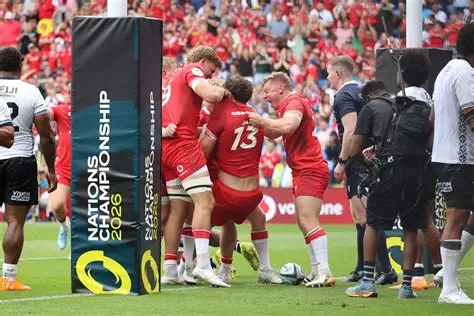
“South Africa’s Springboks defeated Wales at Hollywoodbets Kings Park in Durban, maintaining their perfect record in the inaugural Nations Championship. The match highlighted the balance between seasoned Springbok leaders and four debutants who impressed in their first Test caps.”
The Springboks, South Africa’s national rugby team, once again demonstrated their dominance on the international stage by defeating Wales in Durban on July 18, 2026. This fixture, part of the inaugural Nations Championship, was highly anticipated as it pitted the reigning world champions against a Welsh side in transition. The result not only reinforced South Africa’s supremacy but also provided valuable insights into the team’s depth and future prospects.
Match Context
Heading into the third round of the Nations Championship, South Africa had already secured victories against England and Scotland. Wales, meanwhile, had shown flashes of promise with wins over Fiji and Italy but faltered against Argentina. The Durban clash was seen as a litmus test for Wales’ rebuilding efforts under coach Steve Tandy, while for South Africa, it was an opportunity to consolidate their lead in the tournament.
Team Selection and Debutants
Springbok coach Rassie Erasmus made headlines by including four debutants in the starting XV: prop Carlü Sadie, lock Ruben van Heerden, flyhalf Vusi Moyo, and wing Jaco Williams. Their inclusion reflected Erasmus’ commitment to squad rotation and development. These players were supported by stalwarts such as Malcolm Marx, Pieter-Steph du Toit, and Damian de Allende, ensuring a blend of youth and experience.
First Half Analysis
The opening exchanges were fiercely contested, with Wales attempting to impose physicality through their maul-heavy approach. However, South Africa’s pack, led by Jasper Wiese and Pieter-Steph du Toit, absorbed the pressure and countered with powerful scrummaging. Flyhalf Vusi Moyo impressed early, displaying composure in his kicking game and orchestrating attacking phases. Kurt-Lee Arendse’s pace on the wing stretched Wales’ defense, leading to the first try of the match.
Second Half Momentum
In the second half, South Africa’s dominance became more pronounced. The Springboks capitalized on turnovers, with Cobus Reinach’s quick distribution enabling Jesse Kriel and Damian de Allende to exploit gaps in midfield. Wales, despite spirited resistance from captain Dewi Lake and wing Louis Rees-Zammit, struggled to maintain defensive cohesion. A late surge from South Africa, capped by a try from debutant Jaco Williams, sealed the victory.
Tactical Breakdown
South Africa’s tactical superiority was evident in several areas:
- Set Pieces: The Springboks won the majority of scrums and lineouts, neutralizing Wales’ maul strategy.
- Kicking Game: Vusi Moyo’s tactical kicking kept Wales pinned in their half, while Damian Willemse’s versatility off the bench added depth.
- Defensive Organization: Pieter-Steph du Toit marshaled the defense effectively, ensuring Wales’ attacking phases rarely breached the gain line.
Player Performances
- Malcolm Marx: Dominated the breakdown, securing turnovers and providing leadership.
- Vusi Moyo: A standout debut, showcasing maturity beyond his years.
- Kurt-Lee Arendse: His speed and agility created constant problems for Wales.
- Dewi Lake (Wales): Led by example, but his side was outmatched physically.
Implications for the Nations Championship
This victory places South Africa firmly at the top of the Nations Championship standings, with three wins from three matches. Their consistency at home, where they have won 14 of their last 15 fixtures, underscores their formidable status. For Wales, the defeat highlights the challenges of rebuilding against elite opposition, though their resilience offers hope for future fixtures.
Broader Significance
Beyond the immediate result, the match carries broader significance for South African rugby. The successful integration of debutants signals a promising future, ensuring squad depth ahead of upcoming tournaments. Moreover, the Springboks’ ability to “learn while winning,” as Erasmus described, reflects a strategic approach that balances short-term success with long-term development.
Conclusion
South Africa’s triumph over Wales in Durban is more than just another victory; it is a statement of intent. The Springboks remain the benchmark in world rugby, blending tradition with innovation, experience with youth. As the Nations Championship progresses, their dominance appears unshakable, while Wales must regroup and refine their strategies to remain competitive.



