




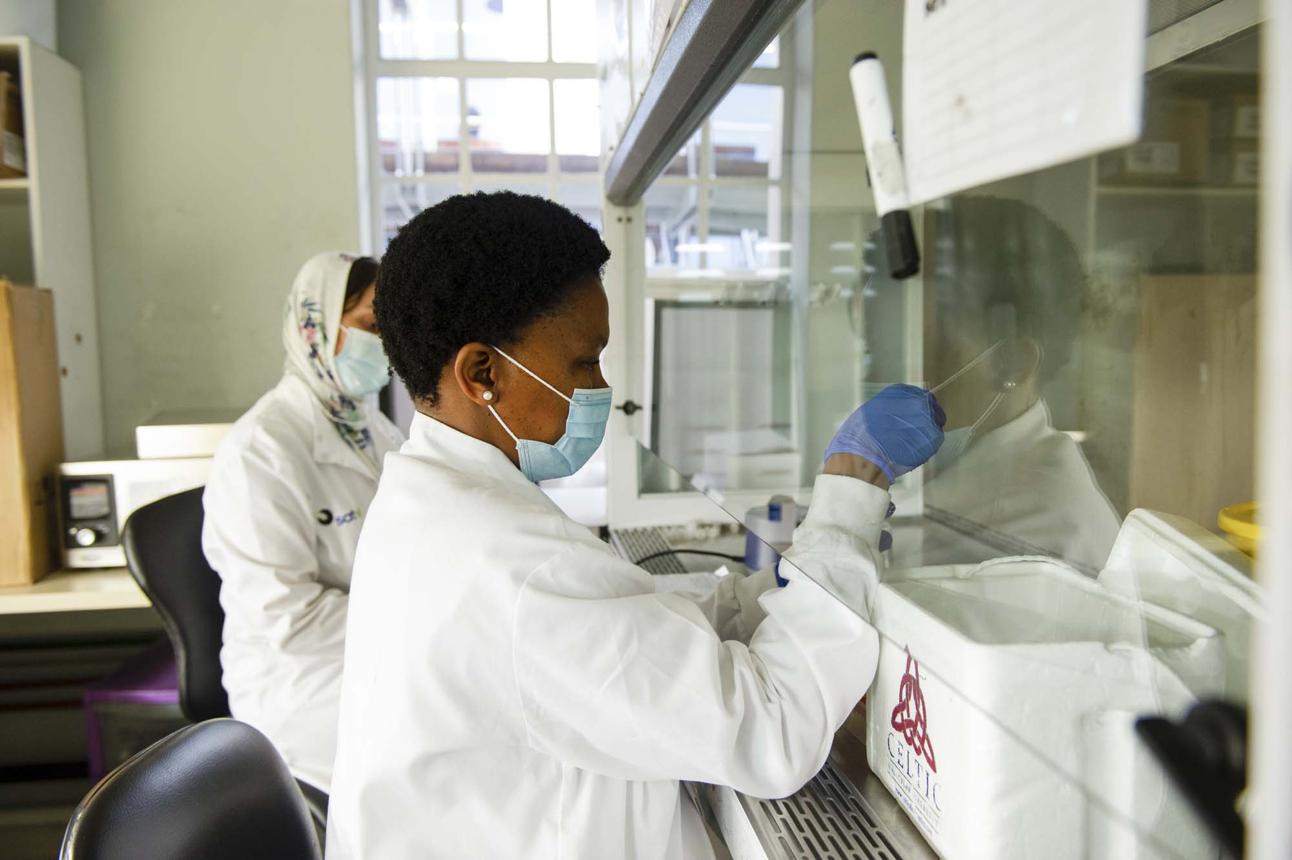
“The University of Cape Town is leading a four-year, approximately R95 million African research programme that will give scientists access to advanced microscopy and machine-learning tools to investigate tuberculosis, malaria, Buruli ulcer and other infectious diseases. The initiative is designed to strengthen African-led research by enabling scientists to study pathogens closer to affected communities, including examining how tuberculosis survives treatment and develops drug resistance.”
A major new infectious-disease research initiative led by the University of Cape Town (UCT) is placing advanced scientific imaging technology in the hands of researchers across Africa, in a move aimed at improving understanding of some of the continent’s most serious diseases.
The four-year openScopes Advancing Infectious Disease Discovery Research in Africa (AIDDiA) programme is valued at approximately R95 million and is funded by the Wellcome Trust. It brings together researchers from South Africa, Kenya, Uganda, Côte d’Ivoire and the United Kingdom to develop and deploy locally adaptable microscopy technology for infectious-disease research.
The programme is particularly significant for South Africa because tuberculosis remains a major infectious-disease challenge. According to figures reported in connection with the programme, South Africa records an estimated 249,000 new tuberculosis cases and approximately 54,000 deaths each year. The new research initiative therefore places TB among its first major scientific priorities.
Why advanced imaging matters
Traditional disease surveillance and laboratory testing can establish whether a person is infected, but researchers also need to understand what happens inside infected cells and tissues. Questions about how pathogens survive, adapt to their surroundings and respond to medicines can require detailed imaging at microscopic levels.
The AIDDiA programme seeks to address that gap by combining advanced microscopy with machine learning, specialised training and locally led research. Scientists will be able to investigate pathogens at a level that could provide additional information about infection biology, persistence and drug resistance.
For tuberculosis research, this could be particularly important. TB bacteria can survive within the human body and, in some cases, become resistant to medicines. Researchers participating in the programme intend to examine drug-resistant TB directly in patient samples and investigate how individual bacteria respond to treatment and immune pressures.
The approach differs from a model in which African scientists collect samples and send them to laboratories elsewhere for advanced analysis. Instead, AIDDiA aims to bring sophisticated imaging capabilities closer to the researchers and communities where infectious diseases are most prevalent.
A five-country research partnership
The consortium includes UCT, the Kenya Medical Research Institute, Mbarara University of Science and Technology in Uganda, the Centre Suisse de Recherches Scientifiques in Côte d’Ivoire and Imperial College London.
UCT researchers are leading the overall programme, with Dr Caron Jacobs and Professor Digby Warner among the project leaders. The partnership is structured so that participating institutions can concentrate on diseases of particular importance to their settings while sharing technology, expertise, methods and data across the wider network.
The programme’s disease focus extends beyond tuberculosis. Researchers will also investigate malaria, Buruli ulcer and other neglected or emerging infections. According to UCT, the infectious diseases targeted by the programme collectively account for more than 292 million cases and 1.7 million deaths globally, with more than 90% of cases occurring in Africa.
That concentration of disease burden makes local scientific capacity especially important. Researchers based close to affected communities can observe local disease patterns, work with clinical teams and investigate questions that are directly relevant to their populations.
Building microscopes designed for African conditions
One of the distinctive aspects of AIDDiA is that it is not simply purchasing conventional laboratory equipment. The programme will develop and deploy open-source microscopy platforms that can be maintained, repaired and adapted locally.
Mobile travellerScopes will be used to extend advanced imaging capabilities between research locations. More sophisticated microbeScopes will be installed at four African partner sites and customised according to local research priorities.
This design addresses a practical challenge in biomedical research. Highly specialised commercial instruments can be expensive to purchase and maintain, while technical support may be located thousands of kilometres from the laboratories using the equipment.
By contrast, open-source and modular systems can potentially be repaired or upgraded by trained local teams. This could reduce dependence on overseas suppliers and help researchers retain technical expertise within African institutions.
TB research is a central early test
Tuberculosis will be one of the programme’s first major applications. South Africa continues to carry a substantial TB burden, making the disease an important priority for research institutions and public-health authorities.
Researchers will use the new imaging capabilities to study mycobacteria at the single-cell level and within host tissues. The objective is to better understand how TB bacteria respond to medicines and the human immune system.
Such information could contribute to future research into treatment resistance. Drug-resistant TB presents a particular challenge because medicines that work against susceptible bacteria may be less effective against resistant strains, potentially requiring different and more complex treatment strategies.
The project is therefore focused not only on detecting disease but also on understanding the biological processes that allow pathogens to persist.
Combining microscopy with artificial intelligence
Another important element is the use of machine learning to analyse the large quantities of information produced by advanced imaging.
A microscope can produce detailed images, but researchers must still interpret those images and identify meaningful patterns. AIDDiA plans to develop data-management pipelines and machine-learning tools alongside its imaging systems.
This could allow researchers to analyse pathogen behaviour more efficiently and identify patterns associated with treatment response or resistance.
The project also recognises that technology must be adapted to local conditions. Reliable electricity, cold storage and the availability of specialised biological reagents cannot always be assumed in every research setting. The programme therefore plans to explore imaging techniques that can function under challenging conditions, including approaches that rely on pathogens’ natural optical characteristics.
Strengthening African scientific capacity
The initiative is also about people, not only equipment.
Researchers and technical teams will receive specialised training, while materials will be developed for both English- and French-speaking research communities. The programme aims to establish a network of scientists capable of operating, maintaining and further developing the technology.
This emphasis could help create scientific capacity that remains after the four-year grant period ends. Because the microscopes are intended to be modular and open source, participating institutions are expected to have greater opportunities to repair and modify their systems locally.
UCT describes the broader objective as developing a sustainable African imaging community capable of conducting internationally competitive infectious-disease research.
Wider significance for South Africa
For South Africa, the programme arrives alongside other developments aimed at improving the management of infectious diseases.
Researchers at Wits University, the National Health Laboratory Service and University Medical Center Utrecht recently reported progress in using targeted testing to identify HIV drug resistance. Their ITREMA-2 study involved 288 people receiving HIV care in Johannesburg and found that the approach could help distinguish potential treatment resistance from problems with medication exposure. The adapted strategy has subsequently been incorporated into South African public HIV-care guidelines.
Together, these developments illustrate the increasing importance of combining laboratory science, technology and routine healthcare.
The UCT-led initiative, however, is focused primarily on discovery research. Its immediate goal is to give scientists better tools to understand infectious diseases. Any resulting treatments, diagnostic approaches or public-health applications would require additional research, validation and implementation.
Looking ahead
The AIDDiA programme represents a significant investment in African infectious-disease research, with TB providing an important early test of its approach. By placing advanced imaging equipment, machine-learning capabilities and scientific expertise closer to affected communities, the project aims to give African researchers greater control over the investigation of diseases that disproportionately affect the continent.
For South Africa, the work is particularly relevant because TB remains a major public-health challenge. At the same time, the programme’s focus on malaria, Buruli ulcer and emerging infections reflects the broader need for strong disease-surveillance and research capacity across Africa.
The initiative does not provide an immediate solution to infectious diseases. Instead, its significance lies in building the scientific infrastructure and expertise needed to understand pathogens more precisely. Over the four-year programme, researchers will test whether locally maintained microscopy, advanced imaging and machine learning can produce new insights into how infectious diseases develop, persist and resist treatment.
If successful, the model could provide a framework for expanding African-led biomedical research while ensuring that scientists closest to affected populations have access to the tools needed to investigate the diseases around them.



