




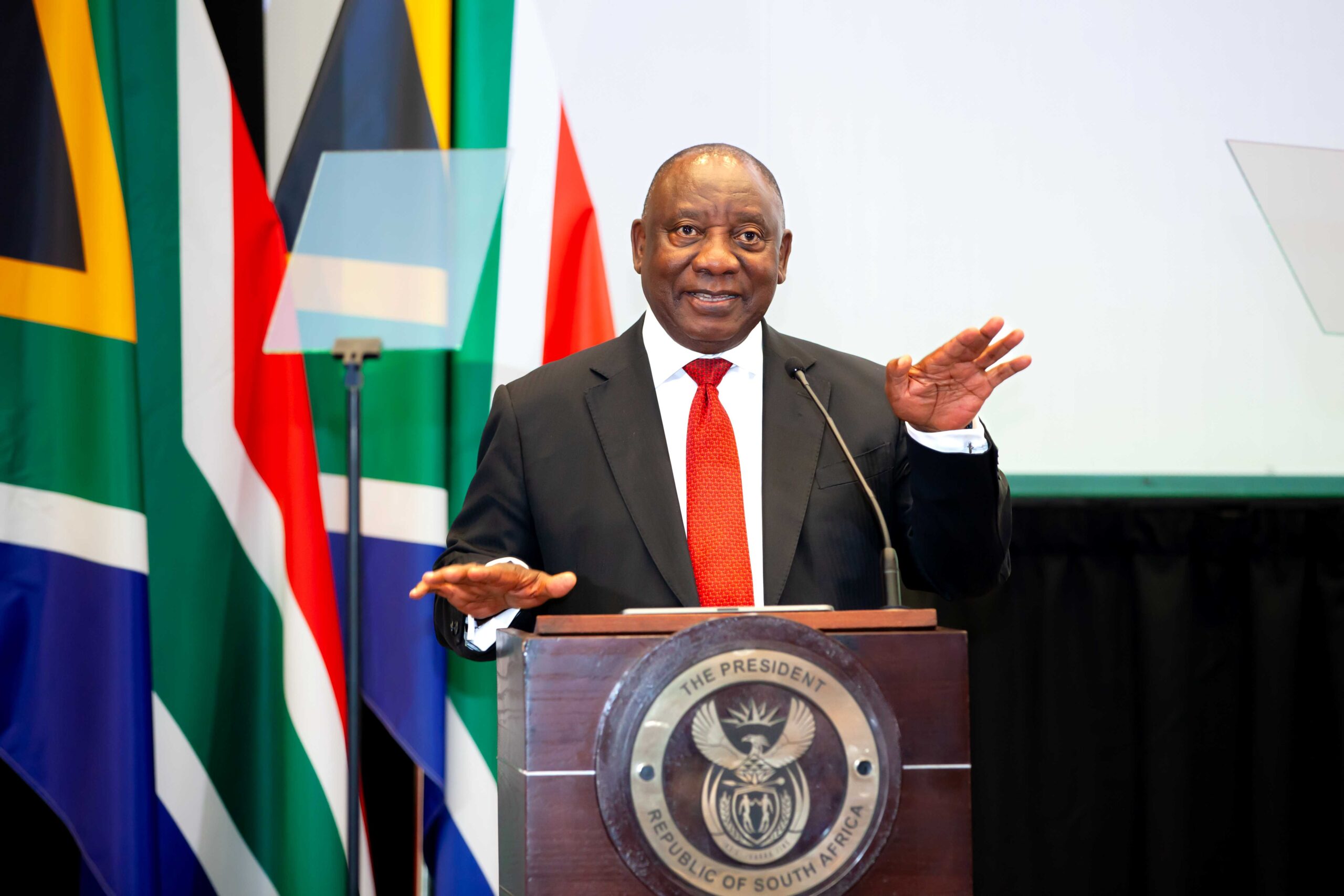
“President Cyril Ramaphosa, in his reply to Parliament’s debate on the Presidency’s 2026/27 Budget Vote, stressed the urgency of inclusive economic growth and job creation. He underscored the Presidency’s role in rebuilding institutional capacity to provide strategic direction and ensure accountability in governance.”
South Africa’s governance landscape took center stage this week as President Cyril Ramaphosa delivered his reply to the debate on the Presidency’s 2026/27 Budget Vote in the National Assembly. His remarks, delivered with a tone of urgency and determination, outlined the Presidency’s commitment to inclusive economic growth, job creation, and rebuilding institutional capacity to meet the country’s pressing challenges. This intervention comes at a time when South Africa faces mounting socio-economic pressures, political contestation, and the need for stronger governance frameworks.
Ramaphosa began by acknowledging the substantive nature of the parliamentary debate, noting that while political differences remain, there is broad consensus on the challenges confronting the nation. He emphasized that South Africans expect more than diagnosis of problems—they demand solutions, accountability, and tangible results. “Our task is not simply to grow the economy,” he asserted, “but to ensure that growth is inclusive, sustainable, and capable of transforming the lives of ordinary South Africans.”
The President’s reply highlighted several key governance priorities. First, he stressed the importance of building a Presidency capable of driving transformation across society. This involves strengthening institutional capacity, ensuring strategic coordination across government, and resisting distractions from political theater or narrow agendas. Ramaphosa’s insistence on focus and discipline reflects a broader governance philosophy: leadership must remain anchored in the needs and interests of citizens rather than partisan maneuvering.
Second, Ramaphosa placed economic growth and job creation at the heart of governance. He linked governance effectiveness directly to whether young people can find work, whether small businesses can expand, and whether investors have confidence to build enterprises in South Africa. This framing underscores the Presidency’s recognition that governance is not abstract—it is measured by its impact on livelihoods and opportunities.
Third, the President emphasized inclusivity as a guiding principle. He acknowledged that economic growth must not only be robust but also equitable, ensuring that marginalized communities benefit from transformation. This aligns with South Africa’s constitutional commitment to social justice and the government’s broader agenda of reducing inequality. Ramaphosa’s remarks suggest that governance reforms will be evaluated not only by efficiency but also by fairness and inclusivity.
The reply also carried a strong message about accountability. Ramaphosa reminded Parliament that effective oversight requires engagement with both grand visions and granular details. This dual focus—strategic direction coupled with operational precision—reflects a governance model that seeks to balance ambition with practicality. It also signals the Presidency’s willingness to be held accountable for both policy outcomes and implementation processes.
Critically, Ramaphosa’s speech comes amid heightened political contestation. Opposition parties have accused the government of slow progress on economic reforms and inadequate responses to unemployment. By reaffirming the Presidency’s priorities, Ramaphosa sought to project confidence and unity of purpose, positioning governance as a collective responsibility shared across government and society. His remarks also aimed to reassure investors and citizens that the Presidency is resolutely focused on transformation, not distracted by political noise.
The governance implications of this reply are significant. It signals a Presidency intent on rebuilding institutional credibility, strengthening accountability mechanisms, and aligning governance with socio-economic imperatives. It also reflects a broader trend in South African governance: the recognition that political legitimacy depends on delivering tangible improvements in people’s lives.
Looking ahead, the success of these governance priorities will depend on effective coordination across ministries, sustained political will, and the ability to navigate complex socio-economic challenges. Ramaphosa’s emphasis on inclusivity and accountability sets a high bar for governance performance. Whether the Presidency can meet this bar will shape South Africa’s trajectory in the coming years.
In conclusion, President Ramaphosa’s reply to the 2026/27 Budget Vote debate represents a defining moment in South Africa’s governance discourse. By centering inclusive growth, institutional rebuilding, and accountability, the Presidency has articulated a vision of governance that seeks to transform both the economy and society. For citizens, businesses, and political actors alike, the message is clear: governance must deliver results, and the Presidency is committed to leading that charge.



