




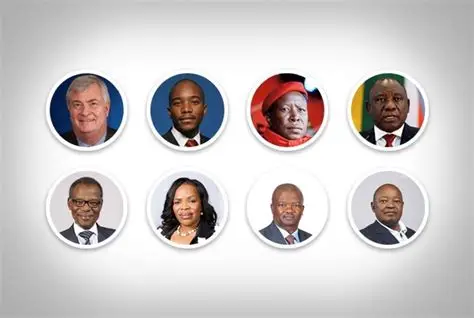
“South Africa’s political landscape is intensifying as parties prepare for the November 2026 local government elections, with the ANC facing mounting pressure after losing its national majority in 2024. The 2026 Voter’s Guide underscores the importance of coalition-building, as no single party is expected to dominate municipal councils.”
South Africa’s political parties are entering a decisive phase ahead of the November 4, 2026 local government elections, a contest that will determine control over municipalities, metros, and councils across the country. The release of the 2026 Voter’s Guide has provided citizens with a comprehensive overview of the major players, their leaders, and their policy positions, setting the stage for one of the most competitive local elections in the nation’s democratic history.
The ANC’s Declining Dominance
The African National Congress (ANC), once the unchallenged majority party, saw its national vote share fall to just over 40% in 2024, forcing it into a Government of National Unity (GNU) with ten other parties. This coalition arrangement stabilized national governance but underscored the ANC’s vulnerability. At the municipal level, the ANC faces even greater challenges, as local councils are determined by ward votes and proportional representation, making coalition-building essential.
The Rise of Opposition Parties
- Democratic Alliance (DA): With 21.8% of the national vote in 2024, the DA remains the strongest opposition party. Its focus on governance efficiency and service delivery resonates in urban metros.
- uMkhonto weSizwe (MK): Emerging as a powerful force with 14.6%, MK has disrupted traditional voting patterns, particularly in KwaZulu-Natal.
- Economic Freedom Fighters (EFF): Holding 9.5%, the EFF continues to push radical economic reforms, appealing to younger and marginalized voters.
- Inkatha Freedom Party (IFP) and Patriotic Alliance (PA): Smaller but regionally influential, these parties are poised to play kingmaker roles in coalition negotiations.
Coalition Politics: The New Normal
The 2026 elections are expected to cement coalition politics as the defining feature of South African governance. Municipal councils, unlike national assemblies, require only a majority of seats to elect mayors and executives. This means that parties with modest vote shares can wield significant influence if they align strategically. The ANC’s reliance on coalition partners at the national level foreshadows similar dynamics at the municipal level.
Voter Dynamics and Local Issues
Local elections are deeply tied to service delivery—potholes, water supply, electricity, and municipal budgets. Voters are increasingly disillusioned with poor governance and corruption, making accountability a central theme. The ward vote system empowers communities to directly elect councillors, while proportional representation ensures broader party influence. This dual system amplifies the importance of grassroots campaigning.
The IEC’s Role and Electoral Integrity
The Electoral Commission of South Africa (IEC) has emphasized safeguarding electoral integrity, publishing a draft Electoral Code of Conduct on Countering Disinformation in July 2026. This move reflects growing concerns about misinformation campaigns and the role of digital media in shaping voter perceptions. The IEC’s proactive stance aims to ensure free and fair elections, reinforcing public trust in democratic processes.
Strategic Battlegrounds
- Urban Metros: Johannesburg, Cape Town, and Durban are expected to be fiercely contested, with DA and EFF challenging ANC dominance.
- Rural Municipalities: ANC retains strongholds but faces growing competition from MK and IFP.
- Coalition Hotspots: Smaller parties like PA, FF+, and ActionSA may tip the balance in councils where no party secures outright control.
Implications for Governance
The outcome of the 2026 local elections will shape municipal governance for years to come. Effective coalitions could improve service delivery, but unstable alliances risk paralysis. The ANC’s ability to manage coalition politics will determine whether it can maintain influence or cede ground to rising opposition forces.
Conclusion
As South Africans prepare to cast their votes in November, the 2026 Voter’s Guide serves as a crucial roadmap, highlighting the shifting balance of power among political parties. With the ANC weakened, opposition parties emboldened, and coalition politics inevitable, the elections represent a turning point in South Africa’s democratic journey. The stakes are high—not just for parties, but for citizens who depend on local councils to deliver essential services.



