




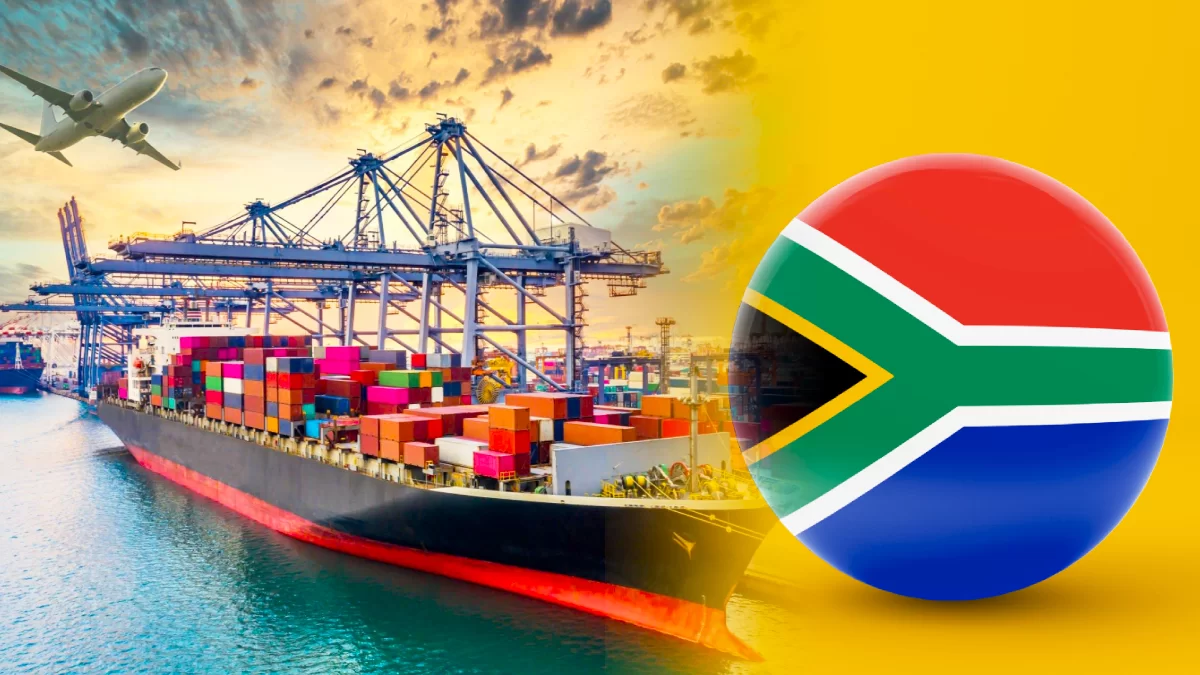
“The Afreximbank President has called for African nations, including South Africa, to accelerate industrialisation and strengthen trade integration to achieve economic sovereignty. This initiative emphasizes reducing dependency on external markets by mobilising domestic resources and expanding intra-African trade networks.”
South Africa’s trade landscape is undergoing a significant transformation as Afreximbank’s President issued a strong call for African economic sovereignty. This announcement, made on July 4, 2026, underscores the urgency of industrialisation, trade expansion, and domestic resource mobilisation as key pillars for sustainable growth. The message resonates deeply in South Africa, a nation grappling with global market volatility, shifting trade alliances, and the pressing need to strengthen its economic resilience.
Context of the Announcement
The Afreximbank President’s remarks come at a time when African economies face mounting challenges:
- Global supply chain disruptions caused by geopolitical tensions.
- Commodity price fluctuations impacting export revenues.
- Dependence on external financing that exposes economies to external shocks.
South Africa, as one of the continent’s largest economies, is particularly vulnerable to these dynamics. The call for sovereignty through trade and industrialisation is therefore both timely and strategic.
South Africa’s Trade Position
According to the latest SARS trade statistics, South Africa recorded exports worth R178.8 billion and imports of R180.6 billion in May 2026, resulting in a trade deficit of R1.79 billion. China, Germany, the United States, Japan, and the United Kingdom remain South Africa’s top trading partners.
This data highlights the country’s reliance on external markets, reinforcing the Afreximbank President’s argument for greater intra-African trade.
Industrialisation as a Driver
Industrialisation is central to the Afreximbank vision. For South Africa, this means:
- Expanding manufacturing capacity to reduce reliance on imported goods.
- Investing in value-added industries such as automotive, steel, and technology.
- Leveraging renewable energy to power industrial growth sustainably.
Industrialisation not only creates jobs but also strengthens South Africa’s bargaining power in global trade negotiations.
Domestic Resource Mobilisation
The Afreximbank President emphasized mobilising domestic resources to finance growth. For South Africa, this entails:
- Enhancing tax collection efficiency to increase government revenue.
- Encouraging local investment in infrastructure and innovation.
- Reducing dependence on foreign loans that often come with restrictive conditions.
This approach aligns with South Africa’s broader fiscal strategy to stabilise its economy while promoting inclusive growth.
Intra-African Trade Opportunities
South Africa stands to benefit immensely from expanding intra-African trade under the African Continental Free Trade Area (AfCFTA). Key opportunities include:
- Exporting manufactured goods to neighbouring countries.
- Strengthening regional supply chains in agriculture and mining.
- Collaborating on infrastructure projects to ease cross-border trade.
By deepening trade ties within Africa, South Africa can diversify its markets and reduce vulnerability to external shocks.
Risks and Challenges
While the vision is compelling, several challenges remain:
- Infrastructure bottlenecks at ports and borders hinder trade efficiency.
- Policy misalignment across African nations slows integration.
- Global competition continues to pressure local industries.
South Africa must address these issues to fully realise the benefits of economic sovereignty.
Strategic Implications
The Afreximbank call is more than rhetoric—it signals a shift in Africa’s trade philosophy. For South Africa, the implications are clear:
- Policy reforms to prioritise industrialisation and local resource mobilisation.
- Investment in trade facilitation to streamline customs and border processes.
- Regional collaboration to strengthen AfCFTA implementation.
Conclusion
The Afreximbank President’s call for African economic sovereignty through industrialisation and trade is a defining moment for South Africa. By embracing this vision, the country can reduce dependency on external markets, strengthen its industrial base, and position itself as a leader in continental trade integration. The path ahead is challenging, but the potential rewards—economic resilience, job creation, and sustainable growth—make it a journey worth pursuing.



