




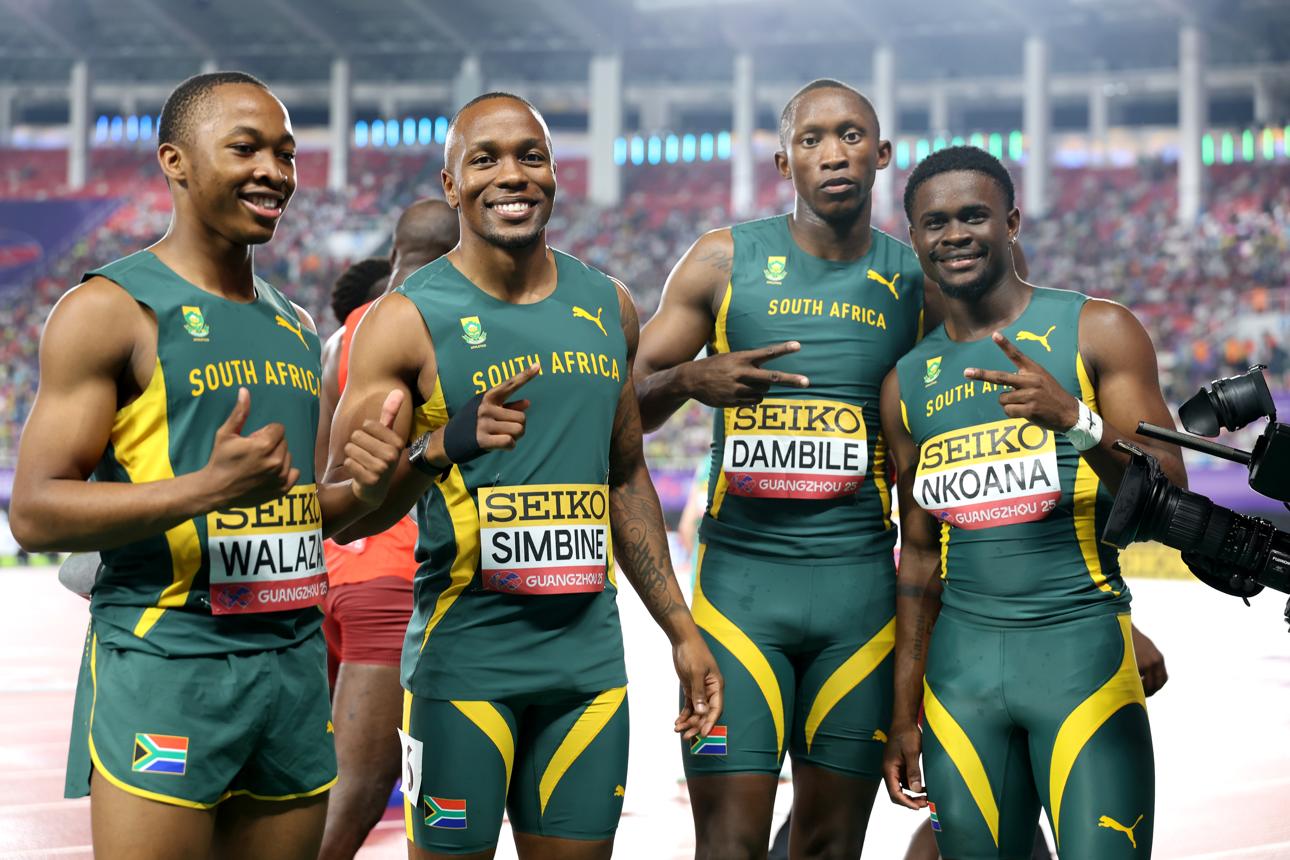
“Athletics South Africa (ASA) continues to face pressure to implement governance reforms demanded by World Athletics, following leadership changes and concerns about the federation’s administration. The appointment of Jean Verster as acting president and preparations for a strategic planning meeting have become central to efforts to restore stability and protect South African athletes from the risk of international suspension.”
Athletics South Africa Faces Crucial Governance Reforms as World Athletics Suspension Threat Looms Over National Athletes
South African athletics is facing one of its most consequential administrative challenges in recent years, with Athletics South Africa (ASA) under intense pressure to implement comprehensive governance reforms demanded by World Athletics. The developments have placed the federation’s leadership, constitutional framework and long-term stability under scrutiny, raising concerns about the potential consequences for athletes competing internationally.
The appointment of Jean Verster as acting president represents an important development in the federation’s ongoing efforts to restore institutional stability. However, the leadership transition is only one part of a much broader reform process that must be completed within the deadlines established by World Athletics and the Confederation of African Athletics (CAA).
Leadership Changes Signal a New Phase for Athletics South Africa
Jean Verster, Athletics South Africa’s chairperson of Track and Field, was appointed acting president following a board meeting on 30 October 2026. His appointment came after John Mathane, who had been serving in the acting presidential position, stepped aside.
According to Athletics South Africa, Verster’s appointment was intended to provide interim leadership while the organisation works through its governance and compliance obligations.
The decision followed discussions involving Zakhele Dlamini, president of the Southern African Confederation of Athletics (SACA) and vice-president of the Confederation of African Athletics. Dlamini has been tasked with overseeing aspects of the reform process in his capacity as an independent observer appointed by World Athletics and the CAA.
Verster is expected to serve until the ASA Council meeting scheduled for 28 November 2026. At that meeting, the council will consider the federation’s interim leadership arrangements and determine the next steps.
The leadership transition is significant because ASA must demonstrate that it can operate transparently, maintain effective decision-making structures and implement reforms that satisfy international requirements.
James Moloi’s Removal and the Financial Misconduct Findings
The governance crisis intensified following disciplinary proceedings involving former ASA president James Moloi.
Moloi was suspended in October 2025 after allegations of financial misconduct involving the federation’s corporate credit card. An investigation and subsequent disciplinary process examined transactions that were considered inconsistent with the organisation’s financial governance requirements.
An independent disciplinary panel chaired by retired judge Basheer Waglay concluded in October 2026 that Moloi was guilty of charges relating to the misuse of ASA funds. The panel recommended his removal from the presidency and executive board.
World Athletics subsequently instructed ASA to implement the disciplinary findings without delay.
The federation confirmed that Moloi was removed from his leadership position following the disciplinary process. Nevertheless, World Athletics made clear that addressing the individual case would not be sufficient to resolve the wider institutional problems identified during its investigation.
The international governing body considers the governance deficiencies to be structural, requiring changes that extend beyond the departure of a single official.
Consequently, ASA must revise its constitution, strengthen oversight mechanisms and establish procedures that prevent similar administrative problems from recurring.
World Athletics Sets a Six-Month Reform Deadline
World Athletics issued a formal directive in October 2026 requiring Athletics South Africa to undertake comprehensive constitutional reform and organise fresh elections.
The directive followed a fact-finding mission conducted in September by Zakhele Dlamini. The mission examined ASA’s governance arrangements, leadership structures and institutional functioning.
The resulting report identified several concerns, including divisions within the executive board, difficulties with collective decision-making, uncertainty regarding the authority of elected officials and conflicts of interest arising from overlapping national and provincial responsibilities.
World Athletics subsequently established a six-month period for ASA to finalise and formally adopt an acceptable revised constitution.
The organisation also required ASA to provide a detailed timetable for the constitutional revision and adoption process. Following the adoption of the new constitution, fresh elections must be organised within a further three-month period.
Failure to meet the requirements could result in the matter being referred to the World Athletics Council for consideration of sanctions under Article 13 of the international governing body’s constitution.
A provisional suspension would represent a serious setback for South African athletics, potentially affecting the country’s participation in international competitions.
Why the Constitution Matters
The constitutional reform process is expected to address the weaknesses identified by World Athletics and the CAA.
One central requirement is establishing the ASA Council as the federation’s supreme decision-making body. Voting arrangements must ensure that representatives exercise legitimate voting rights without receiving additional votes simply because they occupy executive or appointed positions.
The revised constitution must also prevent individuals from representing multiple constituencies or exercising multiple votes during the same meeting.
These changes are intended to improve accountability and reduce the possibility of conflicts of interest involving national and provincial structures.
Another important requirement concerns the separation of responsibilities between the council, executive board, president, commissions and administrative staff.
World Athletics has also called for independent electoral, disciplinary and financial oversight mechanisms. These structures should operate transparently and provide safeguards against interference.
The reform framework further includes expectations concerning term limits, gender balance, athlete representation and financial accountability.
Together, these provisions are intended to create an organisation that operates according to clear rules and places the interests of athletes and the wider athletics community above individual office holders.
Athletes Face the Greatest Risk
Although the governance dispute involves federation officials and administrative structures, South African athletes could experience the most serious consequences if the reform process fails.
South Africa has developed an impressive generation of athletes capable of competing successfully at international championships. Its sprinting, middle-distance running, relay and road-running programmes have produced performances that attract international attention.
Athletes such as Akani Simbine, Bayanda Walaza, Zakithi Nene, Prudence Sekgodiso, Glenrose Xaba and Tayla Kavanagh have demonstrated the depth of South African talent across different disciplines.
The country’s relay achievements, individual medals and national records have strengthened its position in international athletics.
However, a potential international suspension could disrupt the opportunities available to these athletes.
Restrictions on national federation participation could affect entry into international competitions, access to official qualification pathways and participation under the South African flag.
For emerging athletes, international competition is particularly important because it provides exposure to elite opponents, opportunities to improve performance and experience in high-pressure championship environments.
A suspension could also complicate preparations for major competitions, including the 2027 World Athletics Championships and the 2028 Olympic Games in Los Angeles.
The uncertainty surrounding ASA’s future therefore extends beyond administrative disagreements and directly concerns the sporting careers of athletes.
Strategic Planning Meeting to Determine the Reform Roadmap
Athletics South Africa’s board has announced plans for a comprehensive strategic planning meeting scheduled for 13–15 November 2026.
The meeting is expected to focus on finalising an organisational roadmap that addresses the federation’s governance and operational alignment with World Athletics and the CAA.
Zakhele Dlamini is expected to assist with the process, ensuring that the proposed roadmap reflects the requirements established by the international and continental governing bodies.
The resulting document will be presented to the ASA Council for consideration and formal adoption before being submitted to World Athletics and the CAA.
This meeting represents an important opportunity for ASA to move beyond leadership changes and establish a practical framework for institutional recovery.
The roadmap will need to demonstrate how the federation intends to implement constitutional changes, organise elections, strengthen oversight and improve administrative accountability.
The effectiveness of the process will ultimately depend on whether the proposed measures are implemented within the prescribed deadlines.
Implications for South Africa’s Olympic Ambitions
The developments within Athletics South Africa are also unfolding against the background of South Africa’s ambitions to host a future Olympic and Paralympic Games.
Durban has been identified as the country’s proposed host city for a potential 2036 or 2040 Olympic Games bid.
Athletics occupies a prominent position within the Olympic programme, making the stability of the national federation particularly important.
A prolonged governance crisis could undermine confidence in South Africa’s sporting institutions and complicate preparations for future international events.
The successful implementation of reforms would therefore have implications extending beyond athletics administration.
It could contribute to broader efforts to strengthen governance across South African sport and demonstrate the country’s capacity to manage major sporting programmes responsibly.
The Road Ahead
The coming weeks will be decisive for Athletics South Africa.
The November strategic planning meeting, followed by the ASA Council meeting on 28 November, will provide important indications of the federation’s progress.
The organisation must demonstrate that constitutional reform is progressing, leadership arrangements are becoming clearer and appropriate mechanisms are being established to support accountability.
Athletes, coaches, clubs, provincial associations and supporters will be watching closely.
South Africa’s athletics community has invested considerable effort in developing competitive athletes and expanding participation across track and field, road running, cross-country and other disciplines.
Protecting that progress requires an administration capable of supporting athletes rather than becoming an obstacle to their development.
The challenge facing Athletics South Africa is therefore not simply to replace officials or revise documents. It is to establish a sustainable governance system that supports transparency, fair representation, financial responsibility and effective decision-making.
World Athletics’ reform deadline provides a clear framework for that transformation.
If ASA successfully implements the required changes, the federation could emerge with stronger institutions and improved confidence among athletes and stakeholders.
If it fails, the consequences could extend across the national athletics programme, affecting international participation and the development of future champions.
For South African athletics, the priority remains clear: resolve the governance crisis, protect athletes’ opportunities and restore confidence in the organisation responsible for representing the country on the international stage.
The federation’s actions over the coming months will determine whether this difficult period becomes a turning point toward stronger administration or a prolonged disruption to one of South Africa’s most successful sporting disciplines.



