




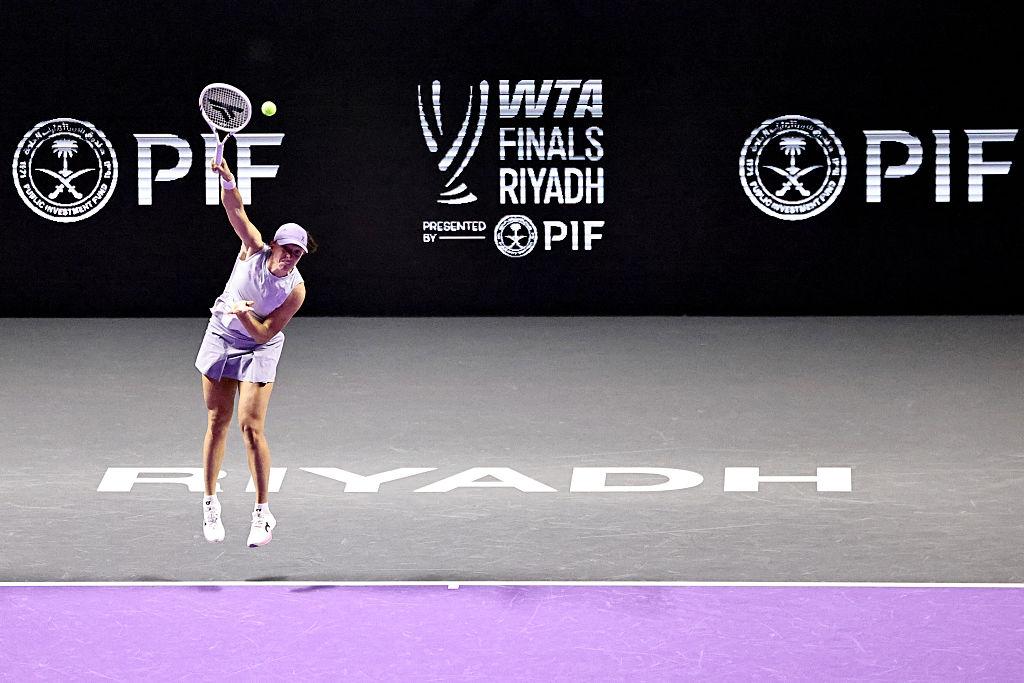
“The professional tennis season is approaching its climax, with players competing across Asia and Europe to secure valuable ranking points and places at the prestigious year-end championships. Iga Świątek’s pursuit of qualification for the WTA Finals and Daniil Medvedev’s campaign at the Almaty Open headline a competitive period that offers South African tennis followers compelling international storylines.”
The international tennis calendar has entered one of its most consequential periods, as professional players seek to finish the season strongly, improve their rankings and qualify for the prestigious year-end championships. With tournaments taking place in Asia and Europe, the coming days could significantly influence which athletes earn the opportunity to compete against the best performers of the year.
According to a tournament preview published by Flashscore, the race for the ATP and WTA Finals is a major storyline this week. Several established stars remain under pressure to accumulate points, while emerging competitors have opportunities to challenge more experienced opponents.
For South African tennis supporters, these competitions provide an opportunity to follow the broader international game while considering what success at the highest level demands from players, coaches and national tennis development programmes.
Although today’s research did not establish a major South Africa-specific tennis headline published on 20 October, the international competition remains relevant to the country’s tennis community.
Świątek faces pressure in the WTA qualification race
One of the most closely watched stories concerns Polish star Iga Świątek, whose campaign to reach the WTA Finals has become increasingly important as the season progresses.
Świątek has established herself among the leading players in women’s tennis through her Grand Slam achievements, physical intensity and ability to dominate baseline exchanges. However, even elite players must consistently produce strong results to secure qualification for the season-ending championships.
Flashscore’s tournament preview identified the Ningbo Open in China as an important opportunity for players pursuing the remaining qualification places. At the time of publication, Świątek was positioned outside the leading group in the race and needed a substantial result to improve her prospects.
Her challenge illustrates the pressure associated with professional tennis. A player’s position depends not only on previous achievements but also on current form, fitness, tournament selection and the results of direct competitors.
Świątek’s campaign also demonstrates why the final stretch of the tennis calendar can be unpredictable. Players who have enjoyed successful seasons may still face difficult qualification calculations, particularly when rivals continue collecting points.
For spectators, this creates additional interest beyond individual match victories. Every round can influence the wider standings, making early-round encounters significant even when they do not involve a tournament final.
Nevertheless, qualification should not be treated as guaranteed. The outcome depends on results and the official standings, and any assessment must reflect the latest confirmed information.
Ningbo Open offers a significant opportunity
The Ningbo Open is among the important women’s tournaments during this stage of the season. Its competitive field includes players with different objectives, ranging from improving their rankings to securing qualification for the WTA Finals.
World number one Elena Rybakina was identified by Flashscore as a major contender. Her performances are particularly significant because she is also competing to finish the season at the top of the rankings.
Świątek and other qualification hopefuls face the challenge of navigating a demanding draw against opponents who have their own ambitions. Winning the title requires sustained performance across multiple rounds, rather than a single impressive match.
The tournament therefore offers a useful measure of players’ ability to manage pressure. Serving consistently, returning effectively and maintaining concentration during long rallies can make the difference between advancing and exiting the competition.
Physical condition is another important factor. Players entering the final weeks of a demanding season must balance their desire to collect ranking points against the risk of fatigue or injury.
This balance can influence tactical decisions. Some competitors may seek shorter points through aggressive serving, while others prefer extended rallies that test their opponents’ movement and patience.
For South African coaches and aspiring players, these matches offer practical lessons in preparation, tactical flexibility and mental discipline.
Medvedev targets another strong result
The men’s competition offers another compelling storyline through Daniil Medvedev’s participation in the Almaty Open in Kazakhstan.
Medvedev, a former US Open champion, is pursuing a place at the ATP Finals in Turin. Flashscore reported that several qualification positions remained available as the week began, leaving competitors with meaningful opportunities to improve their standing.
The Almaty tournament features several capable opponents, including Alexander Bublik, Andrey Rublev, Karen Khachanov and Stefanos Tsitsipas. Their presence creates a competitive environment in which a leading seed cannot assume an easy path to the title.
Medvedev’s experience is an important asset. His court positioning, counterpunching skills and ability to redirect the ball can trouble aggressive opponents. However, success depends on execution, particularly when matches become tight and opponents take risks.
The race for the ATP Finals also creates strategic pressure. A title can deliver valuable points, but players must remain focused on each round rather than becoming distracted by qualification calculations.
The Almaty Open is consequently more than an individual tournament. It forms part of a broader contest involving players attempting to finish the season among the world’s leading competitors.
Europe provides additional qualification battles
While the women’s tour remains active in Asia, the men’s circuit also features tournaments in Europe.
Flashscore highlighted competitions in Lyon and Brussels as significant opportunities for players still pursuing qualification for the ATP Finals. Competitors such as Taylor Fritz, Tommy Paul and Flavio Cobolli were among those facing important challenges in Lyon, while Arthur Fils was a prominent name in Brussels.
These events demonstrate the depth of professional tennis. Qualification opportunities are not limited to the most famous champions; players lower in the standings can also make substantial progress by producing strong performances at the right moment.
However, pressure can affect even technically accomplished athletes. A player who enters a tournament with a qualification opportunity may feel compelled to take unnecessary risks, potentially undermining the consistency required to win matches.
Successful competitors generally need to treat each match as a separate challenge. Effective recovery, preparation for different opponents and the ability to adjust tactics during competition are essential components of a successful campaign.
The European tournaments also provide opportunities for younger players to test themselves against established professionals, gaining experience that can support future development.
Why these developments matter to South African tennis
International results have implications beyond the players competing for trophies. They influence the stories that attract public attention, the role models available to young athletes and the wider commercial environment surrounding the sport.
South Africa has a history of producing competitive tennis players, while Tennis South Africa oversees national programmes, tournaments and player development initiatives. Its official website provides information about national competitions, junior rankings, coaching and other activities supporting the sport.
Following international tournaments can help young South African players understand the demands of professional competition. Watching top athletes manage difficult moments demonstrates that success requires more than natural ability.
Technical development, physical conditioning, tactical awareness and emotional control all contribute to performance. Equally important are access to qualified coaches, regular competitive opportunities and appropriate facilities.
International exposure also highlights the challenges faced by players trying to progress through the rankings. Travel expenses, tournament entry costs, accommodation and coaching support can place considerable demands on developing athletes and their families.
For South Africa, expanding participation and providing sustainable development pathways remain important considerations if more players are to compete consistently at international level.
The achievements of established professionals can inspire interest, but converting that interest into participation requires accessible courts, school programmes, community clubs and opportunities for young players from different backgrounds.
Fitness and consistency remain crucial
As the season approaches its conclusion, physical fitness becomes increasingly important. Professional players may have competed across several continents, adapted to different surfaces and faced repeated high-intensity matches.
Fatigue can affect footwork, reaction time, shot selection and concentration. Even a minor decline in movement can allow an opponent to control rallies or exploit weaknesses.
Injuries create additional uncertainty. Players must decide whether to continue competing, adjust their schedules or prioritise recovery. Świątek’s recent difficulties illustrate why physical condition can be an important consideration during the closing stages of a campaign.
Coaches and support teams therefore play a central role in helping athletes manage their workloads. Training schedules, recovery routines, nutrition and appropriate medical support can all influence a player’s ability to perform consistently.
These considerations also apply to developing athletes in South Africa. Building sustainable careers requires a long-term approach that values health and progression rather than immediate results alone.
Technology and media are changing tennis coverage
Digital platforms have made international tennis more accessible to audiences who previously depended on television broadcasts or newspaper reports.
Live scores, tournament schedules, rankings and online match coverage allow supporters to follow multiple competitions throughout the day. For South African audiences, these services provide ways to track players competing in different time zones.
However, supporters should distinguish confirmed results from previews, projections and qualification estimates. A prediction about a player’s chances is not equivalent to an official announcement.
Tournament organisers and governing bodies remain important sources for verified draws, schedules, rankings and results. Reputable sports publications can provide additional context, including analysis of form and tactical developments.
Improved access to information can also benefit junior players and coaches, who can study professional performances and learn from different playing styles.
Nevertheless, digital coverage cannot replace the value of participating in local tennis communities. Clubs, schools and national competitions remain essential for developing skills, identifying talent and building lasting interest in the sport.
What happens next?
The coming days should provide further clarity about the players best positioned to finish the season strongly.
In the women’s competition, the Ningbo Open offers qualification contenders an important opportunity to collect points, while the men’s events in Almaty, Lyon and Brussels provide additional opportunities for competitors pursuing the ATP Finals.
The results will depend on performances on court, and qualification positions can change as tournaments progress. Readers should consult current official standings and tournament updates before treating any projected qualification scenario as final.
South African fans can follow the developments through international tennis coverage and Tennis South Africa’s official news channels for domestic updates.
For local tennis, the broader lesson is that sustained success depends on a combination of talent, preparation, fitness and access to competitive opportunities.
Conclusion
The final stretch of the 2026 tennis season is providing a compelling contest for ranking points and places at the year-end championships. Świątek’s qualification challenge, Medvedev’s pursuit of a strong result in Almaty and the European tournaments’ competitive fields illustrate the pressure facing players as the calendar advances.
Although no major South African tennis story published specifically on 20 October was verified in this research, the international developments remain relevant to local fans, coaches and emerging athletes.
The results will determine which players finish the season among the elite. For South African tennis, following these competitions can also strengthen public engagement with the sport and reinforce the importance of developing the next generation of competitive players.



