




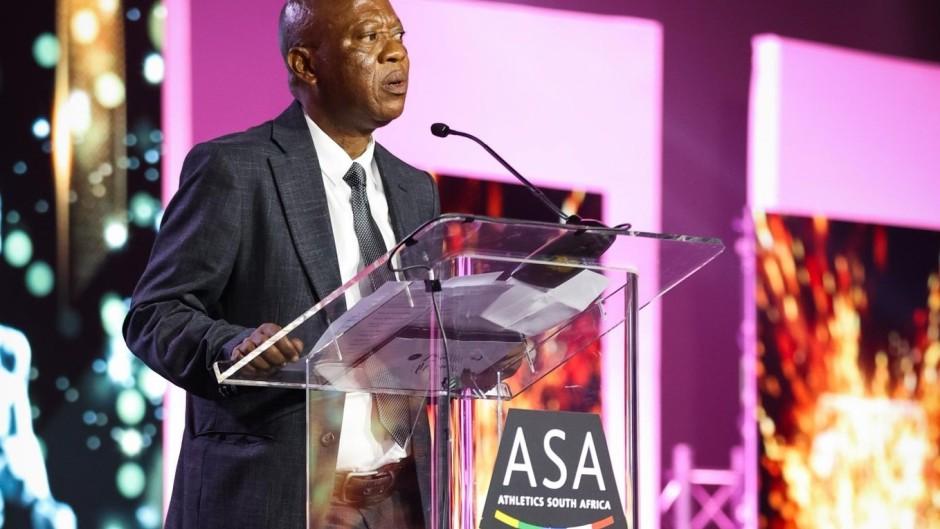
“World Athletics has instructed Athletics South Africa to address serious governance concerns, implement constitutional reforms within six months and act on disciplinary findings concerning suspended president James Moloi. Failure to comply could lead to provisional suspension, potentially affecting South African athletes’ ability to compete internationally under the country’s athletics federation.”
World Athletics’ ultimatum places Athletics South Africa at a critical crossroads
South African athletics faces a defining governance challenge after World Athletics issued a six-month reform mandate to Athletics South Africa (ASA), warning that failure to meet its requirements could result in provisional suspension from international athletics. The intervention raises important questions about accountability, leadership, institutional stability and the protection of athletes whose sporting ambitions depend on a properly functioning national federation.
The directive follows a period of controversy surrounding ASA, including disciplinary findings against suspended president James Moloi and concerns about decision-making within the organisation. According to reporting by IOL Sport on 19 October 2026, World Athletics expects ASA to implement the disciplinary panel’s recommendations and undertake substantial constitutional changes.
The significance of this development extends beyond the federation’s executive leadership. Athletics South Africa is responsible for overseeing the sport nationally, supporting athletes and coordinating the structures through which South Africans participate in domestic and international competition. Consequently, prolonged institutional instability could affect confidence in the sport’s administration and create uncertainty for athletes, coaches, officials and provincial associations.
The six-month deadline and its implications
World Athletics has given ASA six months to address the identified governance shortcomings. The deadline establishes a period in which the national federation must demonstrate that it can implement meaningful reforms rather than simply promise improvements.
The international governing body’s intervention reportedly follows a fact-finding mission conducted in South Africa on 2 and 3 September 2026. The mission was undertaken by Zakhele Dlamini, president of the Southern African Confederation of Athletics and vice-president of the Confederation of African Athletics, following a request involving the continental and international governing bodies.
The resulting assessment highlighted institutional weaknesses within ASA, including divisions within the executive board, difficulties with collective decision-making, uncertainty concerning the authority of elected officials and conflicts associated with voting arrangements involving national and provincial roles.
These concerns matter because a national sports federation needs clear procedures for making decisions, managing finances, resolving disputes and holding leaders accountable. Where responsibilities are unclear or officials disagree over their authority, decisions can become difficult to implement consistently.
The six-month period therefore represents an opportunity for ASA to demonstrate that its governance structures can operate transparently and reliably. However, the deadline also carries considerable pressure because the consequences of non-compliance could extend beyond the federation’s leadership.
The controversy surrounding James Moloi
James Moloi’s position has become central to the dispute. He was initially suspended by the ASA board in October 2025 following a forensic investigation into alleged financial misconduct.
According to IOL’s report, an investigation by Forvis Mazars examined the use of an ASA corporate credit card between May 2023 and April 2024. The investigation reportedly identified almost 400 transactions and more than R300,000 in unauthorised or personal expenditure. These findings subsequently formed part of the disciplinary process concerning Moloi.
An independent disciplinary panel chaired by retired judge Basheer Waglay considered the allegations. In findings dated 6 October 2026, the panel reportedly found Moloi guilty of two charges relating to the misuse of ASA funds and recommended his removal as president and board member.
The panel’s findings and recommendations are significant, but it is important to distinguish between a disciplinary recommendation and the subsequent actions required to implement it. The controversy has intensified because ASA had not yet announced that it would accept and implement the recommendation when the latest reports were published.
World Athletics has now placed greater pressure on the federation to respect the independent panel’s conclusions and act without delay. The issue has consequently evolved from an internal disciplinary matter into a wider question about whether ASA can enforce its own accountability procedures.
The allegations, findings and required sanctions should be understood through the documented disciplinary process rather than through speculation about individuals’ motives.
Constitutional reform is central to restoring confidence
Removing or replacing a leader would not, by itself, resolve all the institutional concerns identified in the investigation. World Athletics has reportedly called for broader changes to ASA’s constitution and governance arrangements.
Among the proposed requirements are strengthening the authority of the ASA Council as the federation’s supreme decision-making body, eliminating double voting and addressing conflicts arising from provincial and national responsibilities. The reform programme also includes independent electoral and oversight mechanisms, term limits, gender representation and athlete representation.
These measures address several fundamental principles of sports governance.
First, decision-making authority must be clearly established. A constitution should explain which bodies have the power to approve policies, appoint officials, manage finances and resolve disputes. Clear rules reduce the possibility of competing interpretations and prolonged internal disagreements.
Second, elections need to be credible and independently overseen. Transparent electoral arrangements help ensure that leadership reflects legitimate organisational processes rather than contested voting procedures.
Third, financial oversight must be sufficiently independent to identify irregularities, investigate concerns and recommend corrective action. Proper controls also help protect public confidence and the contributions of sponsors and other stakeholders.
Finally, meaningful athlete representation can help ensure that decisions reflect the practical realities experienced by the people who compete. Athletes are central to the federation’s purpose, and their interests should be considered when policies affect training, competition opportunities and career development.
The challenge for ASA will be turning these principles into workable rules and consistently applying them.
Why the possible suspension matters to athletes
The most immediate concern for competitors is the possibility that the dispute could affect South Africa’s international participation.
World Athletics has warned that failure to comply with the reform requirements could result in a referral to its governing council for consideration of sanctions, including provisional suspension under its rules. The reports do not establish that ASA has already been suspended. Rather, suspension remains a possible consequence if the organisation fails to meet the requirements.
That distinction is important. The current development is a governance ultimatum, not confirmation that South African athletes have already lost international eligibility.
Nevertheless, the risk is serious. International athletics relies on recognised national federations to administer participation and represent their countries within the sport’s governing structure. A suspension could create uncertainty around national representation and eligibility at affected competitions, depending on the terms and consequences of any eventual decision.
For athletes preparing for major championships, even uncertainty can be damaging. Competitive careers depend on carefully planned training cycles, qualifying opportunities, travel arrangements and access to high-level races. Coaches and support teams also require clarity when preparing athletes for international events.
Young athletes could be particularly vulnerable if administrative instability disrupts development pathways or reduces confidence in the institutions responsible for their progression.
For that reason, the reform process should not be treated solely as a dispute between sports administrators. Its outcome could influence the environment in which South African athletes pursue their ambitions.
South Africa’s athletics achievements raise the stakes
South Africa has an established presence in international athletics, with competitors participating in sprinting, middle-distance and long-distance running, road racing, cross-country and field events.
Recent performances underline the importance of maintaining stable structures around the sport. In September 2026, South African athletes competed at the World Road Running Championships in Copenhagen, where national records fell during the opening day. Glenrose Xaba and Cwenga Nose were also highlighted for their performances on the second day.
Meanwhile, the domestic calendar has continued to produce notable performances. On 17 October, Zanele Maisa won the women’s national 10km title at the ASA 10km Championships in Potchefstroom, finishing in 35 minutes and 44 seconds. Bianca Stoltz took second place in 36:10, while Tinyiko Ndala finished third in 36:52.
These developments demonstrate that athletes continue to compete and achieve milestones while the federation faces governance challenges.
They also illustrate why protecting the integrity of athletics administration matters. Successful athletes require more than physical talent and individual dedication. They need reliable competition structures, fair selection processes, effective administration and confidence that their federation can represent their interests internationally.
Reform should therefore seek to protect the conditions that enable sporting achievement rather than distract indefinitely from them.
What happens next?
The next stage will depend on the actions taken by ASA and the oversight process established by the international and continental governing bodies.
According to IOL, Dlamini has been appointed as an independent observer to oversee compliance and report on progress. This arrangement is intended to provide external scrutiny while ASA works through the required changes.
The first is whether ASA implements the disciplinary panel’s recommendation concerning Moloi. The second is whether the federation adopts a revised constitution that meets the specified governance requirements. The third is whether electoral, financial and oversight arrangements are strengthened in practice.
Progress should be measurable. Clear timelines, documented decisions and transparent communication would help athletes, clubs, sponsors and supporters understand what has changed and what remains outstanding.
The federation will also need to manage the reform process without unnecessarily disrupting routine sporting operations. Domestic races, athlete development, provincial activities and preparations for international competition must continue wherever possible.
A successful outcome would involve more than meeting a deadline. It would establish procedures that remain effective after the immediate controversy has passed.
The importance of accountability and transparency
The crisis presents an opportunity to reinforce the principle that sporting leadership carries responsibilities as well as authority.
Sports federations oversee resources, make decisions affecting athletes’ careers and represent communities on national and international stages. Their credibility depends on consistent rules, transparent administration and a willingness to address misconduct through established procedures.
For ASA, rebuilding confidence will require evidence that the reform programme is being implemented, that financial controls are effective and that decision-making structures operate according to the constitution.
Communication will also matter. Athletes and stakeholders need accurate information about the status of reforms, the potential consequences of non-compliance and any decisions that could affect competition.
At the same time, the process should remain fair to everyone involved. Allegations, disciplinary findings, recommendations and final administrative decisions are distinct stages and should be reported accurately.
Conclusion: a decisive period for Athletics South Africa
World Athletics’ six-month reform mandate places Athletics South Africa at a critical crossroads. The directive combines an immediate demand for action on the disciplinary findings concerning James Moloi with a broader requirement to improve constitutional governance, electoral procedures, oversight and representation.
The possible consequences are substantial. Failure to comply could lead to consideration of provisional suspension, creating uncertainty for South Africa’s participation in international athletics. However, no suspension had been confirmed in the reports examined for this article.
The coming months will therefore be decisive. ASA must demonstrate that it can respond to the concerns raised, implement credible reforms and restore confidence in the administration of the sport.
For South African athletes, the priority is a stable, accountable federation that allows sporting performance to remain at the centre of attention. For administrators, the task is to establish governance arrangements that are transparent, fair and sustainable.
Ultimately, the success of this reform process should be measured not simply by whether ASA avoids sanctions, but by whether it emerges with stronger institutions capable of serving athletes and the wider athletics community.



