




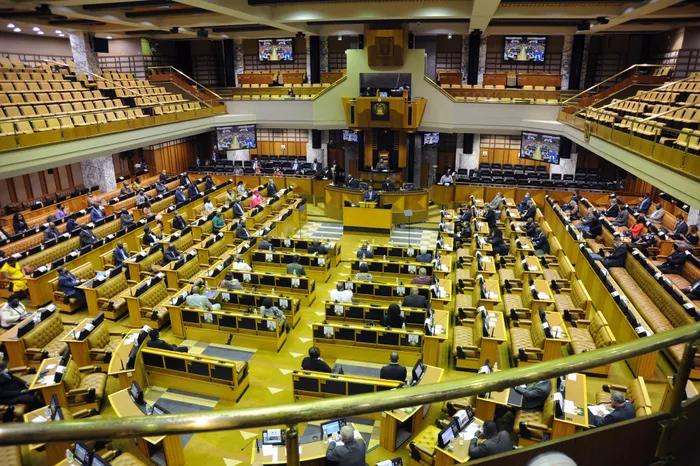
“The Congress of South African Trade Unions (COSATU) has welcomed the Employment Services Amendment Bill, with the latest report published on 27 September 2026 highlighting provisions that would give the Employment and Labour Minister powers to regulate the employment of foreign nationals through limits in workplaces, regions, sectors or occupations. The Bill is already before Parliament, where public participation is underway, with written submissions due by 6 November 2026 as lawmakers consider changes to South Africa’s labour-migration framework.”
COSATU backs Employment Services Amendment Bill as Parliament advances labour migration reform
South Africa’s debate over employment, unemployment and the regulation of foreign workers has moved into another important legislative phase, following the latest public backing from the Congress of South African Trade Unions (COSATU) for the Employment Services Amendment Bill. A report published on Sunday, 27 September 2026, said COSATU welcomed the Bill’s tabling in Parliament and highlighted provisions dealing with the employment of undocumented migrant workers and possible limits on documented foreign workers.
The development places labour migration once again at the centre of South Africa’s political and legislative agenda. The Employment Services Amendment Bill, formally identified as B16–2026, proposes amendments to the Employment Services Act of 2014. Parliament says the legislation is intended to regulate the employment of foreign nationals in a manner consistent with the Employment Services Act, the Immigration Act and the Refugees Act.
The Bill is not yet law. It remains part of Parliament’s legislative process, meaning its provisions can still be considered, amended or otherwise changed as parliamentary deliberations and public participation continue.
What the Bill proposes
According to Parliament’s official description, the proposed legislation would broaden the Employment Services Act by introducing and amending definitions and extending its scope to cover foreign nationals, workers and certain private employment agencies. It would also give the Minister powers to make regulations concerning labour migration.
One of the most significant elements concerns the employment of foreign nationals. The Bill proposes a framework under which the Minister of Employment and Labour could establish regulations dealing with the employment of foreign workers. Parliament’s committee has described the proposal as part of a broader attempt to create a structured framework for labour migration.
The legislation also proposes expanding the functions of the Employment Services Board, establishing and governing Supported Employment Enterprises, creating additional offences and strengthening enforcement mechanisms connected with employment and immigration laws.
The Bill therefore goes beyond a single question about foreign workers. It seeks to modify several parts of the existing employment-services framework, while creating additional enforcement powers and regulatory mechanisms.
Public participation now forms a key part of the process
Parliament’s Portfolio Committee on Employment and Labour formally opened public comments on the Bill on 18 September 2026. The committee invited citizens, civil-society organisations, business organisations and organised labour to submit written views before formal parliamentary deliberations proceed.
Interested parties have until 6 November 2026 at 16:00 to submit written representations to the committee. Parliament has also indicated that stakeholders can request an opportunity to make verbal presentations during public hearings.
This public participation process is significant because the Bill concerns several groups whose interests may differ, including South African workers, employers, documented foreign workers, undocumented workers, labour organisations and businesses that rely on migrant labour.
The final legislation will therefore depend not only on the government’s original proposal but also on parliamentary consideration and the views submitted during the consultation process.
COSATU’s position
COSATU has expressed support for the Bill and has argued that stronger regulation is necessary in the context of South Africa’s unemployment challenge. The latest report quotes COSATU spokesperson Matthew Parks as supporting limits on documented migrant workers in workplaces, regions, sectors or professions.
COSATU previously welcomed the Bill when it was introduced, saying the federation had engaged with the legislation through the National Economic Development and Labour Council, or Nedlac. In August, the federation said it supported provisions allowing the minister to set limits on documented migrant workers.
COSATU’s position represents the view of organised labour rather than a determination of how Parliament will ultimately decide the legislation. Other stakeholders can participate in the parliamentary process and present different arguments concerning labour-market regulation, migration, enforcement and constitutional considerations.
Proposed penalties for employers
Another important feature of the legislative debate concerns employers who knowingly employ foreign nationals who do not have the necessary legal status to work in South Africa.
Recent reporting on the Bill says proposed penalties could include fines of up to R100,000 per undocumented worker for a first offence. A second offence within three years could attract a fine of up to R200,000, while repeat violations could result in fines of as much as R1 million or possible imprisonment.
These proposed penalties would represent a significant enforcement mechanism if enacted in their current form. They would also place greater responsibility on employers to establish whether foreign workers have the necessary documentation and permission to work.
Importantly, the proposed legislation does not simply concern employers of large companies. Reporting on the Bill has highlighted that private households employing domestic workers could also potentially fall within its scope where the relevant legal requirements are breached.
Foreign-worker limits and the labour market
The proposal to allow limits on foreign workers is one of the most closely watched elements of the legislation. Parliament’s description says the Bill seeks to establish a regulatory framework for foreign employment, while reporting on the proposed legislation indicates that limits could apply to particular economic sectors, occupational categories or regions.
The issue is closely connected to South Africa’s long-running unemployment problem. COSATU has cited very high unemployment as part of its argument for stronger regulation. However, the economic effects of labour migration are subject to broader debate involving employment creation, skills availability, business requirements, wages and enforcement of existing labour laws.
The Bill itself therefore needs to be considered within the wider labour-market environment rather than as a standalone immigration measure.
Government’s wider immigration and labour framework
The Employment Services Amendment Bill also connects with broader government efforts to improve the administration of migration and employment. Parliament says the Bill is intended to align employment regulation involving foreign nationals with the Immigration Act and the Refugees Act.
The Department of Employment and Labour has presented the legislation as part of efforts to strengthen the country’s employment-services framework. When the committee received a briefing on the Bill in August, Parliament said the proposals included stronger enforcement, regulation of foreign employment and a legislative framework for labour migration.
This means the parliamentary process will involve questions about how the proposed rules would interact with legislation that already governs immigration and refugee protection.
What happens next
The immediate next stage is public participation. Written submissions are being accepted until 6 November, after which the parliamentary committee will continue its consideration of the Bill and the submissions received.
The Bill must still pass through the required parliamentary stages before it could become law. Parliament’s official Bill record currently lists B16–2026 at the introduction stage and identifies the Minister of Employment and Labour as its sponsor.
For employers, workers and organisations affected by labour migration, the public-comment period provides an opportunity to place their views on the parliamentary record. Those submissions can address the practical operation of proposed quotas, employer responsibilities, enforcement provisions, protections for workers and the relationship between employment and immigration law.
The latest COSATU statement therefore comes at a point when the legislation remains under consideration rather than having reached its final form. The coming parliamentary process will determine how the proposals are debated and whether amendments are made before the Bill can progress further.
For South Africa’s political landscape, the Employment Services Amendment Bill represents an important legislative debate about the relationship between unemployment, labour-market regulation, migration and enforcement. With public comments still open, the next phase will involve Parliament weighing submissions from organised labour, business, civil society and members of the public before deciding how the proposed changes should proceed.



