




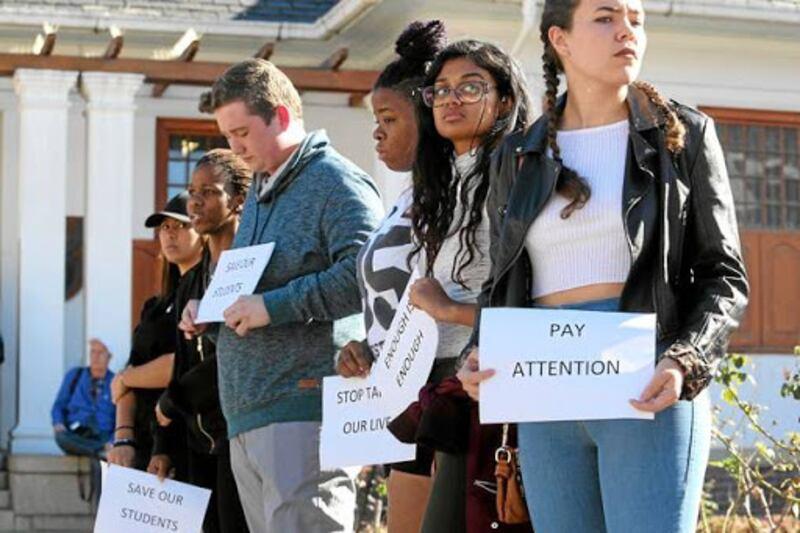
“Stellenbosch University students have mobilized against gender-based violence and femicide, with hundreds participating in a solidarity walk and vigil organised by student and anti-GBV groups in response to the deaths of women in Ekurhuleni. The activism has placed renewed attention on accountability, prevention and the role of young people and civil society in demanding stronger action against gender-based violence in South Africa.”
South African students turn GBV grief into activism
A renewed wave of student activism against gender-based violence and femicide is drawing attention to the role of young South Africans in demanding accountability from institutions and political leaders. The latest development comes from Stellenbosch University, where students participated in a solidarity walk and vigil to protest gender-based violence and remember women whose lives have been lost to violence.
Stellenbosch University published its report on 27 September 2026, making it one of the latest documented South African developments involving political and civic activism around gender-based violence. The university said the solidarity event took place on 21 September and was co-created by the South African Students Congress (SASCO) Tsietsi Mashinini branch at Stellenbosch, the university’s Anti-GBV Community and the Students’ Representative Council’s Womxn and Queer Empowerment portfolio.
The mobilization followed a series of killings in Ekurhuleni, Gauteng, where the bodies of nine women had been discovered over a period of several months. The killings generated widespread concern and renewed public demands for stronger measures to protect women and improve the criminal-justice response to gender-based violence. The South African Police Service has separately confirmed intensified policing efforts following the murders and reported thousands of arrests during a nationwide crime operation.
For the students involved, however, the issue was not simply about expressing grief. The protest represented an attempt to turn public concern into collective action.
Hundreds of students gathered at Irene Women’s Residence before walking along Victoria Street to the Rooiplein. At the destination, participants sang and later took part in a candlelight vigil remembering women who had been killed through gender-based violence and femicide.
The event demonstrates how activism continues to function as an important part of South Africa’s democratic political culture. Rather than operating only through political parties or elections, activism allows citizens, students, community organisations and civil-society groups to put particular social problems on the public agenda.
Students demand prevention and accountability
The Stellenbosch mobilisation was particularly focused on prevention, accountability and safety. Student representatives argued that society cannot wait for another killing before responding.
During the vigil, SASCO representative Thabisile Mahlangu said students were participating because women were dying and called for prevention, accountability, safety and justice. The university’s account said students also remembered women whose deaths had become part of the wider national conversation about femicide.
That message reflects a broader pattern in South African activism. Campaigners have repeatedly argued that demonstrations should not merely commemorate victims but should also pressure institutions to address the conditions that allow violence to continue.
The activism also reflects concerns about the relationship between gender-based violence and public policy. South Africa has already classified GBVF as a national disaster, placing responsibility for coordinating the response primarily at national government level. The classification was made under the Disaster Management Act following an assessment of the persistent risks associated with GBVF.
The government’s response has included the establishment of structures intended to coordinate action, while the Presidency has repeatedly called for communities and men to become involved in confronting violence against women.
In his National Heritage Day address on 24 September, President Cyril Ramaphosa described unemployment, gender-based violence, corruption and alcohol and drug abuse as major challenges facing South Africa. He also said violence against women could not form part of the country’s heritage and stated that government would update the public on measures concerning GBV and the Ekurhuleni killings.
The timing is significant because the students’ activism is occurring alongside heightened national political attention to GBVF.
Activism meets government responsibility
The Stellenbosch protest also illustrates the sometimes complicated relationship between activism and government.
South Africa’s Constitution protects freedom of expression and peaceful assembly, allowing citizens to organise, demonstrate and raise issues of public concern. Activism therefore provides a channel through which communities can challenge institutions and demand that public authorities respond to problems affecting citizens.
At the same time, government remains responsible for implementing laws, policies and programmes designed to protect people and investigate crimes.
This distinction matters in the GBV debate. A protest can draw attention to a problem, create public pressure and mobilise communities, but police investigations, prosecutions, victim-support services and prevention programmes require sustained institutional action.
The South African government has acknowledged the scale of the problem. On 18 September, the Department of Social Development reported that its 24-hour Gender-Based Violence Command Centre had received 6,782 calls between 1 and 16 September. That represented a 21% increase compared with the average number of calls recorded during the corresponding period in August. The department said the increase occurred amid heightened public concern about gender-based violence and femicide.
These figures help explain why activism has remained prominent.
For many campaigners, the issue is not confined to individual criminal cases. They argue that GBV has wider consequences for women’s freedom, public safety and participation in society.
A new generation of political participation
The Stellenbosch mobilisation also highlights the changing character of political participation among young South Africans.
Student activism has historically played a major role in the country’s political development. Universities have frequently served as spaces where young people debate social justice, inequality, discrimination and government policy.
Contemporary activism, however, operates through both traditional demonstrations and digital networks. Students can organise events, communicate demands and raise awareness through social media while simultaneously engaging university structures, community organisations and political institutions.
The Stellenbosch event brought together several organised groups, demonstrating that activism does not necessarily depend on a single political organisation. The university said the walk was jointly created by SASCO, the Anti-GBV Community and the SRC’s Womxn and Queer Empowerment portfolio.
This coalition-based approach allows participants with different organisational backgrounds to focus on a shared concern.
The mobilisation also included men, reinforcing the organisers’ argument that gender-based violence should not be treated solely as a women’s issue. Student representatives called on men to challenge harmful behaviour and participate in efforts to prevent violence.
That theme also appears in national political messaging. In August, President Ramaphosa said addressing GBVF requires men and boys to participate in preventing violence and challenging behaviours that contribute to abuse.
From mourning to political pressure
One of the strongest themes emerging from the Stellenbosch activism is the movement from mourning towards political pressure.
The candlelight vigil provided space for remembering victims, but the organisers also used the event to call for changes in how society responds to GBV. The university’s report records repeated calls for prevention, accountability, safety and justice.
That distinction is important.
Memorial events can create public awareness, but activism becomes politically significant when participants use collective action to demand changes from institutions responsible for policy, policing, education and justice.
Cape Town also recently witnessed a major demonstration against GBV. On Heritage Day, hundreds of people participated in a One Billion Rising solidarity march at Princess Vlei, while organisers called for stronger action to end violence against women and children. SABC News reported that activist Lucinda Evans organised the march and urged communities to become more active in shaping political leadership.
Reuters footage from the Cape Town march similarly documented demonstrators calling for action against gender-based violence, showing that the issue is generating activism beyond university campuses.
Together, these demonstrations show a broader civic response developing around GBV.
Why the Ekurhuleni killings have intensified activism
The deaths of women in Ekurhuleni have become an important catalyst for this latest wave of mobilisation.
Police have acknowledged the murders and intensified operations in response. The SAPS said that following the recent killings of nine women in Ekurhuleni, it had intensified efforts targeting threats to women, children and other vulnerable people. Between 14 and 20 September, police reported 17,270 arrests for various offences during Operation Shanela II.
The scale of the response illustrates the seriousness with which authorities are treating the security environment. However, activism is also demanding attention to prevention rather than relying exclusively on arrests after crimes occur.
This is one reason student activism has become politically relevant.
Young people are not simply responding to individual cases. They are questioning whether existing systems are sufficiently preventing violence, protecting vulnerable people and delivering justice after crimes occur.
The wider political significance
The Stellenbosch protest comes at a politically significant time for South Africa. The country is preparing for local government elections scheduled for 4 November 2026, meaning questions about public safety, municipal services and accountability are likely to remain prominent in political debate.
Although the university protest was not itself a campaign event, activism can influence political discussion by keeping social issues visible and demanding responses from elected leaders and public institutions.
The connection between activism and democratic participation was also visible in President Ramaphosa’s Heritage Day message. He said democracy itself was part of South Africa’s heritage and argued that citizens needed to work collectively to address the country’s major challenges.
For activists, however, participation goes beyond voting. Demonstrations, vigils, community organising, petitions and public advocacy are additional ways citizens can engage with political institutions.
The Stellenbosch students’ actions therefore represent more than a university event. They form part of a wider national conversation about what government, universities, police, communities and individuals should do to reduce gender-based violence.
What happens next?
The immediate challenge will be translating public mobilisation into sustained action.
For students and activists, this means maintaining pressure after demonstrations end. For universities, it means ensuring students have effective mechanisms for reporting harassment and violence and that complaints are addressed appropriately. For government and law-enforcement agencies, it means investigation, prosecution, prevention and survivor support.
The Justice Department’s National Task Team on Sexual Orientation, Gender Identity, Expression and Sex Characteristics also recently expressed concern about continuing GBVF and emphasised the importance of coordinated criminal-justice responses, including police visibility, thorough investigations and effective prosecution.
These institutional responses will remain important as activism continues.
The Stellenbosch students have demonstrated one part of that process: making their voices heard collectively. Their solidarity walk and vigil brought hundreds of young people together around a shared demand for greater safety and accountability.
The broader significance lies in what happens after the protest.
If activism is to influence public policy, its demands must remain visible, specific and connected to measurable institutional action. For the students who participated, the message was that remembering victims should also involve challenging the conditions that allow violence to continue.
As South Africa confronts continuing concerns over gender-based violence and femicide, the mobilisation at Stellenbosch University shows how students and civil-society groups are using protest, solidarity and public advocacy to participate in the country’s democratic debate.
The latest activism does not provide a single solution to GBV. It does, however, demonstrate that young South Africans continue to regard public participation as a way of demanding attention to issues they consider urgent, while government institutions remain under pressure to demonstrate how policy commitments translate into practical protection, accountability and justice.



