




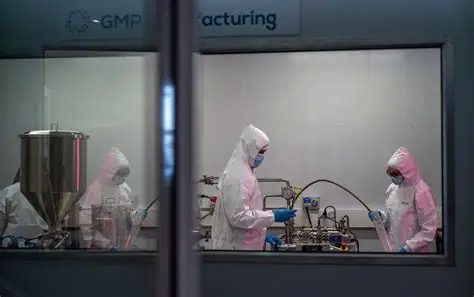
“South Africa has launched the Southern African Biomanufacturing Training Hub, a landmark project funded by the EU’s Global Gateway initiative and Germany’s KfW Development Bank. The hub will provide specialized training for 400 candidates annually, strengthening Africa’s health resilience and boosting South Africa’s role as a biotechnology leader.”
South Africa has taken a decisive step toward reshaping its biotechnology future with the establishment of the Southern African Biomanufacturing Training Hub. This initiative, spearheaded by the Council for Scientific and Industrial Research (CSIR) and supported by the European Union’s Global Gateway program alongside Germany’s KfW Development Bank, represents a landmark investment in Africa’s scientific and industrial capacity. It is not only a technological milestone but also a political statement about South Africa’s ambition to lead the continent in biotechnology innovation.
Background and Context
The COVID-19 pandemic exposed Africa’s vulnerability to global supply chain disruptions in vaccines and medicines. Countries across the continent struggled to secure timely access to life-saving treatments, underscoring the urgent need for local biomanufacturing capacity. The EU’s Global Gateway initiative, designed to strengthen infrastructure and resilience in partner countries, identified biotechnology as a critical sector for investment. South Africa, with its established research institutions and industrial base, was a natural choice to host this hub.
Objectives of the Hub
The hub aims to:
- Train 400 candidates annually in vaccine and pharmaceutical production.
- Develop a pipeline of highly skilled professionals in bioprocess development, quality control, and large-scale manufacturing.
- Strengthen Africa’s health security by reducing reliance on imported vaccines and medicines.
- Position South Africa as a continental leader in biotechnology and biomanufacturing.
Structure of the Training Program
The CSIR has designed a structured biomanufacturing training program that includes early, intermediate, and advanced levels. This pathway ensures that graduates progress from foundational skills to specialist expertise. The program combines theoretical learning with practical, hands-on training, preparing participants for the demands of modern biomanufacturing. Facilities will be upgraded to provide state-of-the-art laboratories and production environments, enabling realistic training scenarios.
Economic and Industrial Impact
The hub is expected to generate significant economic benefits:
- Job creation in biotechnology and related industries.
- Industrial competitiveness by fostering local production of vaccines and pharmaceuticals.
- Technological innovation through collaboration between academia, government, and industry.
- Export potential, as South Africa could supply vaccines and medicines to neighboring countries, strengthening regional integration.
Political and Strategic Significance
Beyond its technical role, the hub carries political weight. By hosting this initiative, South Africa signals its ambition to be a continental leader in science and technology. The EU’s involvement reflects a growing recognition of Africa’s strategic importance in global health security. Germany’s KfW Development Bank’s support highlights the role of international partnerships in building sustainable infrastructure.
Challenges and Risks
While the hub presents enormous opportunities, challenges remain:
- Sustained investment in workforce development is essential to maintain momentum.
- Technical training infrastructure must be continuously upgraded to keep pace with global standards.
- Partnerships among government, academia, and industry must be carefully managed to avoid duplication and inefficiency.
- Ensuring equitable access to training opportunities across Southern Africa will be critical to avoid concentration of benefits in urban centers.
Future Outlook
Over the next two years, the CSIR will focus on addressing critical skills shortages in vaccine production, quality control, and large-scale biomanufacturing operations. The hub is expected to become a regional center of excellence, attracting talent from across Africa. By 2030, South Africa could emerge as a global player in biotechnology, exporting not only products but also expertise.
Conclusion
The launch of the Southern African Biomanufacturing Training Hub marks a turning point in Africa’s biotechnology journey. It represents a bold vision for a continent that seeks to move from dependency to self-reliance in health innovation. For South Africa, it is both an opportunity and a responsibility: to lead, to innovate, and to ensure that the benefits of biotechnology reach every corner of the continent.



