




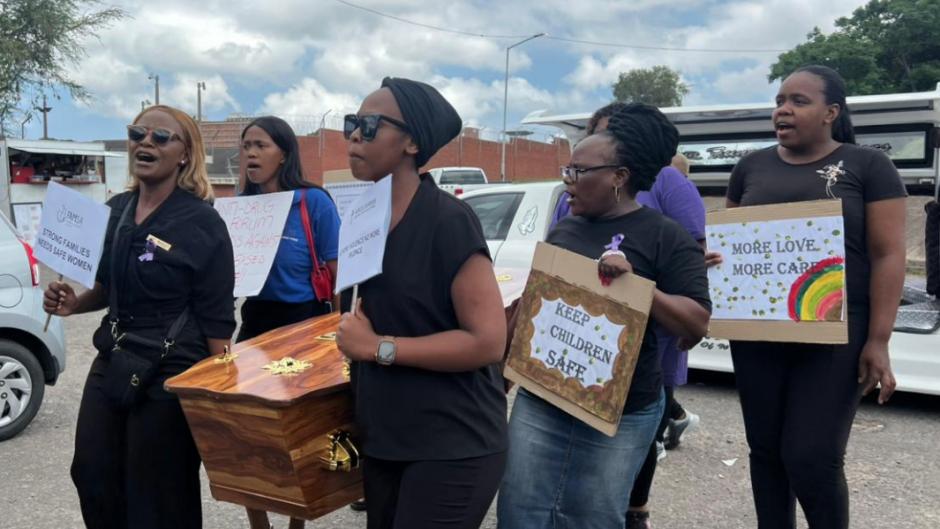
“South African gender-based violence activists and frontline organisations are demanding urgent government intervention as the country begins its annual 16 Days of Activism for No Violence Against Women and Children, calling for better-funded shelters, faster protection orders, improved investigations and stronger accountability for perpetrators. Their demands come amid alarming crime statistics, with 12,444 sexual offences, including 9,908 rape cases, reported nationally between July and September 2026.”
GBV Activists Demand Urgent Government Action as South Africa Launches 16 Days of Activism
Introduction: Renewed national pressure to end gender-based violence
South Africa has entered another year of the 16 Days of Activism for No Violence Against Women and Children, with civil society organisations, survivor-support groups and gender-based violence activists renewing their demands for meaningful government intervention. Beginning on 25 November and continuing until 10 December 2026, the campaign has once again placed the country’s persistent gender-based violence and femicide crisis at the centre of national political and social discussions.
This year’s campaign comes at a particularly important moment, as activists increasingly question whether existing government policies, public awareness initiatives and institutional commitments are producing sufficient improvements in the safety of women and children.
Frontline organisations argue that South Africa cannot continue relying primarily on annual awareness campaigns while survivors experience difficulties accessing shelters, counselling, legal assistance and effective protection from perpetrators.
Their message is that public commitments must translate into practical interventions, sufficient financial resources and measurable improvements in the criminal justice system.
According to an article published by IOL on 25 November, organisations working directly with survivors are calling for better-funded support services, faster protection orders, stronger investigations and more effective action against perpetrators.
1. Activists demand practical government intervention
The renewed calls for action come from organisations that regularly assist individuals experiencing domestic violence, sexual abuse, intimidation and other forms of gender-based violence.
Tessa Naidoo, deputy chairperson of the Rapid Response Team on GBV-Chatsworth, explained that gender-based violence remains a significant concern within communities.
According to her organisation, approximately 20 cases move through its multi-stakeholder support network during an average month.
Naidoo also raised concerns about incidents that are never formally reported to authorities. Consequently, official crime statistics may not capture the full extent of the problem.
She argues that government intervention must extend beyond awareness programmes to include accessible shelters, properly resourced counselling services, faster responses to protection-order applications and effective investigations.
Her recommendations also include perpetrator rehabilitation programmes and sustainable financial support for community organisations.
These demands highlight an important challenge for South Africa’s public institutions: survivors need protection and assistance when violence occurs, while communities also require effective prevention programmes to reduce future incidents.
Activists therefore want a coordinated response involving the police, healthcare facilities, justice institutions and social development services.
2. Alarming crime statistics intensify the campaign
The 2026 campaign is taking place against the background of concerning national crime statistics.
According to the figures reported by IOL, South Africa recorded 12,444 sexual offences between July and September 2026.
These included 9,908 rape cases, 1,824 sexual assaults, 530 attempted sexual offences and 182 contact sexual offences.
The figures also showed 5,590 murders nationally during the same three-month reporting period.
KwaZulu-Natal recorded 2,511 sexual offences, making it the province with the highest reported number during the period.
The Department of Social Development separately reported that 581 women were murdered between July and September 2026.
These figures demonstrate why activists continue demanding stronger interventions, although reported crime figures should not be interpreted as representing every incident because some victims never report their experiences.
The statistics also raise questions about the effectiveness of prevention, policing, survivor protection and the investigation of reported cases.
For civil society organisations, the challenge is not simply to encourage victims to report abuse. Authorities must also ensure that survivors receive appropriate assistance after approaching the criminal justice system.
3. Organisations highlight the difficulties survivors experience
Another important aspect of the activism campaign concerns the difficulties survivors face when attempting to rebuild their lives.
Keresha Govender, acting vice-chairperson of the DSK Group, which supports survivors of gender-based violence and LGBTQIA+ individuals, highlighted the importance of community support.
She explained that survivors may encounter stigma, isolation and judgement when attempting to recover from abusive experiences.
Financial resources and professional services are essential, but supportive families and communities also contribute to recovery.
This demonstrates that the effects of gender-based violence frequently extend beyond the immediate incident.
Survivors may experience emotional distress, financial insecurity, housing difficulties and challenges maintaining employment or education.
For this reason, organisations are encouraging communities to become more supportive and avoid blaming individuals who experience abuse.
Lubna Nadvi, chairperson of the Advice Desk for the Abused, also emphasised the importance of accessible assistance.
Her organisation reportedly assists approximately 30 victims every week, with women and girls representing the majority.
She called for increased investment in counselling, medical assistance, legal referrals, court support and shelter placements.
Such services are important because survivors often require assistance from several institutions rather than a single organisation.
4. Calls for stronger protection orders and justice
The campaign has also renewed attention on the role of the criminal justice system in protecting survivors.
Protection orders can provide an important legal mechanism for individuals experiencing domestic violence.
However, activists and legal practitioners have raised concerns about the practical difficulties some victims encounter when seeking protection.
Attorney Serisha Inderjeeth explained that women regularly approach her for assistance with protection orders, divorce proceedings and related legal matters.
She emphasised the importance of documenting incidents and seeking assistance from appropriate authorities.
Her recommendations include retaining relevant evidence, reporting incidents and obtaining medical assistance where necessary.
Nevertheless, survivors should not be expected to navigate the justice system without support.
Activists want authorities to improve responses to reported incidents, strengthen investigations and ensure that protection measures are implemented effectively.
They also argue that intimidation and threats must not be allowed to prevent survivors from pursuing justice.
The wider objective is to establish a system in which victims can report abuse without facing unnecessary obstacles and receive appropriate assistance throughout legal proceedings.
5. The 16 Days campaign focuses on collective responsibility
The South African Government’s 2026 campaign runs from 25 November to 10 December under the theme:
Letsema: Men, Women, Boys and Girls Working Together to End Gender-Based Violence and Femicide.
The theme emphasises shared responsibility and the importance of involving every section of society in preventing violence.
The campaign recognises that ending gender-based violence cannot be left exclusively to women, survivors, police officers, courts or social workers.
Men and boys are also being encouraged to challenge harmful behaviour, promote respect and contribute to safer communities.
The government has emphasised that the campaign must contribute to a broader 365-day effort rather than becoming an annual event that receives attention for only a few weeks.
This approach is significant because harmful attitudes and abusive behaviour cannot be addressed through public messaging alone.
Schools, families, workplaces, religious institutions, community organisations and government departments all have roles in promoting equality and preventing abuse.
The campaign also provides opportunities for public discussions, community education and cooperation between government and civil society.
6. Government commitments face increased scrutiny
South Africa has introduced various policies and interventions intended to strengthen its response to gender-based violence.
During the November campaign launch, Acting President Paul Mashatile emphasised the importance of moving beyond public commitments towards practical improvements.
The government’s announced interventions include reviewing unresolved cases involving women and children, reducing forensic backlogs, conducting women’s safety audits in municipalities and addressing alcohol-related violence.
These measures are intended to strengthen institutional responses and improve prevention.
Women’s safety audits are particularly important because the physical environment can influence people’s exposure to risk.
Poor street lighting, unsafe transport routes, abandoned buildings and neglected public spaces can create conditions that make communities feel unsafe.
Municipalities therefore have an important responsibility to work with residents to identify risks and introduce improvements.
However, activists continue emphasising that the success of these interventions should be assessed through implementation, transparency and measurable outcomes.
They want government departments to demonstrate what has changed, what resources have been committed and whether survivors are receiving improved assistance.
7. Civil society organisations remain central to the response
Community-based organisations play an important role in responding to gender-based violence.
Many provide services that survivors may struggle to access through formal institutions.
These include counselling, referrals, emergency assistance, legal guidance, awareness programmes and connections to shelters.
Their work also helps identify problems that may not be immediately visible in national government statistics.
However, many organisations operate with limited resources and depend on donations, volunteers and temporary funding arrangements.
This creates difficulties in maintaining consistent services, recruiting qualified personnel and extending assistance to underserved communities.
Activists therefore want government to strengthen financial support for organisations already working directly with affected communities.
Stable funding could help these organisations improve their capacity, maintain services and develop longer-term prevention programmes.
Partnerships between government departments and civil society could also improve coordination and reduce gaps in survivor assistance.
The challenge is to ensure that funding reaches organisations delivering practical services while maintaining transparency and accountability.
8. The importance of sustained activism beyond December
The 16 Days of Activism campaign provides an opportunity to increase public awareness, but activists argue that the response must continue throughout the year.
Gender-based violence does not stop when awareness events conclude.
Survivors require continuous access to protection, medical services, counselling and justice.
Similarly, prevention programmes must operate consistently in schools, communities and workplaces.
The demand for 365 Days of Activism reflects the need to maintain public attention and institutional responsibility beyond the official campaign period.
South Africans can contribute by challenging abusive behaviour, supporting survivors, participating in community initiatives and refusing to normalise harassment or violence.
People who require assistance can contact the South African GBV Command Centre on 0800 428 428, which provides a support channel for people affected by gender-based violence.
9. What South Africa must achieve
The renewed activism campaign places several practical priorities before government and society.
These include improving survivor access to shelters, strengthening the criminal justice response, ensuring effective investigations, reducing forensic delays and providing sustainable support to community organisations.
It also requires improved education about consent, equality and respectful relationships.
Government departments must coordinate their activities, while municipalities should work with communities to address unsafe public spaces.
Importantly, progress should be measured through publicly accessible information and practical outcomes rather than the number of awareness events conducted.
Regular reporting could help communities understand whether commitments are being implemented and where further intervention is required.
The role of civil society will remain important in monitoring progress and communicating the experiences of survivors.
Conclusion: Activism must translate into lasting protection
South Africa’s 2026 16 Days of Activism campaign has renewed national attention on gender-based violence and femicide, with frontline organisations demanding practical government action.
Their concerns reflect the continuing difficulties experienced by survivors seeking protection, support and justice.
Although the government has introduced policies and announced additional interventions, activists want stronger implementation, sustainable funding and greater accountability.
The campaign’s Letsema theme recognises that preventing violence requires cooperation across society.
However, meaningful progress will depend on whether political commitments translate into safer communities, accessible support services, effective investigations and improved protection for vulnerable people.
As the campaign continues until 10 December, the central challenge remains ensuring that the attention generated during these 16 days contributes to sustained action throughout the year.
For activists, the objective is not simply to raise awareness. It is to help create a country in which women and children can live safely, survivors can obtain justice and institutions fulfil their responsibility to protect human dignity.



