




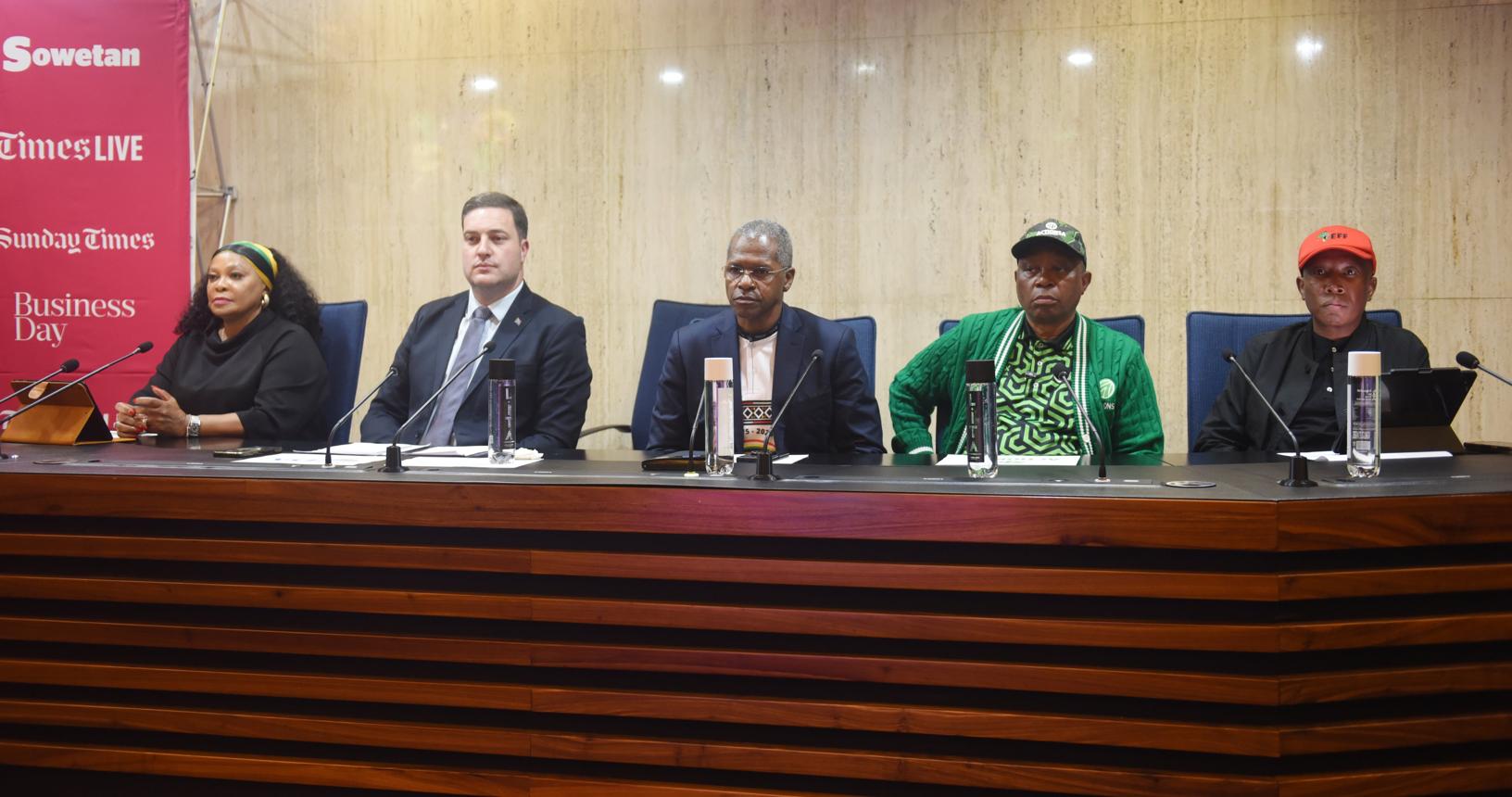
“A new political commentary published on 25 November examines the forces that may influence political decisions in South Africa, particularly when government actions appear disconnected from electoral expectations and public promises. It raises questions about political accountability, transparency and whether citizens have sufficient information to understand the decisions made in their name.”
Political Accountability and Public Opinion: South Africans Face Growing Questions About Who Really Influences Government Decisions
JOHANNESBURG, 25 November 2026 – Questions about political accountability, transparency and the influence of powerful interests are receiving renewed attention in South Africa following the country’s November 2026 local government elections. As political parties negotiate coalition arrangements and municipalities prepare new governing structures, citizens face an important democratic question: are political decisions being made according to voters’ expectations, or are other interests influencing the direction of government?
A political commentary published by The Common Sense on Wednesday, 25 November, examines this issue through the idea of political dark matter. The article argues that political parties, election results and public statements are visible, but the interests, relationships and incentives behind political decisions may not always be apparent to ordinary citizens.
The commentary encourages South Africans to examine political decisions more critically, particularly when parties make choices that appear inconsistent with their election promises, public statements or previously announced political positions.
The relationship between public opinion and political decision-making
Public opinion plays an important role in South Africa’s constitutional democracy. Citizens participate in elections, express their views through public consultations, question government policies and hold elected representatives accountable for their decisions.
However, the relationship between public expectations and political decision-making is not always straightforward. Political parties campaign on particular promises, but once elections are completed, governing requires negotiations, compromises and decisions involving competing interests.
This situation becomes especially important when no political party secures an outright majority. Parties must negotiate with potential coalition partners to establish administrations capable of passing budgets, appointing political leadership and delivering municipal services.
The November 2026 local government elections have increased the importance of these negotiations. The Common Sense commentary highlights the increased number of hung councils and continuing uncertainty surrounding coalition arrangements in some major municipalities.
Such circumstances create opportunities for smaller political parties to influence governing arrangements. Although coalition negotiations are a legitimate part of representative democracy, citizens have a reasonable interest in understanding how agreements are reached and whether they reflect the priorities expressed during election campaigns.
Coalition negotiations place political transparency under scrutiny
Coalition governments require political organisations to work together despite differences in ideology, leadership and policy priorities. These arrangements can help ensure that municipalities continue functioning when no party has enough council seats to govern independently.
Nevertheless, coalition negotiations can create questions about political accountability.
Voters may question why parties that previously criticised one another decide to cooperate after elections. They may also want explanations when political organisations reject partnerships that appear consistent with their publicly stated priorities but accept alternative arrangements involving substantial political differences.
There can be legitimate explanations for these decisions. Parties may disagree over leadership appointments, budget priorities, governance commitments or the practical requirements of managing a municipality.
However, the public deserves meaningful explanations rather than political statements that provide little information about the agreements being negotiated.
The Common Sense commentary identifies potential areas requiring scrutiny, including municipal appointments, public procurement, political financing, business relationships and access to government resources. These are issues raised for investigation and should not be interpreted as proof that particular political parties or individuals have engaged in misconduct.
The distinction is important. Democratic scrutiny must be based on verifiable evidence, documented relationships and transparent reporting rather than assumptions about hidden political arrangements.
Public confidence remains an important democratic concern
The debate about political accountability comes against a background of research showing that confidence in local government remains a significant concern.
Ipsos published research on 2 November 2026 indicating that only a quarter of South Africans over the age of 18 trusted their current local governments. The research also reported that 55% of registered voters were distrustful of their local governments.
These findings highlight the importance of service delivery, municipal management and responsiveness to community needs.
For many households, political accountability is experienced through everyday realities rather than parliamentary debates or party conferences.
Residents assess their municipalities through the availability of electricity, reliable water supplies, functioning roads, refuse collection, sanitation, public safety and the maintenance of public infrastructure.
When these services deteriorate, citizens may question whether elected representatives are prioritising community needs.
This helps explain why municipal performance can influence public attitudes towards political organisations. Voters often judge political leadership according to whether public promises translate into visible improvements in their communities.
Political parties therefore face an ongoing responsibility to demonstrate that their decisions are connected to the interests of residents.
Democratic dissatisfaction and voter participation
Another important dimension of public opinion is the relationship between political confidence and electoral participation.
An Eyewitness News report published on 6 November examined findings presented by the Human Sciences Research Council concerning declining satisfaction with democracy and the factors contributing to voter abstention.
HSRC research director Dr Benjamin Roberts highlighted a significant decline in satisfaction with the functioning of democracy since the early 2010s. He also explained that dissatisfaction with public services and corruption can influence how citizens participate in elections.
The report noted that preliminary turnout in the 2026 local government elections was approximately 54.5%, compared with 45.9% in 2021. Although turnout improved, millions of registered voters still did not participate.
These figures demonstrate why political participation cannot be understood simply by counting the votes cast.
The views of people who abstain from elections also matter. Some may face practical barriers to voting, while others may feel disconnected from political organisations or uncertain about whether elections can improve their circumstances.
It would be inaccurate to assume that every person who does not vote shares the same political concerns. Nevertheless, declining confidence in democratic institutions deserves serious attention from political leaders and researchers.
Electoral confidence and trust in democratic institutions
Public opinion about political leadership should also be distinguished from confidence in the institutions responsible for administering elections.
The Human Sciences Research Council released findings from its 2026 Election Satisfaction Survey on 6 November, based on interviews conducted on election day.
According to the research, 90% of participating voters considered election procedures free, while 91% rated them fair. Furthermore, 81% expressed overall trust in the Electoral Commission, and 95% reported confidence in the secrecy of their ballots.
The survey involved 13,198 face-to-face interviews across 300 nationally representative voting stations in all nine provinces.
These results provide an important perspective on South African public opinion.
They suggest that confidence in the administration of voting can remain relatively high even when citizens express dissatisfaction with political leadership or the performance of government institutions.
This distinction matters because democracy depends on several connected elements. Citizens need credible elections, but they also expect elected representatives to govern responsibly and respond to community concerns.
A satisfactory voting process does not automatically resolve dissatisfaction with unemployment, corruption, municipal failures or political accountability.
The importance of investigating political interests
The political dark matter argument raises questions about how citizens can evaluate decisions that appear inconsistent with public commitments.
One useful approach is to examine the relationship between political promises and subsequent government action.
For example, if a political organisation campaigns on transparent procurement, residents should be able to examine whether municipal contracts are awarded through credible processes and whether relevant information is publicly accessible.
Similarly, parties that promise improved municipal administration should be assessed according to measurable service delivery outcomes, financial management and the effectiveness of their oversight structures.
Journalists, civil society organisations and independent researchers also have important responsibilities.
Investigative reporting can examine public records, procurement contracts, municipal budgets, political agreements and the relationships between public officials and private interests.
However, allegations must be carefully verified. Political disagreements and unusual coalition arrangements do not, by themselves, demonstrate corruption or improper influence.
Transparency requires evidence, fair reporting and opportunities for those implicated in allegations to respond.
What citizens should expect from coalition governments
As municipalities establish governing arrangements following the November elections, residents have legitimate expectations concerning the conduct of their representatives.
First, coalition agreements should be communicated clearly. Citizens should understand which parties are working together, what commitments have been made and how disagreements will be managed.
Second, municipal appointments should follow appropriate legal and administrative procedures. Public positions should serve the interests of effective administration rather than undisclosed personal or political arrangements.
Third, procurement processes should be transparent, competitive and subject to proper oversight. Public resources must be managed in accordance with applicable laws and financial regulations.
Finally, municipalities should communicate measurable service delivery targets and report regularly on their progress.
These measures can help strengthen accountability even where political parties have significant ideological differences.
Conclusion: Public scrutiny remains essential to democracy
South Africa’s political environment is changing as coalition government becomes increasingly important at municipal level. The November elections have demonstrated that political representation is becoming more fragmented, requiring parties to negotiate and cooperate in new ways.
The Common Sense commentary published on 25 November raises an important question about the relationship between political decisions and the interests influencing them. Its central argument is that voters should examine political behaviour, question inconsistencies and seek explanations when public commitments do not appear to match government actions.
Recent Ipsos and HSRC research adds further context by highlighting concerns about local government trust, democratic satisfaction and electoral participation, alongside positive findings about confidence in election administration.
Ultimately, public opinion should not be treated as something that matters only during election campaigns. It is an ongoing expression of citizens’ expectations concerning political leadership, public resources and the quality of government services.
Political parties may negotiate coalitions, change strategies and compromise on policies. However, they remain accountable to the communities they represent.
For South Africa’s democracy to remain responsive, political leaders must provide clear explanations, citizens must have access to reliable information, and public institutions must maintain effective oversight.
The central democratic question is therefore not simply who occupies positions of political power. It is whether those positions are being used transparently, lawfully and in the interests of the public.



