




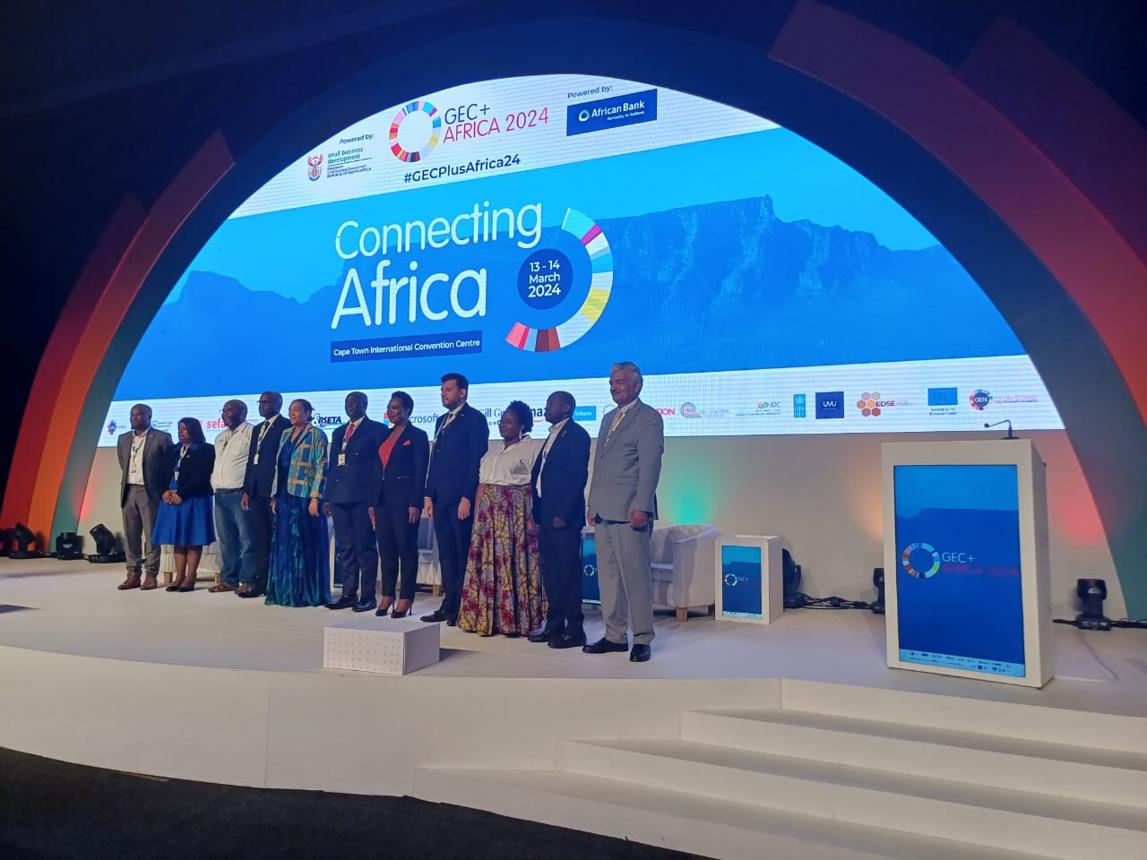
“GEC+Africa 2026 brought approximately 2,500 entrepreneurs, investors, policymakers, corporates and ecosystem leaders from 56 countries to Cape Town, highlighting the importance of stronger connections between African businesses, capital, markets and support organizations. The event also showcased emerging entrepreneurs and launched KUMii, an AI-powered platform designed to connect businesses with capital, markets, expertise and opportunities for growth.”
GEC+Africa 2026 Puts African Entrepreneurs, Investment and Market Access in the Spotlight
The conclusion of the Global Entrepreneurship Congress Africa 2026 in Cape Town has placed entrepreneurship, innovation, investment and cross-border business cooperation firmly at the centre of discussions about Africa’s economic future.
The two-day GEC+Africa 2026 gathering, hosted at the Cape Town International Convention Centre, brought together approximately 2,500 delegates from 56 countries, including 29 African countries. Entrepreneurs, investors, policymakers, corporates and organizations supporting businesses participated in discussions focused on strengthening entrepreneurial ecosystems and expanding access to capital, markets, skills and business opportunities.
Held under the theme “Connecting Africa,” the congress focused on the idea that entrepreneurs can benefit from stronger relationships across national borders. The event provided a platform for startups and established small and medium-sized businesses to engage with investors, policymakers and potential commercial partners.
The significance of the gathering extends beyond the two days of meetings. For South Africa, the event also highlighted Cape Town’s position as an important centre for entrepreneurship, technology, investment and business development.
Connecting entrepreneurs with capital and markets
Access to finance remains an important issue for entrepreneurs across Africa. Businesses can have products, customers and growth opportunities but still face difficulties obtaining the capital required to expand.
GEC+Africa placed this challenge within a broader discussion about how entrepreneurship ecosystems can work together. Rather than viewing entrepreneurs, investors, governments, corporates and support organizations as separate parts of the economy, the congress brought these groups together in one environment.
The event’s programme included keynote presentations, ministerial engagements, panel discussions, masterclasses, startup showcases, investor engagements and networking opportunities.
These activities are particularly relevant to entrepreneurs attempting to move from the early stages of business development into expansion. Access to a network can help founders identify potential investors, customers, suppliers, mentors and strategic partners.
However, networking alone does not guarantee business growth. Entrepreneurs still need viable products, sustainable business models, effective management systems and access to customers. The value of an entrepreneurship ecosystem therefore depends partly on whether relationships created through events can eventually translate into commercial opportunities.
African entrepreneurs showcase new business ideas
One of the major elements of GEC+Africa 2026 was its continental pitching competition.
Entrepreneurs from different African markets were given an opportunity to present their businesses and innovations. The competition demonstrated the diversity of challenges being addressed by African founders, from accessibility and waste management to climate technology and manufacturing.
According to the event organizers, deaftouch from South Africa took first place. The technology startup focuses on accessible communication solutions for Deaf and hard-of-hearing communities and includes a Deaf-to-Deaf call-centre model. Uganda’s women-led Helton Traders Limited placed second, while Egypt’s Agrona took third place with a climate-technology business focused on converting agricultural waste into lower-carbon materials.
The results provide an example of how entrepreneurship competitions can expose businesses to audiences beyond their domestic markets.
For South African entrepreneurs in particular, continental platforms can create opportunities to test whether products developed for local consumers could potentially serve customers elsewhere in Africa.
At the same time, expansion across borders can introduce additional challenges. Businesses must understand different regulations, currencies, consumer preferences, logistics systems and competitive environments before entering new markets.
KUMii introduces a digital approach to business support
Another development announced at the congress was the launch of KUMii, an AI-powered digital platform developed by 22 On Sloane.
The platform is designed to connect entrepreneurs and businesses with capital, markets, knowledge, expertise, tools and other opportunities intended to help businesses grow and scale.
Digital platforms of this type could become increasingly relevant as entrepreneurs search for information about funding, market opportunities, business support and professional expertise.
For a small business owner, identifying the right investor or support organisation can be difficult. Information may be spread across government departments, financial institutions, accelerators, incubators, corporate programmes and development organisations.
A platform that brings relevant opportunities into a more accessible environment could potentially reduce some of those information barriers.
Nevertheless, entrepreneurs will still need to evaluate opportunities carefully. Funding programmes have eligibility requirements, investors have different expectations, and markets require evidence of demand. Technology can make information easier to find, but it does not eliminate the fundamental work involved in building a sustainable company.
Why Cape Town matters to entrepreneurship
The choice of Cape Town as the host city also reflects the city’s role in South Africa’s startup and innovation environment.
22 On Sloane describes Cape Town as an important entrepreneurship and startup centre, while noting the city’s concentration of startups, accelerators, incubators and investors. The organization says Cape Town is home to a substantial share of South Africa’s startup activity.
The city provides several ingredients that entrepreneurs need, including universities, technology businesses, financial services, tourism, creative industries and access to international markets.
The presence of international delegates during GEC+Africa also gave Cape Town an opportunity to function as a meeting point between South African businesses and entrepreneurs from other African countries.
That cross-border dimension is increasingly relevant because African businesses operate within a continent where consumer markets and business opportunities extend beyond individual national economies.
The African Continental Free Trade Area has also contributed to wider discussions about expanding trade between African countries. For entrepreneurs, greater regional integration could create opportunities to sell products and services to larger markets, although businesses still need to navigate practical regulatory and logistical barriers.
Entrepreneurship and job creation
Entrepreneurship is frequently discussed in South Africa in connection with employment creation.
Small and medium-sized enterprises make up a large part of the country’s business landscape, but many smaller companies face difficulties progressing from survival to sustainable growth.
A September 2026 report based on research among 800 South African SMMEs found that 32.1% of surveyed businesses had been operating for more than 20 years, yet many remained small employers. The finding highlights an important distinction between business survival and business scaling.
For entrepreneurs, remaining in business for several years can demonstrate resilience, but growth requires additional capabilities.
These can include financial management, staff development, technology adoption, marketing, customer acquisition, supply-chain management and access to investment.
The GEC+Africa discussions therefore connect with a wider South African challenge: how to help more businesses move from operating at a small scale toward sustainable expansion.
The importance of local manufacturing
Entrepreneurship discussions in South Africa are also increasingly linked to manufacturing and local production.
Earlier in September, Takealot and the Technology Innovation Agency announced the 2026 Takealot TIA Local Innovation Challenge, known as “Made Local.” The programme targets existing Takealot sellers that manufacture selected consumer products in South Africa and offers training, mentorship and business support.
The programme illustrates how digital marketplaces can potentially provide entrepreneurs with both infrastructure and access to customers.
For manufacturing entrepreneurs, however, reaching consumers is only one part of the equation. Businesses must also manage production capacity, quality standards, inventory, logistics, financing and consistent demand.
These issues reinforce the broader message emerging from entrepreneurship discussions: successful businesses need more than ideas. They require systems capable of turning those ideas into commercially sustainable operations.
Technology is changing entrepreneurship
Technology was another important thread running through the broader GEC+Africa programme.
Digital tools are changing how entrepreneurs develop products, market businesses, communicate with customers and analyse information. Artificial intelligence is also becoming increasingly relevant to startups and small businesses.
South Africa’s entrepreneurship ecosystem is seeing initiatives that specifically target AI-based businesses. For example, Injini launched an AI for Education Venture Builder and Incubation Programme in September, supporting teams developing technology for education challenges in African markets. The programme includes an incubation phase and equity-free seed funding for selected ventures.
Such initiatives demonstrate the growing connection between entrepreneurship and technological innovation.
However, technology adoption also introduces new questions around affordability, skills, data protection, cybersecurity and responsible use. Entrepreneurs therefore need to consider not only what technology can do, but whether it solves a genuine customer problem and creates measurable value.
What GEC+Africa means for South African entrepreneurs
For South African entrepreneurs, the significance of GEC+Africa lies partly in the connections created between local businesses and the wider African entrepreneurial ecosystem.
The congress brought together businesses at different stages, from startups and MSMEs to investors and larger organizations.
That creates an environment in which entrepreneurs can learn from businesses operating in different markets.
A South African founder, for example, may discover that a problem encountered domestically is also being addressed by entrepreneurs in Kenya, Ghana, Nigeria, Uganda or Egypt. Conversely, a solution developed in South Africa could potentially be adapted for another African market.
The value of such connections ultimately depends on what happens after the event. Partnerships need to develop into commercial relationships, investment agreements, market access or other measurable forms of business support.
Looking beyond entrepreneurship events
GEC+Africa has highlighted the opportunities available when entrepreneurs, investors, policymakers and support organizations meet around common objectives.
However, the long-term development of entrepreneurship in South Africa will depend on conditions beyond major conferences.
Entrepreneurs need access to finance, reliable infrastructure, customers, skills, appropriate regulation and markets. They also need business support that extends beyond the launch phase and helps companies manage the challenges associated with growth.
The recent focus on SMME survival and scaling illustrates why this issue matters. A company can survive for many years without becoming a significant employer or expanding into new markets. The next stage is helping viable businesses develop the capacity to grow.
GEC+Africa’s focus on connections, investment, markets and expertise addresses several of these issues at an ecosystem level.
The event therefore represents one part of a much broader entrepreneurship story in South Africa: the continuing effort to turn entrepreneurial ideas into sustainable businesses that can create employment, develop new products, enter new markets and contribute to economic activity.
As the congress concluded in Cape Town, its organisers emphasised that the relationships created during the event could continue influencing African entrepreneurship beyond the conference itself.
For South African entrepreneurs, investors and business-support organization, the next measure of impact will ultimately be whether those connections result in businesses securing customers, investment, partnerships and opportunities to scale.



