




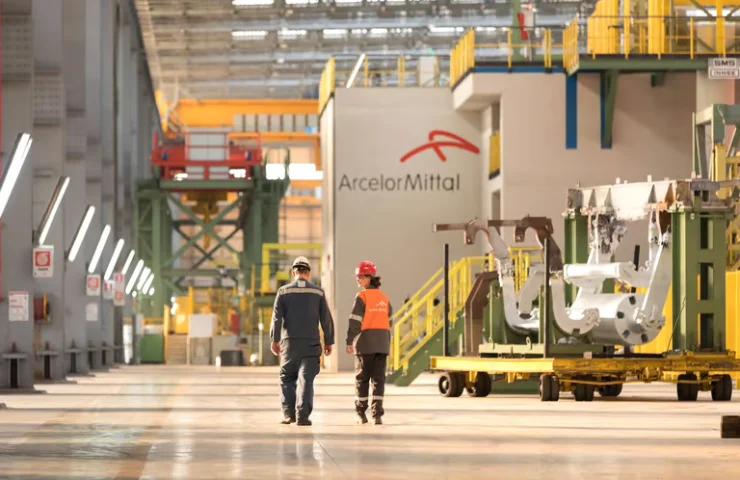
“South Africa’s Industrial Development Corporation has reportedly tabled an offer of between R2.8 billion and R3 billion for an 80% stake in ArcelorMittal South Africa (Amsa), according to a report published by Business Times on 27 September 2026. The proposed transaction could take the struggling steelmaker off the JSE temporarily before a restructuring and potential relisting, but negotiations remain delayed over conditions including the treatment of Amsa’s empowerment partner, Likamva Resources.”
IDC offer puts ArcelorMittal South Africa at the centre of the market
South Africa’s investment and industrial markets are watching developments around ArcelorMittal South Africa (Amsa) after the Industrial Development Corporation (IDC) reportedly tabled an offer of between R2.8 billion and R3 billion to acquire an 80% stake in the country’s largest steel producer.
The proposal, reported by Business Times on Sunday, 27 September 2026, represents a significant development in the long-running efforts to find a sustainable future for Amsa. According to sources cited by the publication, the offer was tabled in July, but implementation has been delayed while the parties work through outstanding conditions, particularly those relating to the company’s empowerment structure.
The reported transaction would give the state-owned IDC effective control of Amsa while the steelmaker would retain 20%. The proposal also envisages Amsa being delisted from the Johannesburg Stock Exchange before undergoing restructuring and subsequently being relisted.
For markets, the development is significant because Amsa’s difficulties have extended well beyond one listed company. The steelmaker sits within South Africa’s industrial supply chain and serves sectors including construction, manufacturing, mining, transport and automotive production. Its financial condition therefore has implications for investors, suppliers, customers, employees and companies that depend on locally produced steel.
Deal reportedly close on several key terms
Business Times reported that the parties have agreed on “nearly everything”, including pricing, but remain divided over the treatment of Likamva Resources, Amsa’s black economic empowerment partner. The publication reported that Likamva holds a 17% interest under a 10-year agreement that expires at the end of 2026.
Amsa has not independently confirmed the reported R3 billion transaction structure. In its 28 August cautionary announcement, the company said discussions involving Amsa, its parent company ArcelorMittal Group and the IDC had reached an advanced stage. The company also said it would make further announcements when appropriate.
The IDC, meanwhile, told Business Times that it does not comment on speculation involving listed companies, but confirmed that it remains engaged with Amsa, the ArcelorMittal Group and government partners, including the Department of Trade, Industry and Competition, in an effort to find a lasting solution for the steelmaker.
This distinction is important for investors. Until binding agreements, required approvals and formal stock-exchange announcements are completed, the reported terms should be treated as information from sources familiar with the negotiations rather than as a completed transaction.
Amsa’s difficult financial position
The proposed intervention comes after a prolonged period of financial pressure at Amsa.
The company reported a headline loss of approximately R1.49 billion for the six months ended June 2026, while its earnings before interest, tax, depreciation and amortisation loss was R409 million. Engineering News reported that the interim result was affected by weak steel prices, increased imports and substantial nonrecurring costs associated with the restructuring of the business.
Amsa has also been restructuring its operations following the wind-down of its long-steel business. The company’s Newcastle facility in KwaZulu-Natal was placed into care and maintenance as part of the process, while its remaining operations have been adjusted to reflect the changed operating environment.
The company’s own published information records that the Long Steel Business was formally wound down and that no production activities were taking place at Newcastle under the company’s revised operating structure. Amsa has instead been examining options involving selected assets, partnerships and potential monetisation opportunities.
The difficulties facing Amsa have been attributed to a combination of factors, including weak domestic demand, high electricity and logistics costs, international steel-market conditions and increased competition from imported steel.
Engineering News has also reported that South Africa’s broader steel industry is facing structural pressure, with downstream manufacturers and fabricators affected by changes in domestic steel availability.
What the proposed IDC transaction could mean for the JSE
From a capital-markets perspective, the proposed transaction could represent a major change in Amsa’s status.
Business Times reported that the proposed structure would involve an Amsa delisting followed by a restructuring and eventual relisting. The report said the company’s JSE market value had fallen to roughly R1.3 billion, compared with approximately R56 billion at its 2007 peak.
A transaction valued at as much as R3 billion would therefore be considerably larger than Amsa’s reported current market capitalisation. However, the comparison should not be interpreted as a simple premium because a transaction involving a distressed or heavily indebted company can involve recapitalisation, debt restructuring, changes in ownership and other financial adjustments.
For existing shareholders, the details of any final transaction would therefore be critical. The treatment of minority shareholders, existing debt, employee interests, empowerment ownership and future listing arrangements would all affect the ultimate economic consequences.
The proposed transaction also illustrates how South Africa’s development-finance institutions can influence listed-company restructuring where an industrial asset is regarded as strategically important.
Government’s interest in maintaining domestic steel capacity
The IDC’s involvement reflects the wider economic importance attached to steel manufacturing in South Africa.
The corporation has previously stated that a competitive domestic steel industry is important to the country’s industrialisation and infrastructure objectives. Business Times reported that the IDC’s stated objective in its discussions with Amsa is to help protect South Africa’s steel-manufacturing capabilities.
The issue extends beyond the steel mills themselves. Steel is an input into construction, engineering, automotive manufacturing, mining equipment, infrastructure and numerous other activities.
A reduction in domestic production can therefore increase dependence on imports, while disruptions to local supply can affect manufacturers that require specific grades and products.
Recent reporting from Engineering News has highlighted supply constraints affecting parts of South Africa’s steel-fabrication industry following the closure of Newcastle’s long-steel operations.
That creates a complicated market environment. A transaction that stabilises Amsa could provide greater certainty for customers and suppliers, but the long-term outcome would depend on whether the restructured company can operate sustainably rather than relying indefinitely on financial support.
Previous IDC support
The reported R3 billion proposal is not the IDC’s first financial intervention involving Amsa.
Business Times reported that the development financier previously provided Amsa with a R1 billion lifeline, followed by an additional R1.68 billion to defer the winding down of the long-steel business. The publication also reported that Amsa received R417 million through a temporary employee relief scheme supporting thousands of workers.
These interventions underline the scale of the financial challenge facing the company.
Earlier reporting also showed that investors had been closely monitoring the IDC negotiations. Moneyweb reported in September that Amsa’s share price had risen significantly as investors anticipated progress toward a possible rescue transaction.
News24 similarly reported in August that Amsa shares rose after the company announced that discussions with the IDC had reached an advanced stage. At the time, News24 noted that the IDC already held a minority stake in Amsa and had provided financial support.
The empowerment question
One of the most important unresolved issues is the position of Likamva Resources.
According to Business Times, Likamva’s empowerment agreement is due to expire in December. Sources cited by the publication said disagreement over whether and how Likamva would participate in the proposed transaction had become one of the obstacles to completing the deal.
This issue could have implications for the transaction structure, shareholder rights and regulatory approvals.
It also demonstrates that a corporate restructuring in South Africa can involve considerations extending beyond valuation and financing. Ownership structures, empowerment commitments, employment obligations and industrial-policy objectives can all influence the eventual form of a transaction.
The claims made by sources about the motivations and positions of individual parties remain contested or unconfirmed publicly. Amsa has declined to comment beyond its formal cautionary announcement, while the IDC has avoided commenting on speculation surrounding the listed company.
What investors will watch next
Markets will now be focused on several developments.
First, investors will want to see whether the reported proposal becomes a binding transaction. Second, they will look for details about the proposed ownership structure, financing, debt treatment and the future of Amsa’s JSE listing.
Third, the market will want clarity about the company’s operating strategy following restructuring. The future of the Newcastle assets, Vanderbijlpark operations and other facilities will be important to determining whether the transaction creates a sustainable steel producer.
Finally, investors will monitor the treatment of existing shareholders and the empowerment structure.
Until those details are formally announced, the reported R3 billion offer remains a developing transaction rather than a completed acquisition.
Broader implications for South Africa’s markets
The Amsa development arrives at a time when investors are closely examining the country’s industrial base, infrastructure prospects and role of development-finance institutions.
Amsa’s situation also highlights the relationship between financial markets and the real economy. A listed company’s share price can reflect expectations about future earnings, but industrial assets such as steel mills also affect employment, supply chains, infrastructure costs and manufacturing capacity.
For South Africa’s markets, the outcome of the IDC-Amsa negotiations could therefore become an important case study in how the country attempts to preserve strategic industrial capacity while addressing the financial realities of a company that has accumulated substantial losses.
For now, the key fact is that the IDC has reportedly tabled an offer of up to R3 billion for an 80% stake in Amsa, while negotiations remain incomplete. The next formal announcement from Amsa, the IDC or the relevant authorities should provide greater clarity on whether the proposed transaction can move from advanced negotiation into a binding restructuring.



