




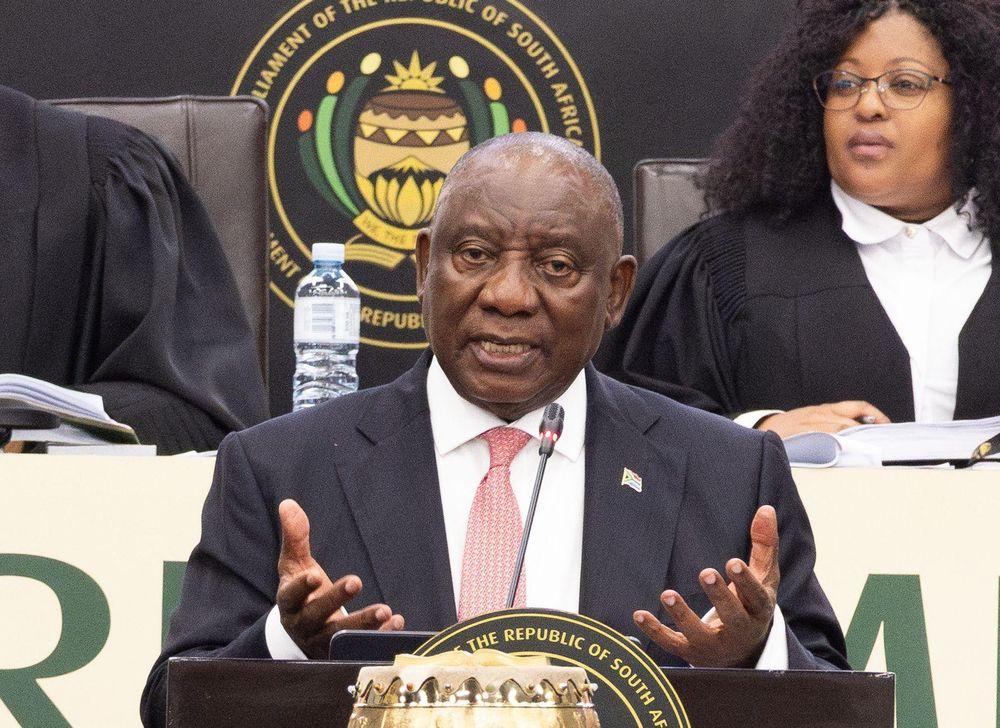
“South Africa’s Western Cape High Court has unanimously set aside the Section 89 independent panel report concerning the Phala Phala farm theft scandal, removing the legal foundation for the parliamentary impeachment proceedings initiated against President Cyril Ramaphosa. The ruling represents a significant legal victory for the president but raises important questions about Parliament’s constitutional responsibility to hold the country’s highest political office accountable, the future of impeachment proceedings and public confidence in South Africa’s democratic institutions.”
High Court Sets Aside Phala Phala Impeachment Report as South Africa Faces Renewed Questions About Presidential Accountability
Introduction
South Africa’s constitutional democracy has entered another significant political and legal moment following a unanimous Western Cape High Court judgment setting aside the independent parliamentary panel report concerning President Cyril Ramaphosa and the Phala Phala farm theft scandal. The judgment, delivered on 25 November 2026, has fundamentally changed the direction of the impeachment process that had threatened the president’s political position since 2022.
The ruling provides Ramaphosa with substantial legal relief by declaring the Section 89 independent panel report unlawful and invalidating parliamentary steps taken on the basis of that report. However, the decision has also placed Parliament under renewed scrutiny, particularly concerning its constitutional responsibility to establish effective mechanisms for presidential accountability.
The controversy is particularly important because it involves the relationship between the executive, legislature and judiciary, three institutions that must operate independently while maintaining constitutional checks and balances.
Background to the Phala Phala controversy
The Phala Phala controversy originated from a burglary at Ramaphosa’s private game farm in Limpopo on 9 February 2020. Foreign currency, reported to amount to approximately US$580,000, was stolen from the property.
The incident attracted national attention after former intelligence chief Arthur Fraser submitted allegations concerning the circumstances surrounding the theft, including questions about the money’s origins, how the incident was reported and the subsequent investigation.
Ramaphosa maintained that the money originated from a legitimate transaction involving the sale of buffalo. He also denied allegations of wrongdoing and maintained that he had reported the incident through appropriate security channels.
Nevertheless, the controversy developed into a major political challenge because of questions concerning whether the president had complied with his constitutional obligations and whether state resources or security officials had been improperly involved in investigating the incident.
In November 2022, an independent panel led by former Chief Justice Sandile Ngcobo issued a report indicating that information before it disclosed a prima facie case requiring further consideration.
The findings created the possibility of impeachment proceedings under Section 89 of South Africa’s Constitution.
The report became politically significant because it provided the basis for further parliamentary action against a sitting president.
High Court delivers a significant constitutional judgment
The Western Cape High Court’s decision represents the most important development in the latest chapter of the controversy.
The full bench, comprising Judge President Nolwazi Mabindla-Boqwana, Judge Mark Sher and Judge Ncumisa Mayosi, unanimously ruled in Ramaphosa’s favour.
The court found that the independent panel had misunderstood important aspects of its mandate and had made material legal errors when evaluating the information presented to it.
One of the central issues concerned the distinction between information suggesting that allegations deserved investigation and sufficient evidence to justify the next stage of the impeachment process.
The court found that the panel had not applied the correct legal test required by the parliamentary rules.
It also concluded that the panel had gone beyond the prescribed scope of its inquiry.
Consequently, the court declared the report unlawful and set it aside in its entirety. It also invalidated steps taken by the National Assembly pursuant to that report.
This means that the parliamentary impeachment process cannot simply continue using the invalidated report as its foundation.
The judgment demonstrates the importance of procedural fairness and lawful decision-making, particularly when constitutional processes have potentially serious consequences for elected officials.
However, the decision does not constitute a criminal acquittal or a comprehensive judicial determination of every allegation associated with the original burglary.
Ramaphosa receives political relief
For President Ramaphosa, the judgment represents an important political development.
The Phala Phala controversy has remained a recurring issue throughout his presidency, attracting criticism from opposition parties, political commentators and sections of civil society.
The possibility of impeachment created uncertainty around his leadership and placed additional pressure on the African National Congress.
The court’s decision removes the immediate threat associated with the existing parliamentary process.
It also gives the president an opportunity to focus on other government priorities, including economic recovery, public administration, infrastructure development and political stability.
Nevertheless, the political implications extend beyond the immediate legal victory.
South Africa is approaching another important period in the ANC’s internal political development, with the party’s next elective conference expected in December 2027.
The removal of the impeachment report could influence political discussions surrounding leadership succession and the president’s remaining time in office.
However, it would be premature to conclude that the controversy has disappeared permanently.
Opposition parties may consider further legal action, while questions about the underlying allegations remain part of the broader public debate.
The Presidency has indicated that Ramaphosa will study the judgment, maintaining that he respects judicial independence and the rule of law.
Parliament faces difficult decisions
Although the president has obtained a favourable judgment, Parliament faces a complicated institutional challenge.
National Assembly Speaker Thoko Didiza has indicated that she will study the judgment and consider its implications for Parliament and the impeachment committee.
Parliament must determine how to implement the court order while protecting its constitutional responsibilities.
One possible response would be to accept the ruling and discontinue the proceedings that depended on the invalidated report.
Another possibility would involve considering an appeal, provided the relevant legal requirements and procedures are satisfied.
Political representatives may also examine whether a fresh parliamentary process could lawfully be initiated under the applicable constitutional framework.
However, restarting the process would require careful legal consideration.
The original report cannot simply be reused after being declared unlawful. Any future proceedings would need to comply with constitutional requirements, parliamentary rules and the principles established by the judgment.
The challenge is therefore not merely political.
It concerns Parliament’s ability to exercise oversight powers independently, lawfully and consistently.
This is particularly important because Parliament is expected to scrutinise executive decisions regardless of the political party controlling government.
If parliamentary oversight becomes ineffective, public confidence in democratic accountability may weaken.
Constitutional accountability remains central
South Africa’s Constitution establishes a system in which the president and other public officials are subject to legal and parliamentary oversight.
Section 89 provides a mechanism through which the National Assembly can remove a president under specified circumstances.
However, impeachment is an exceptional constitutional measure and must be conducted according to established procedures.
The Phala Phala judgment highlights why these procedures matter.
A parliamentary investigation must distinguish between allegations, information, admissible evidence and findings that meet the relevant legal requirements.
Institutions cannot disregard procedural requirements simply because a matter has attracted substantial public interest.
Equally, procedural requirements should not become an excuse for avoiding legitimate investigations into possible misconduct.
A strong constitutional democracy needs both principles.
Judicial oversight protects individuals against unlawful administrative and parliamentary decisions. Parliamentary oversight, meanwhile, ensures that the executive remains accountable to elected representatives and ultimately to the public.
The two functions should complement rather than undermine each other.
The latest judgment therefore provides an opportunity to clarify how presidential impeachment procedures should operate in practice.
Opposition parties and public reactions
The ruling has generated significant political discussion because opposition parties have different interests and perspectives concerning the outcome.
The African Transformation Movement, which has supported efforts to pursue the impeachment matter, has criticised the outcome and indicated that further legal options may be considered.
Other opposition representatives may question whether the decision creates difficulties for future efforts to hold senior political officials accountable.
Meanwhile, supporters of Ramaphosa are likely to interpret the ruling as confirmation that the original parliamentary process was legally defective.
These competing political interpretations demonstrate the continuing significance of the controversy.
However, the most important consideration should remain the constitutional implications rather than the immediate political advantages enjoyed by individual parties.
South Africa’s democratic institutions must maintain public confidence by demonstrating that allegations involving powerful individuals receive appropriate consideration.
Political disagreements are expected in a multiparty democracy, but institutional decisions should be based on law, evidence and transparent procedures.
The judgment also reinforces the importance of distinguishing between political criticism and judicial findings.
A court decision concerning the legality of a parliamentary report should not automatically be interpreted as a determination that every underlying allegation was false.
Similarly, allegations should not be treated as established misconduct without appropriate evidence and lawful findings.
Implications for public trust and democratic governance
The Phala Phala controversy has broader implications for public confidence in South Africa’s governance system.
Citizens expect public officials to demonstrate transparency, integrity and accountability.
These expectations are especially important when allegations involve the president, who occupies the highest executive office in the country.
The government’s ability to maintain public confidence depends partly on whether accountability institutions are perceived to operate independently and consistently.
When investigations become politically contested or legal procedures fail, public frustration can increase.
South Africa already faces considerable governance challenges involving corruption, municipal administration, infrastructure failures and public service delivery.
Consequently, the country cannot afford prolonged uncertainty concerning the effectiveness of its accountability mechanisms.
Parliament must demonstrate that it can exercise oversight without political interference.
The judiciary must continue to protect constitutional principles and ensure that public institutions act within their legal authority.
The executive must remain committed to transparency and responsible administration.
These responsibilities are interconnected.
A democratic system becomes stronger when its institutions can investigate allegations, correct procedural failures and establish accountability without compromising constitutional protections.
The wider political environment
The judgment comes at a particularly important time for South Africa.
The country’s political landscape has become increasingly fragmented following the 2026 local government elections.
Coalition negotiations and disputes over municipal leadership have created uncertainty in several important municipalities.
These developments have increased pressure on national political leaders to demonstrate effective governance and institutional stability.
The International Monetary Fund has also warned that prolonged political gridlock could weaken investor confidence and undermine economic reforms.
Its assessment emphasises the importance of strengthening governance, improving public administration and accelerating anti-corruption measures.
The Phala Phala judgment should therefore be considered within this wider environment.
Although the case concerns presidential accountability, its implications reach beyond the Presidency.
It highlights the importance of predictable legal processes, institutional independence and effective political oversight.
South Africa’s ability to attract investment and improve service delivery depends partly on confidence that its public institutions can function effectively.
What happens next?
The immediate priority is for Parliament and the Presidency to study the full judgment and determine the appropriate legal and institutional responses.
Speaker Thoko Didiza must consider the implications for parliamentary proceedings, while opposition parties must decide whether to pursue available appeal procedures.
Any attempt to restart impeachment proceedings would require a legally sound foundation and compliance with the applicable parliamentary framework.
The possibility of further litigation means that the wider political debate may continue.
Nevertheless, the immediate consequence is clear: the existing Section 89 report and parliamentary steps based on it have been set aside.
South Africa now faces an important opportunity to strengthen its constitutional procedures and clarify how allegations against a sitting president should be assessed.
Conclusion
The Western Cape High Court’s decision to set aside the Phala Phala independent panel report is a significant development in South African politics and governance.
It gives President Cyril Ramaphosa substantial legal and political relief while creating important questions about Parliament’s future handling of presidential accountability.
The judgment reinforces a fundamental constitutional principle: public institutions must exercise their powers lawfully, respect procedural requirements and remain accountable for their decisions.
However, protecting constitutional procedures must go hand in hand with maintaining effective oversight of political leaders.
For South Africa, the real test will be whether Parliament, the Presidency and other democratic institutions can use this moment to strengthen public trust, improve accountability and demonstrate that constitutional democracy applies equally to everyone, regardless of political position.
The Phala Phala controversy may have entered a new legal chapter, but the broader debate about transparency, ethical leadership and responsible governance remains central to South Africa’s democratic future.



