




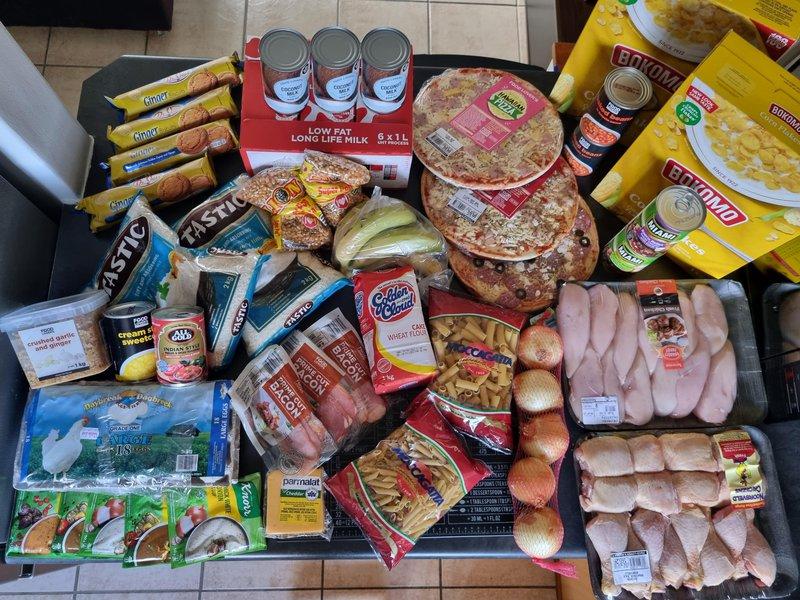
“South Africa’s average household food basket increased to R5,530.83 in November 2026, rising by R18.30 from October and R117.30 compared with November 2025, according to the latest PMBEJD Household Affordability Index. The increase highlights the continuing pressure on household purchasing power, particularly among low-income families whose wages and social grants are insufficient to cover basic nutritional needs.”
South Africa’s household food basket reaches R5,530.83 as rising grocery costs deepen the affordability crisis
Introduction: Household food affordability remains a major economic concern
South African households are facing continued pressure from rising food costs, with the latest November 2026 Household Affordability Index showing that the average household food basket has increased to R5,530.83. The findings, published by the Pietermaritzburg Economic Justice and Dignity Group (PMBEJD), highlight the financial difficulties experienced by consumers as they attempt to balance food expenditure against wages, transport costs, electricity bills and other essential household expenses.
The report is particularly important because food represents a substantial proportion of household expenditure, especially among low-income families. Consequently, even relatively small increases in the prices of basic necessities can have significant consequences for household consumption, living standards and financial stability.
The November figures show that the average food basket increased by R18.30 compared with October 2026. On an annual basis, the basket increased by R117.30, representing growth of approximately 2.2% compared with November 2025, when it cost R5,413.53.
These developments provide an important indication of the microeconomic conditions affecting South African consumers, particularly the relationship between prices, purchasing power, household demand and the availability of affordable essential goods.
Understanding the November household food basket
The PMBEJD Household Affordability Index measures the prices of 44 basic food products across 52 supermarkets and 36 butcheries. Its research covers different communities and urban centres, allowing the organisation to monitor changes in food affordability across South Africa.
The November 2026 results reveal that food prices are not increasing uniformly. While certain products have become more expensive, others have recorded meaningful price reductions.
Oranges experienced one of the largest increases, rising by 26% during November. Chicken feet and wors also recorded increases of at least 5%. Other products experiencing increases of 2% or more included maize meal, rice, cake flour, white sugar, samp, frozen chicken portions, spinach, green pepper, tinned pilchards and canned beans.
Meanwhile, several vegetables became cheaper. Butternut prices decreased by 16%, while carrots, onions, potatoes and cabbage also recorded reductions of at least 5%.
These contrasting movements demonstrate how supply and demand conditions influence individual product markets. Seasonal availability, production conditions, transportation expenses, distribution costs and consumer purchasing patterns can all contribute to differences in retail prices.
For consumers, however, a reduction in the price of one product does not necessarily compensate for increases in other essential purchases. Families must purchase a combination of food products to maintain a balanced diet, making the overall cost of the basket more important than the movement of an individual item.
The relationship between wages and household purchasing power
One of the most concerning findings concerns the difference between minimum wages and the actual cost of supporting a household.
According to the November report, a general worker earning the national minimum wage of R30.23 per hour could earn approximately R4,836.80 during a month containing 20 working days.
This amount is significantly lower than the average household food basket cost of R5,530.83.
The difference is R694.03, meaning that a worker earning this amount cannot independently purchase the entire average food basket, even before paying for electricity, accommodation, transport, healthcare, education and other necessities.
The challenge becomes more serious when one considers that workers frequently support dependants rather than spending their entire salaries on themselves.
PMBEJD indicates that one wage may support approximately four people in many black South African working households. Dividing R4,836.80 equally among four people produces approximately R1,209.20 per person monthly.
This amount remains considerably below the reported upper-bound poverty line of R2,962 per person per month.
The figures illustrate the difference between employment and economic security. Although a person may have a job and receive a regular salary, that income may still be insufficient to provide adequate food and meet basic household requirements.
From a microeconomic perspective, this situation reflects the limitations of household purchasing power. Consumers with limited disposable income must prioritise necessities and reduce expenditure on products and services that are considered less essential.
Transport and electricity reduce money available for groceries
Food affordability cannot be understood independently of other household expenses.
Transport and electricity costs are particularly important because they consume money that households would otherwise use to purchase food.
PMBEJD’s November calculations indicate that transport and electricity together account for approximately R3,183.45 of the calculated R4,836.80 monthly minimum wage.
This leaves approximately R1,653.35 for groceries and other household necessities.
Consequently, families are forced to make difficult decisions about how to distribute their limited resources.
The situation also demonstrates how increases in one market can affect demand in another. For example, when transport fares increase, commuters have less disposable income available for groceries. When electricity expenses rise, households may reduce spending on food, clothing, personal care and other products.
This relationship is particularly significant for low-income consumers, whose expenditure is concentrated on necessities.
Earlier research around Gauteng taxi ranks also highlighted how higher transport costs reduce the money available for everyday purchases. The research found that consumers were increasingly making smaller purchases and looking for products that matched their immediate budgets.
Regional differences in food prices
Another important aspect of the November findings is the variation in food basket costs between South African cities.
The PMBEJD national figures show that the average basket costs R5,530.83, but individual locations experience different price movements.
During November, the food basket increased in Durban by R8.64, Cape Town by R92.80, Springbok by R64.70 and Mthatha by R67.09.
In contrast, Johannesburg recorded a decrease of R14.18, Pietermaritzburg decreased by R65.49, and Mtubatuba recorded a reduction of R154.89.
These differences demonstrate the importance of local market conditions.
Retail prices can vary because of transportation distances, distribution networks, competition between retailers, local demand, storage costs and the availability of agricultural products.
For example, consumers living in areas with limited retail competition may have fewer opportunities to compare prices or purchase cheaper alternatives.
Similarly, communities located far from major distribution centres may face additional costs associated with transporting agricultural products and manufactured food items.
The regional findings therefore suggest that national averages should be considered alongside local affordability conditions when evaluating household economic welfare.
Inflation adds pressure to household budgets
The November food affordability findings come against a background of rising consumer inflation.
Statistics South Africa reported that headline consumer inflation increased to 5.2% in October 2026, compared with 4.5% in September. This was the highest annual inflation rate in almost two-and-a-half years.
Food and non-alcoholic beverage inflation also showed increases in selected categories. Vegetable inflation accelerated, with onion prices increasing by 53.6% over 12 months, potato prices by 14.9% and cabbage prices by 12.1%.
However, some important staples, including maize meal and white rice, recorded annual price reductions. These differences demonstrate that inflation does not affect every household purchase equally.
Transport inflation was another major contributor, with the annual rate reaching 15.2% in October. Higher fuel costs contributed to the increase, creating additional pressure on businesses and consumers.
For households, these developments mean that the cost of living depends on a combination of food prices, transport expenses, electricity costs and other essential services.
How consumers are changing their purchasing behaviour
Rising living costs are changing the way South African households approach shopping.
Consumers with limited disposable income increasingly compare prices, purchase smaller quantities, switch brands and prioritise products that offer the greatest immediate value.
Rather than purchasing large quantities of groceries at once, some households are moving towards smaller, more frequent shopping trips.
This behaviour is particularly visible in informal retail markets, where consumers may purchase bread, milk, maize snacks, cooking essentials and airtime in affordable quantities.
For example, a consumer with R20 available for shopping may prefer purchasing several smaller necessities instead of spending the entire amount on one product.
This illustrates the microeconomic concept of consumer choice under a budget constraint. Every purchasing decision involves selecting products according to available income, prices and household priorities.
Retailers must therefore understand not only what consumers want but also what they can realistically afford.
The changing behaviour also creates opportunities for smaller retailers and informal traders that provide convenient products at accessible price points.
However, businesses must balance affordability against operating expenses to maintain sustainable profit margins.
Implications for supermarkets, food producers and small businesses
The increase in household food costs has important implications for South African businesses.
Supermarkets, wholesalers, food manufacturers, agricultural producers and informal traders all operate within markets influenced by consumer purchasing power.
When households experience financial pressure, demand for premium products may decline as consumers move towards cheaper alternatives.
Retailers may consequently experience changes in product demand, purchasing quantities and profit margins.
Food manufacturers may also need to reconsider their packaging sizes, pricing strategies and distribution arrangements.
Smaller packaging options can make products accessible to consumers who cannot afford larger purchases. Nevertheless, businesses must ensure that smaller products offer reasonable value and do not create unnecessary additional costs for consumers.
Competition between retailers also becomes increasingly important. Businesses that offer competitive prices, reliable product availability and convenient shopping experiences may attract customers who are actively searching for savings.
At the same time, aggressive price reductions can affect business profitability, particularly for smaller enterprises with limited financial resources.
The challenge is therefore to maintain a balance between affordable consumer prices and financially sustainable business operations.
Poverty, nutrition and household welfare
Beyond commercial considerations, the November food basket figures raise serious questions about nutrition and household welfare.
PMBEJD estimates that its basic nutritional food basket costs R6,708.19 in November, compared with the average household food basket of R5,530.83.
The difference is R1,177.36.
This gap highlights the financial difficulties facing families attempting to purchase sufficient and nutritionally appropriate food.
When household income is inadequate, consumers may reduce meal sizes, purchase cheaper alternatives or sacrifice dietary variety.
Such decisions can have longer-term consequences for children’s development, educational performance, productivity and general household wellbeing.
The Institute for Economic Justice has also raised concerns about the adequacy of social grants in protecting vulnerable households against increasing living expenses.
These concerns demonstrate why food affordability should be considered an important economic and social policy issue rather than simply a matter of supermarket pricing.
Possible measures to improve household affordability
Addressing South Africa’s household food affordability challenges requires cooperation between government, businesses, agricultural producers and consumer organisations.
Firstly, improving agricultural productivity and distribution efficiency could help reduce unnecessary costs throughout the food supply chain.
Secondly, stronger competition between retailers could improve consumer access to competitively priced essential products.
Thirdly, government policies supporting employment, income growth and social protection could help households improve their ability to purchase necessities.
It is also important to strengthen local agricultural production and improve access to markets for small-scale farmers.
Furthermore, transparent food pricing and regular monitoring of essential products can help consumers understand market movements and identify affordable purchasing opportunities.
Retailers can contribute by providing clear promotional information, maintaining affordable product ranges and avoiding misleading discount practices.
Finally, household support programmes should consider the relationship between food, transport, electricity and other essential expenses when assessing the financial needs of vulnerable communities.
Conclusion: Household affordability remains central to South Africa’s microeconomic outlook
South Africa’s November 2026 Household Affordability Index provides an important picture of the economic pressures experienced by ordinary consumers.
The increase in the average household food basket to R5,530.83 demonstrates that food affordability remains a significant concern, particularly for minimum-wage earners and families supporting several dependants.
Although some food products became cheaper during November, increases in other essential products, together with transport and electricity expenses, continue to restrict household purchasing power.
The findings also demonstrate how changing prices influence consumer behaviour, retail competition, business decisions and household welfare.
For policymakers, the challenge is to improve employment opportunities, strengthen household incomes, support food production and ensure that essential products remain accessible.
For businesses, understanding changing consumer purchasing patterns will be increasingly important when developing pricing, packaging and distribution strategies.
Ultimately, economic progress must be reflected not only in national economic indicators but also in the ability of ordinary South Africans to purchase sufficient food, meet essential expenses and maintain a reasonable standard of living.
The November findings therefore reinforce the importance of placing household affordability, consumer welfare and sustainable market competition at the centre of South Africa’s economic development priorities.



