




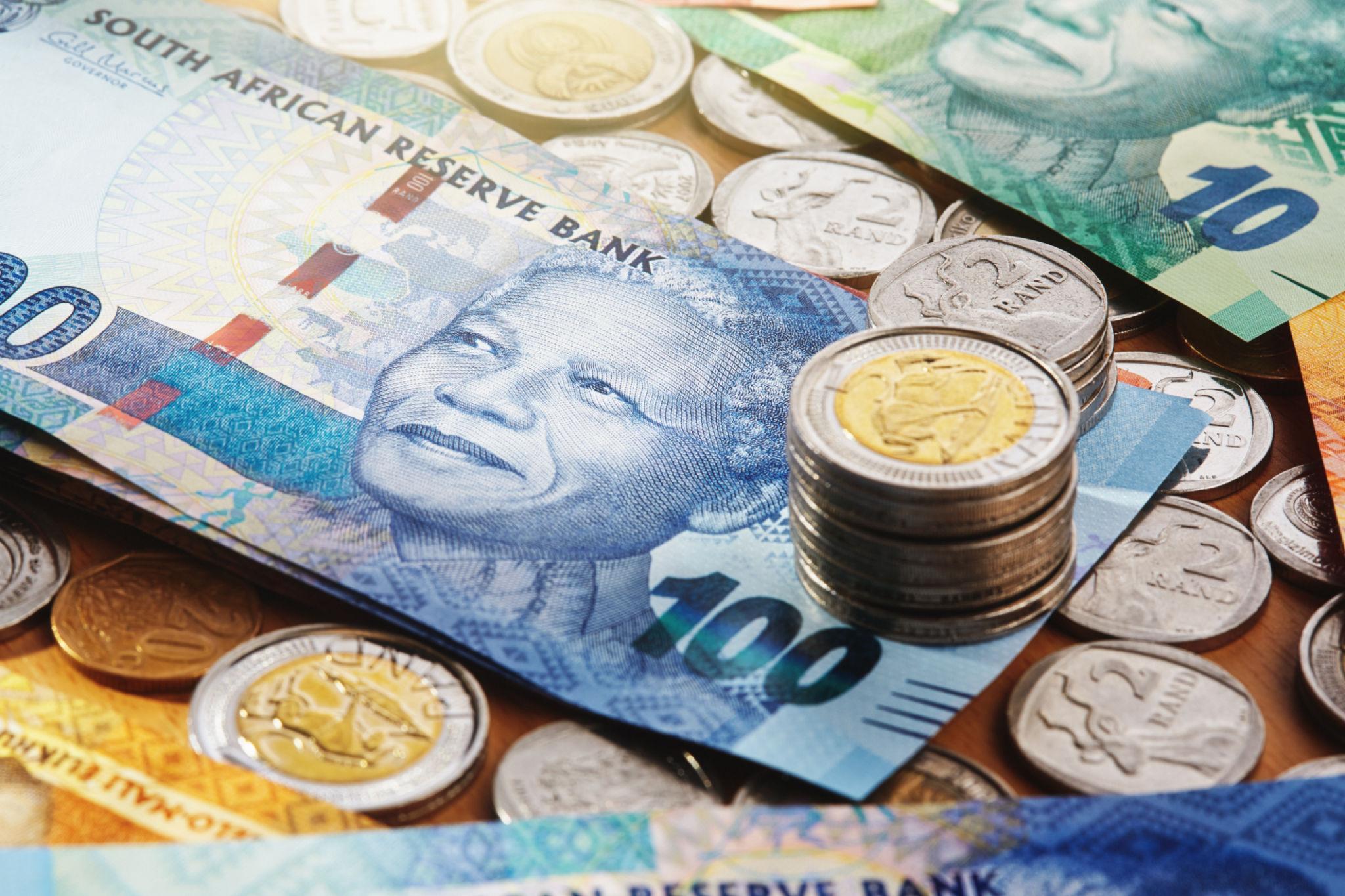
“The South African rand traded relatively steadily at R17.5550 against the US dollar on Thursday morning as investors awaited October producer inflation figures from Statistics South Africa, with analysts expecting annual producer inflation to increase to 7.6%. Meanwhile, stronger US inflation figures raised concerns about the possibility of further Federal Reserve interest rate increases, adding uncertainty to South Africa’s currency outlook, borrowing costs and economic recovery.”
South African Rand Holds Steady as Markets Await Producer Inflation Data Amid Rising Global Interest Rate Concerns
South Africa’s currency stability faces fresh economic tests
South Africa’s macroeconomic environment is facing renewed attention as financial markets monitor the performance of the rand, rising inflation pressures and the possibility of tighter monetary policies in major international economies. On Thursday, 26 November 2026, the South African rand remained relatively stable against the US dollar as investors awaited the release of October producer price inflation figures.
The currency traded at approximately R17.5550 against the US dollar at 05:52 GMT, showing little movement from its previous closing level. Although this relative stability provided some reassurance to financial markets, investors remained cautious because of continuing inflation concerns, international economic uncertainty and the possibility of additional interest rate increases in the United States.
According to Reuters, Statistics South Africa was expected to publish its October Producer Price Index (PPI) figures during the day. Economists surveyed by Reuters anticipated that annual producer inflation would increase to 7.6%, compared with 6.2% in September and 5.0% in August.
The anticipated increase has attracted attention because producer inflation provides important information about the costs businesses face when producing and supplying goods and services. These costs can influence retail prices, business profitability, investment decisions and household purchasing power.
Consequently, the latest developments represent an important economic indicator for South Africa as policymakers attempt to balance inflation control with economic growth.
Producer inflation becomes a major economic concern
Producer inflation measures changes in the prices received by producers or paid across different stages of production, depending on the specific PPI category. It provides an indication of price pressures within the production and supply chain.
When production costs increase, companies may face higher expenses for raw materials, transportation, electricity, packaging, machinery and other essential inputs. Businesses must then decide whether to absorb those expenses, reduce their profit margins or pass some of the additional costs to consumers.
For South African manufacturers, wholesalers, agricultural businesses and retailers, rising production costs can create significant operational challenges.
If companies transfer higher expenses to consumers, retail inflation may increase. However, this relationship is not automatic. Businesses may absorb part of the increases, improve efficiency, negotiate lower supplier prices or reduce production costs to remain competitive.
The September figures already demonstrated an acceleration in producer inflation, which increased to 6.2% annually from 5.0% in August.
The market expectation of 7.6% for October therefore suggested that inflation pressures could be strengthening further. Nevertheless, the anticipated figure should not be confused with the official statistical result.
Statistics South Africa’s publication schedule confirmed that the October PPI release was planned for 26 November 2026.
Impact on businesses and consumers
The performance of producer inflation matters because businesses operate within interconnected supply chains.
For example, manufacturers depend on stable input prices to determine production budgets, establish selling prices and plan future investments. When input costs rise unexpectedly, businesses may experience pressure on their operating margins.
Small and medium-sized enterprises can be particularly vulnerable because they often have less financial flexibility than larger corporations.
A manufacturing company experiencing increased electricity, transportation and raw material expenses may have limited options for absorbing the additional costs. Similarly, wholesalers and retailers may face higher purchasing expenses, affecting their ability to maintain affordable prices.
For consumers, these developments can eventually influence the cost of everyday products and services.
Food processing, construction materials, clothing, household products and manufactured goods may all be affected by changing production costs.
However, the final impact depends on the strength of consumer demand, competition, exchange rate movements and the ability of businesses to manage their expenses.
South Africa’s economic policymakers must therefore monitor both consumer and producer inflation to understand whether price pressures are temporary or becoming more persistent.
The rand responds to international economic developments
Another important dimension of Thursday’s economic developments is the influence of international monetary policy on the South African currency.
The rand is an emerging-market currency that can experience significant movements when global investors change their expectations about interest rates, economic growth and investment risks.
Reuters reported that stronger-than-expected US inflation figures had shifted attention towards the Federal Reserve’s upcoming monetary policy meeting.
Higher American inflation can increase expectations that the Federal Reserve will maintain restrictive monetary conditions or consider additional interest rate increases.
When US interest rates rise relative to those in other economies, dollar-denominated investments may become more attractive to international investors.
This can encourage capital movements towards the United States and create pressure on emerging-market currencies, including the rand.
For South Africa, these movements matter because exchange rate changes can influence the domestic prices of imported goods, international trade costs and investor confidence.
A weaker rand can make imported fuel, machinery, industrial equipment and other internationally traded products more expensive in local currency terms.
Conversely, a stronger rand can reduce some import-related costs, although the benefits depend on international prices and how quickly businesses pass exchange rate changes through to consumers.
The currency’s relative stability on Thursday therefore provided only a temporary indication of market conditions rather than confirmation that the broader economic risks had disappeared.
South African Reserve Bank faces a difficult balancing act
The South African Reserve Bank remains central to the country’s efforts to maintain price stability while supporting a sustainable economic environment.
In its November 2026 Monetary Policy Committee decision, the Reserve Bank maintained the policy interest rate at 7.25%.
However, the decision highlighted divisions within the committee. Four members supported keeping rates unchanged, while three favoured a 25-basis-point increase.
The disagreement demonstrated the difficulty of responding to inflation pressures without unnecessarily weakening economic activity.
Higher interest rates can help control inflation by reducing borrowing and spending. However, they can also increase the cost of financing for households and businesses.
For households, higher interest rates may increase repayments on home loans, vehicle finance and other credit facilities.
For businesses, more expensive borrowing can discourage expansion, equipment purchases, construction projects and other investment activities.
On the other hand, failing to respond appropriately to persistent inflation could weaken purchasing power and undermine confidence in the economy.
The Reserve Bank therefore needs to assess whether inflation pressures are likely to continue and whether monetary policy is sufficiently restrictive to bring inflation back towards its target.
The November decision showed that policymakers remained concerned about upside inflation risks, particularly those associated with fuel prices, international geopolitical developments and possible increases in food prices.
Consumer inflation adds to the economic pressure
Producer inflation is not the only concern facing South Africa.
Statistics South Africa reported that annual consumer price inflation increased to 5.2% in October 2026 from 4.5% in September.
This represented the highest inflation rate in almost two and a half years.
The consumer price index also increased by 0.7% between September and October.
Food and non-alcoholic beverage inflation recorded further increases, with fish and seafood, vegetables, sugar, confectionery and desserts contributing to price pressures.
These developments are important because households experience inflation through the prices they pay for food, transportation, housing-related expenses and other essential goods and services.
When consumer prices rise faster than household incomes, purchasing power declines.
Low-income households are particularly vulnerable because a substantial proportion of their budgets is allocated to necessities.
Rising living costs can also affect household savings, consumer confidence and demand for non-essential goods.
For businesses, weaker household purchasing power may reduce sales volumes and limit opportunities for expansion.
The October inflation figures therefore provide an important background to the markets’ interest in the latest producer inflation data.
If production costs continue increasing while consumer purchasing power remains under pressure, businesses may face a difficult environment in which passing on additional costs becomes increasingly challenging.
Government policy and economic growth
South Africa’s inflation challenges are also connected to the country’s broader macroeconomic performance.
The government needs to encourage investment, strengthen productive industries, improve infrastructure and create an environment in which businesses can expand.
Although monetary policy is important, interest rate decisions alone cannot address the structural challenges that limit economic growth.
Investment in electricity generation, transport infrastructure, ports, railways, water systems and industrial capacity is necessary to improve productivity.
Reliable infrastructure can help reduce operating expenses, improve the movement of goods and encourage domestic and international investment.
The South African Reserve Bank has identified low fixed investment as a major obstacle to stronger long-term economic growth.
Business Day reported that fixed investment remained around 13% of economic output, a level that policymakers consider insufficient to support the country’s long-term growth ambitions.
This matters because investment creates productive capacity.
When companies invest in factories, machinery, technology, logistics and employee training, they can improve efficiency, increase production and create employment opportunities.
Without sufficient investment, economic growth may remain dependent on household consumption rather than improvements in productive capacity.
South Africa therefore needs a coordinated economic strategy that combines inflation management with structural reforms and investment promotion.
Employment and household economic security
Inflation and economic growth have important implications for employment.
When businesses experience higher operating costs and weak demand, they may postpone recruitment, reduce expansion plans or limit wage increases.
This can affect employment opportunities across manufacturing, retail, construction, transport and other sectors.
South Africa’s unemployment challenge makes economic stability particularly important.
The country requires stronger investment and sustainable economic expansion to create employment opportunities for its growing labour force.
Rising production expenses can make it more difficult for businesses to expand, especially when financing costs are already high.
At the same time, uncontrolled inflation can weaken consumer demand and create uncertainty for companies planning long-term investments.
Policymakers must therefore consider how monetary and fiscal decisions affect both price stability and employment creation.
A successful economic recovery requires businesses to have confidence in future market conditions, access to affordable financing and reliable infrastructure.
It also requires households to have sufficient purchasing power to support domestic demand.
What the latest developments mean for investors
For investors, Thursday’s developments highlight the importance of monitoring both domestic economic indicators and international financial conditions.
The rand’s performance can affect the returns of foreign investors holding South African assets.
Currency movements can also influence the attractiveness of government bonds, equities and other financial instruments.
The benchmark South African government bond maturing in 2035 was reported to have a yield of approximately 8.74% during early trading on Thursday.
Bond yields are important because they influence government borrowing costs and provide information about investors’ assessments of inflation, interest rates and sovereign risk.
Higher yields can increase the cost of financing government debt, potentially placing additional pressure on public finances.
For investors, the relationship between inflation, interest rates and exchange rates is therefore essential when evaluating South Africa’s financial outlook.
The latest PPI figures, once officially released, will provide another indication of the direction of domestic price pressures.
Investors will also continue monitoring the Federal Reserve’s monetary policy signals because international interest rate developments can influence capital flows into emerging markets.
The outlook for South Africa’s economy
South Africa’s immediate economic outlook will depend on several interconnected factors.
These include the direction of producer and consumer inflation, movements in international oil prices, the performance of the rand, interest rate expectations and the strength of domestic economic activity.
If producer inflation increases significantly, businesses could face additional pressure from rising production costs.
However, the eventual effect on consumer prices will depend on how companies respond and whether demand allows them to increase selling prices.
The Reserve Bank will also need to determine whether inflation pressures are temporary or likely to persist.
At the same time, the government must continue improving the conditions required for sustainable investment and economic growth.
South Africa cannot rely exclusively on monetary policy to achieve long-term prosperity.
The country needs greater productive investment, improved infrastructure, stronger industrial competitiveness and policies that encourage employment creation.
These priorities will be essential in reducing the economy’s vulnerability to international shocks.
Conclusion: Inflation and currency stability remain central economic priorities
The rand’s relative stability on 26 November 2026 reflects a cautious financial market environment in which investors are balancing domestic inflation expectations against developments in the international economy.
The anticipated October producer inflation figures have become particularly important because they could provide further insight into the costs facing South African businesses and the potential direction of future price pressures.
Meanwhile, the increase in consumer inflation to 5.2% and the Reserve Bank’s decision to maintain interest rates at 7.25% demonstrate the difficult economic conditions confronting policymakers.
South Africa needs to maintain price stability while creating an environment that supports business investment, employment and stronger economic growth.
Ultimately, the country’s macroeconomic performance will depend on its ability to manage inflation, maintain investor confidence, improve productivity and address structural obstacles to economic development.
The latest currency and inflation developments therefore represent more than short-term financial market movements. They highlight the importance of building a resilient economy capable of protecting household purchasing power while creating sustainable opportunities for businesses and workers.



