




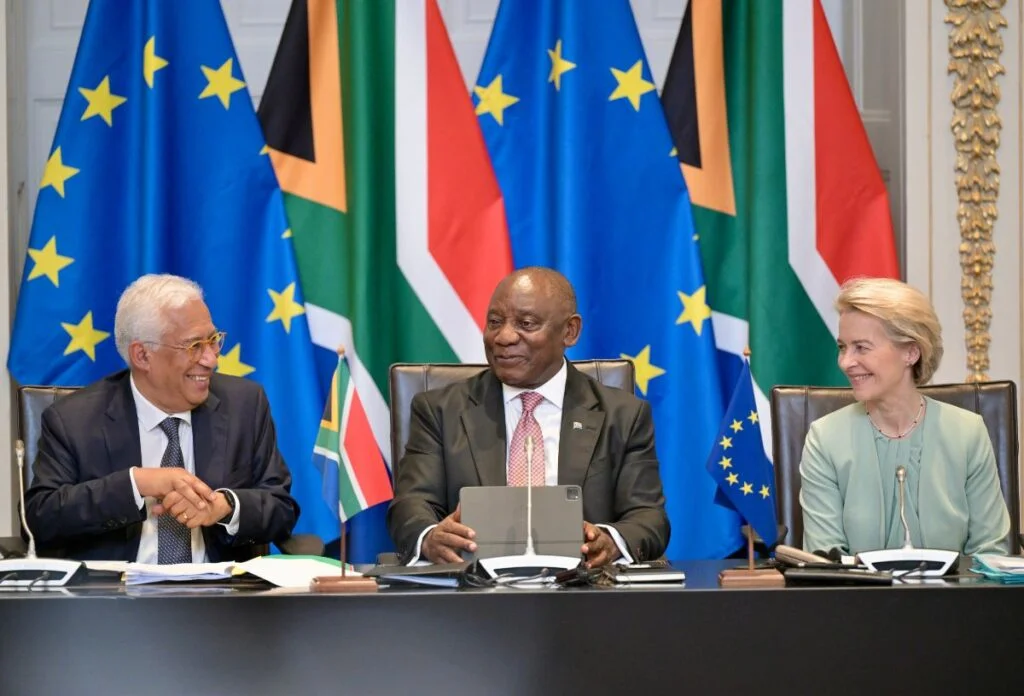
“India and South Africa have renewed efforts to finalize a Preferential Trade Agreement (PTA) with the Southern African Customs Union (SACU), focusing on critical minerals, pharmaceuticals, and manufacturing. The move, announced at the BRICS Trade Ministers’ Meeting in Jaipur, marks a significant step toward strengthening bilateral trade ties and diversifying supply chains.”
BRICS Trade Ministers’ Meeting in Jaipur, India’s Commerce and Industry Minister Piyush Goyal and South Africa’s Minister of Trade, Industry and Competition Parks Tau announced a renewed push to finalize a Preferential Trade Agreement (PTA) between India and the Southern African Customs Union (SACU). This development is particularly significant given the nearly two-decade delay in negotiations and the growing global demand for resilient supply chains in critical sectors.
Background of the PTA
Formal negotiations for the PTA began in 2008 after India and SACU signed a Memorandum of Understanding. Product lists were exchanged in 2011, but talks stalled due to disagreements over tariff concessions and market access. India sought improved access for textiles, while SACU countries pushed for greater opportunities in agriculture and minerals. The renewed momentum reflects both sides’ recognition of shifting global trade dynamics and the need to secure strategic resources.
Strategic Importance
- Critical Minerals: India is seeking to diversify supply chains for minerals essential to clean energy technologies and advanced manufacturing.
- Pharmaceuticals: South Africa’s growing healthcare sector aligns with India’s pharmaceutical expertise, offering opportunities for collaboration.
- Manufacturing: Both nations aim to strengthen industrial cooperation, particularly in automotive, textiles, and digital infrastructure.
Economic Context
Bilateral trade between India and Africa has already reached $98 billion, with Indian investments in Africa totaling $75 billion, primarily in telecommunications, pharmaceuticals, infrastructure, and agriculture. The PTA is expected to expand these figures significantly, opening new avenues in healthcare, artificial intelligence, fintech, and clean energy.
Diplomatic Significance
The renewed negotiations come at a time when the next India–Africa Forum Summit has faced delays. Analysts argue that the PTA should be seen not just as a trade arrangement but as a strategic partnership platform to strengthen India’s long-term engagement with Southern Africa.
Challenges Ahead
- Tariff Concessions: Balancing India’s push for textile access with SACU’s demand for agricultural concessions remains a hurdle.
- Market Access: Ensuring equitable opportunities across sectors will require careful negotiation.
- Geopolitical Dynamics: The broader BRICS framework adds complexity, as both India and South Africa must align their trade strategies with other member states.
Potential Impact
If finalized, the PTA could:
- Reduce tariffs and boost trade flows between India and SACU.
- Strengthen supply chains for critical minerals, reducing dependence on traditional markets.
- Enhance pharmaceutical cooperation, improving healthcare access in Southern Africa.
- Support manufacturing growth, creating jobs and fostering innovation.
Expert Opinions
Dr. Manish Karmwar of the University of Delhi emphasized that the PTA represents more than tariff reductions: “It is an opportunity to strengthen India’s long-term partnership with Southern Africa through critical minerals, pharmaceuticals, manufacturing, agriculture, and resilient value chains.”
Conclusion
The revival of India–South Africa trade negotiations marks a pivotal moment in both nations’ economic strategies. With critical minerals, pharmaceuticals, and manufacturing at the forefront, the PTA has the potential to reshape trade dynamics across Southern Africa and strengthen India’s role as a key partner in the region. The coming months will be crucial as negotiators work to finalize the Terms of Reference and bridge longstanding differences.



