




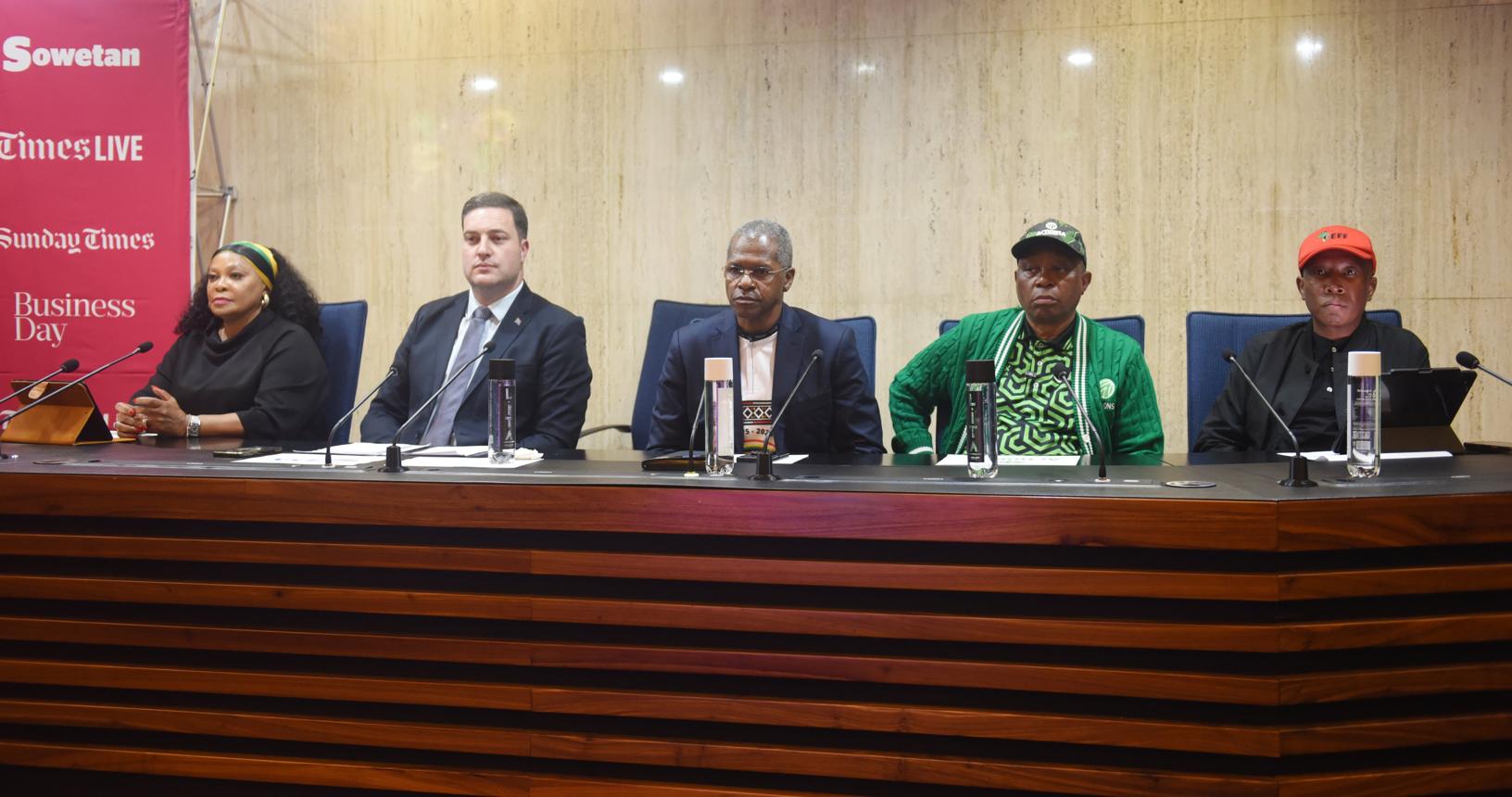
Johannesburg’s mayoral candidates have placed failing infrastructure, water shortages, electricity disruptions, sewage problems, crime and municipal financial management at the centre of the political debate ahead of the 4 November local government elections. The debate follows warnings about the links between organised crime, corruption and weaknesses in municipal administration, raising questions about whether the next city government can restore services, protect public resources and rebuild residents’ trust.”
Johannesburg’s Governance Crisis Intensifies as Residents Demand Accountability and Reliable Services
Introduction: Governance becomes a defining election issue
Johannesburg’s persistent service delivery difficulties have become a major test of municipal governance as South Africa approaches the local government elections scheduled for 4 November 2026. On 26 October, a report published by The Star through IOL highlighted promises from mayoral candidates to repair infrastructure, address crime, improve financial management and restore public confidence in the country’s largest economic centre. The debate demonstrates how municipal governance has moved beyond party competition to focus on the practical ability of elected leaders to administer public resources and deliver essential services.
The challenges confronting Johannesburg include water shortages, electricity disruptions, sewage spills, deteriorating infrastructure, unemployment and allegations of corruption within municipal operations. These problems affect households, businesses, property owners and investors. They also raise a fundamental question about democratic government: how can residents hold public officials accountable when municipal services repeatedly fail to meet their needs?
With political parties competing for control of the city, voters are being presented with different proposals for addressing these problems. However, the central measure of success will not simply be campaign promises. It will be whether the next administration can translate policy commitments into measurable improvements in public services.
Corruption concerns and weaknesses in municipal administration
One of the most serious issues raised in the reporting is the relationship between organised crime, political influence and weaknesses in municipal administration.
An October 6 report by the Centre for Development and Enterprise, titled Time for Action – Corruption in Joburg, describes a system in which criminal networks and commercial interests may exploit weaknesses in procurement, infrastructure management and municipal service delivery. The report raises concerns about infrastructure theft, sabotage, building hijackings, extortion and interference in municipal processes. These are reported concerns, not proof that every municipal department or official is involved in wrongdoing.
Such allegations matter because municipalities manage essential infrastructure and substantial public budgets. If procurement decisions are manipulated or public assets are repeatedly damaged, residents may face service interruptions while the municipality incurs additional repair costs.
Water infrastructure illustrates the problem. When pipes are damaged or maintenance is neglected, communities can experience shortages and reduced water pressure. The report also highlights concerns about the water tanker industry, where unreliable municipal supplies can create commercial opportunities. Transparent contracts, effective monitoring and independent investigations are therefore essential to ensure that emergency arrangements serve residents rather than exploit their difficulties.
Addressing these risks requires more than announcing investigations after problems emerge. Municipal authorities need reliable procurement controls, accessible contract information, protected reporting channels and consequences for proven misconduct. Law enforcement agencies must also investigate credible allegations impartially, while officials accused of wrongdoing retain the right to due process.
Political instability and the challenge of coalition government
Johannesburg’s governance difficulties are also linked to repeated changes in political leadership. The IOL report notes that the city has experienced six mayors in five years since the 2021 local government elections, amid changing coalition arrangements.
Coalition government is not inherently ineffective. It can bring different political perspectives into decision-making and require parties to negotiate compromises. Nevertheless, coalitions become difficult to manage when disagreements over positions, policy priorities or political alliances repeatedly disrupt administration.
A change of mayor does not automatically resolve operational problems within municipal departments. Water networks still require maintenance, electricity infrastructure still needs investment, and financial controls still need consistent enforcement. Frequent leadership changes can make it harder to maintain long-term priorities, evaluate performance and establish clear responsibility for missed targets.
This is particularly important in Johannesburg because infrastructure planning often requires sustained investment over several years. A credible municipal administration needs continuity in technical planning and project implementation, even when political leadership changes.
The forthcoming election therefore presents voters with an opportunity to evaluate not only individual candidates but also the governing arrangements and oversight mechanisms their parties propose. Any coalition agreement should clearly identify policy priorities, responsibilities, performance expectations and procedures for resolving disputes without unnecessarily disrupting service delivery.
Mayoral candidates present competing solutions
The election debate reported by The Star featured representatives from several political parties outlining their approaches to Johannesburg’s problems.
The MK Party’s mayoral candidate, Bongani Baloyi, emphasised financial stability, improved governance, better services and stronger partnerships. His intervention placed responsibility on parties that have previously participated in governing the city to explain the municipality’s record.
Build One South Africa’s Nobuntu Hlazo-Webster stressed preventative maintenance of water pipes, electricity networks, roads and sewage systems. Her argument highlighted a recurring weakness in infrastructure management: waiting until equipment fails can lead to more expensive repairs and longer service interruptions. She also raised municipal revenue collection, support for entrepreneurs and policing in crime hotspots.
The EFF’s mayoral candidate, Dr Tlaleng Mofokeng, emphasised economic freedom, dignity and public participation. Her proposals included community assemblies intended to increase residents’ involvement in municipal decisions.
Representing the DA’s Johannesburg leadership, Luyolo Mphithi argued for experienced administration and better management of municipal revenue to restore essential services. ActionSA representative Bongani Mabizela focused on sewage spills, potholes, water shortages, environmental management and accountability for public expenditure.
Al Jama-ah’s Ashley Mama raised economic development, land ownership and community participation, while the UDM’s Khayalethu Nyathi highlighted problems involving leaking pipes, meter readings and estimated billing. RISE Mzansi’s Lukhona Mnguni emphasised ethical leadership, financial management and infrastructure investment.
These proposals differ in emphasis, but they share a recognition that municipal performance depends on functioning infrastructure, competent administration and public accountability.
Water shortages expose the consequences of weak governance
Water supply has become one of the most visible tests of government performance in Johannesburg and elsewhere in South Africa. On 26 October, SABC News reported that President Cyril Ramaphosa said government was coordinating efforts to address the national water crisis through a National Water Crisis Committee. The reported priorities include improving bulk water availability, repairing ageing pipes and maintaining infrastructure.
The national response is significant because water systems involve responsibilities across different levels of government and public entities. Municipalities manage local distribution and reticulation, while bulk supply and broader infrastructure planning can involve other institutions. Effective action therefore depends on clear responsibilities, coordination and transparent reporting on progress.
However, establishing a committee does not itself guarantee better water delivery. Residents need to see whether repairs are completed, interruptions become less frequent and complaints receive timely responses. Government should publish clear information about planned interventions, expenditure, project deadlines and performance.
For municipal leaders, water management should include preventative maintenance, accurate infrastructure records, realistic budgets and rapid responses to leaks. For residents, the quality of water services is an immediate measure of whether public administration is functioning.
Financial management and responsible spending
Sound financial governance is another central requirement for improving Johannesburg’s services. Municipalities must collect revenue fairly, prepare realistic budgets, maintain infrastructure and ensure that spending complies with legislation.
A separate report published by TimesLIVE on 25 October described National Treasury proposals to strengthen oversight of municipal finances. The draft amendments to public finance management legislation include measures concerning affordable salary increases, oversight of chief financial officer appointments, compliance orders and the proposed creation of a financial misconduct investigative committee. These are proposals described in reporting, not evidence that all the measures have already become law.
The underlying principle is that municipalities should not make financial commitments they cannot afford. Unfunded budgets and poorly controlled expenditure can reduce the money available for water repairs, road maintenance, sanitation and other essential services.
Financial discipline must nevertheless be applied fairly. Oversight should not become an excuse for arbitrary interference in local government. Clear legal standards, transparent decisions and appropriate review mechanisms are necessary to balance national supervision with municipalities’ constitutional responsibilities.
Municipal financial reports should also be understandable and accessible to residents. Communities need to know how much money is collected, where it is spent, which projects are delayed and what corrective steps are being taken when targets are missed.
Public participation and restoring trust
Good governance requires more than technically competent officials. It also depends on whether residents can influence decisions and obtain honest explanations when services fail.
Community participation is most effective when it produces tangible results. Public meetings should identify local priorities, record complaints and specify which department is responsible for action. Municipalities should then communicate progress and explain delays rather than allowing residents’ concerns to disappear into administrative systems.
The proposals discussed by candidates, including community assemblies and stronger transparency commitments, reflect different approaches to this challenge. Their effectiveness will depend on how participation is implemented and whether municipal leaders are willing to respond to criticism.
Residents should be able to access relevant budget information, procurement records, council decisions and service delivery plans. Where corruption is suspected, complaints must be handled through credible processes that protect whistleblowers and preserve evidence.
Rebuilding trust will require consistent performance over time. A successful repair or a cleaner neighbourhood can demonstrate progress, but durable confidence depends on services remaining reliable and public officials explaining their decisions openly.
The economic consequences of municipal failure
Johannesburg’s governance problems have implications beyond the delivery of basic services. As a major economic centre, the city depends on reliable electricity, water, sanitation, roads, public safety and efficient municipal administration to support investment and employment.
When infrastructure becomes unreliable, businesses may face interruptions, higher operating costs and uncertainty about future investment. Small enterprises can be particularly vulnerable because they often have limited resources to absorb unexpected expenses or prolonged service disruptions.
The concerns raised by the mayoral candidates about revenue collection and infrastructure maintenance therefore connect governance directly to economic development. Better billing systems can help municipalities collect legitimate revenue, while transparent expenditure can help ensure that collected funds support essential services.
The next administration will need to balance financial sustainability with residents’ ability to afford municipal services. It must also demonstrate that public money is being used effectively, particularly when communities face unemployment, poverty and deteriorating infrastructure.
What voters should assess before the election
As the 4 November election approaches, Johannesburg residents have an opportunity to assess political parties against practical governance standards rather than campaign messaging alone.
Important questions include whether candidates have credible infrastructure maintenance plans, how they intend to prevent procurement manipulation, what controls they propose for municipal spending and how they will measure improvements in service delivery.
Voters should also examine candidates’ approaches to coalition stability, professional appointments and public participation. Where parties have previously governed the city, their records and explanations for past decisions deserve scrutiny. At the same time, new political entrants should be expected to demonstrate that their proposals are financially realistic and administratively achievable.
The most useful commitments will include measurable targets, clear implementation schedules and regular public reporting. Promises to eliminate corruption or repair every infrastructure problem are difficult to evaluate unless candidates explain the methods, resources and accountability arrangements that will support those objectives.
Conclusion: Accountability must produce visible results
Johannesburg’s service delivery crisis has placed municipal governance at the centre of South Africa’s approaching local government elections. Reporting on the mayoral debate, corruption concerns and financial oversight proposals points to a common challenge: public institutions must become more capable, transparent and accountable if residents are to receive reliable services.
The next city administration will inherit complex problems that cannot be resolved through political promises alone. Progress will require competent officials, realistic budgets, infrastructure maintenance, effective procurement controls and stable political leadership.
Equally important, residents must have meaningful opportunities to question decisions, report failures and monitor whether corrective action takes place. Investigations into alleged wrongdoing should be impartial, while officials responsible for proven misconduct must face appropriate consequences.
The national government’s efforts to coordinate a response to the water crisis underline the importance of cooperation across public institutions. However, lasting improvement will depend on whether those efforts translate into functioning infrastructure and dependable services at community level.
Ultimately, Johannesburg’s governance challenge is about restoring the connection between public authority and public responsibility. The election will determine the city’s political leadership, but the real test will follow: whether residents experience more reliable water and electricity, better-maintained roads, cleaner neighbourhoods, transparent spending and a municipal administration that responds when problems arise.
For voters, businesses and communities, these outcomes will provide the clearest evidence of whether the next administration has begun to rebuild public trust.



