




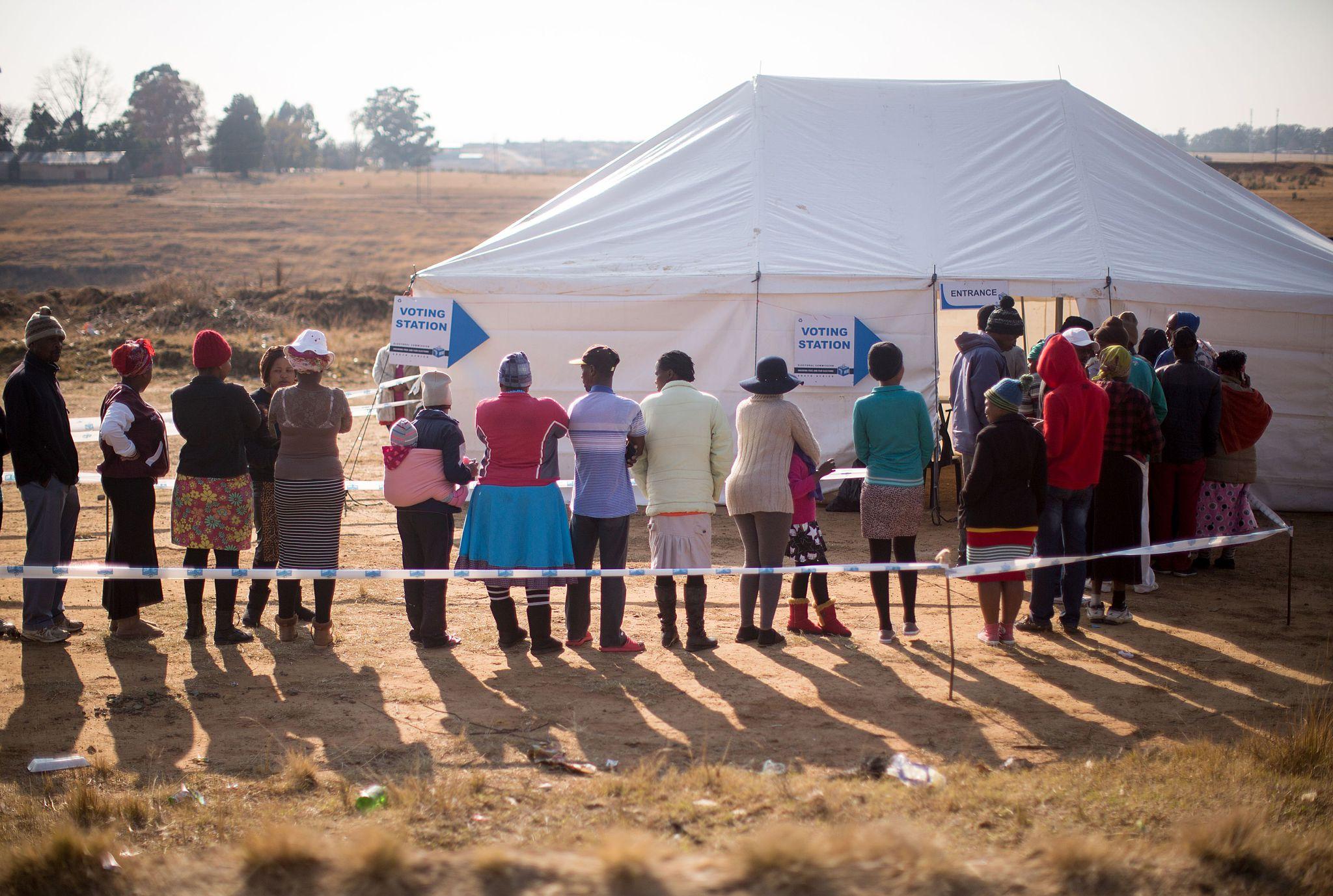
“South Africa is entering the final stretch before the 4 November municipal elections, with government officials reporting that logistical and security preparations are progressing while political parties intensify campaigns amid public frustration over service delivery, living costs and unstable municipal coalitions. The election will test the strength of the African National Congress (ANC), the Democratic Alliance (DA), the uMkhonto weSizwe Party (MK Party) and smaller parties, while also examining the Electoral Commission’s ability to accommodate legal changes to candidate lists and deliver a credible vote.”
South Africa’s 2026 Municipal Elections Enter Decisive Final Week as Voter Discontent and Coalition Politics Take Centre Stage
Johannesburg, 26 October 2026
South Africa’s political parties are entering the decisive phase of campaigning ahead of the 4 November 2026 Local Government Elections, with voter dissatisfaction, municipal service delivery, coalition instability and the credibility of electoral administration emerging as central issues. With just over a week remaining before the public vote, the election is shaping up to be an important test of political support and local government accountability across the country.
The Department of Cooperative Governance and Traditional Affairs has expressed confidence in preparations for the election. Minister Velenkosini Hlabisa said on 26 October that logistical, technical and security arrangements were progressing satisfactorily. His comments covered ballot printing, special voting arrangements and the inclusion of candidates affected by recent legal developments. Nevertheless, the final days will require close coordination between election officials, municipalities, political parties and security services.
Voters focus on service delivery and municipal accountability
The election comes at a time when many communities are demanding more reliable municipal services. Access to clean water, functioning sanitation, dependable electricity infrastructure, refuse collection, road maintenance and effective management of public funds remain important concerns in local politics.
Unlike national elections, municipal elections place particular emphasis on the institutions responsible for everyday services. Residents assess whether their local councils respond to complaints, maintain public infrastructure, manage budgets responsibly and deliver improvements in their neighbourhoods.
For parties seeking electoral support, these concerns create both opportunities and risks. Opposition parties can present themselves as alternatives to incumbent administrations, while governing parties must demonstrate their achievements and explain why unresolved problems persist.
The results will also reflect differences between communities. In some areas, voters may prioritise infrastructure and administrative competence; elsewhere, unemployment, housing, safety and the cost of living may be more prominent. Campaign promises will therefore be judged against local experience rather than national slogans alone.
Political organisations that provide specific, measurable and credible plans could gain an advantage over those relying mainly on broad promises. However, voters will also need to consider whether proposed improvements fall within municipal powers and whether the relevant councils have realistic funding and implementation plans.
Johannesburg emerges as a major electoral battleground
Johannesburg is one of the most closely watched contests because of its economic importance and history of unstable coalition government. The city has experienced repeated changes in municipal leadership since the 2021 local elections, highlighting the difficulty of maintaining durable governing arrangements when no party commands a clear majority.
Reuters identified Johannesburg as a major battleground in its 26 October analysis of the municipal election contest. The report highlighted the competition between the ANC and DA, including the DA’s selection of Helen Zille as its mayoral candidate and the parties’ efforts to win support in the country’s largest economic centre.
The central question is whether voters will reward established parties, support alternative political movements or divide their votes among competing organisations. A fragmented result could again require negotiations between parties to establish a governing majority.
Coalition government is not inherently unsuccessful. Parties with different policy positions can cooperate around shared priorities and provide checks on one another. However, coalitions become vulnerable when disagreements over leadership, appointments, budgets or policy prevent councils from functioning effectively.
For Johannesburg residents, the consequences can extend beyond political disputes. Uncertainty can delay decisions, complicate long-term infrastructure planning and undermine confidence in municipal administration.
The election will therefore test not only individual parties but also their ability to negotiate workable agreements. A party that gains votes without securing a majority may still need credible coalition partners and a practical governing programme.
Tshwane and Ekurhuleni will test coalition strategies
Tshwane, which includes Pretoria, is another important metropolitan contest. Its political history illustrates how smaller parties can influence who governs even when they do not receive the largest share of the vote.
ActionSA has become a significant participant in Tshwane’s coalition politics. Reuters reported that the party helped remove a DA mayor in 2024 and subsequently became a pivotal force in the metro’s governing arrangements. This makes the contest relevant to understanding how smaller parties may influence municipal leadership after 4 November.
For voters, the key consideration is whether coalition partners can demonstrate effective administration despite competing interests. Parties will need to explain how they intend to agree on budgets, protect municipal institutions and ensure that disagreements do not repeatedly interrupt service delivery.
Ekurhuleni is also an important test of changing electoral loyalties. Reuters highlighted the possibility of declining ANC support and stronger competition from the DA. The outcome could reveal whether dissatisfaction in Gauteng’s urban centres is translating into significant changes in voting behaviour.
These contests will be important for parties preparing for the 2029 national election. Municipal results can expose weaknesses in local organisation, identify emerging political support bases and provide an indication of how voters are responding to the country’s broader political direction. However, local results should not automatically be treated as predictions of national voting patterns.
eThekwini presents a challenge for established political loyalties
In KwaZulu-Natal, eThekwini is attracting attention because of the growing challenge posed by the MK Party to the ANC. Reuters identified the municipality as a major battleground, with the MK Party potentially drawing substantial support in the contest.
The outcome could demonstrate whether political loyalties in the province are shifting substantially or whether established parties retain sufficient support to remain dominant.
For the ANC, the contest is significant because KwaZulu-Natal has long been an important political region. For the MK Party, a strong result could strengthen its position in municipal politics and increase its influence in coalition negotiations.
Yet electoral strength alone does not guarantee effective government. Any party taking part in a municipal administration will need to show that it can manage municipal finances, maintain services, work with officials and address community complaints.
The election will also reveal whether voters prioritise party identity, leadership, local candidates or the performance of existing administrations. These factors may differ between wards, making local campaigning and candidate credibility important.
The ANC faces a test of public confidence
The ANC enters the municipal election under pressure to demonstrate that it can maintain public confidence amid criticism of local government performance. As the governing party in many municipalities, it must defend its record while presenting plans for improving administration and services.
President Cyril Ramaphosa’s campaign activity in Soweto, reported by EWN, illustrates the importance of direct voter engagement. The report described household visits in which the ANC president engaged residents about service delivery ahead of the municipal polls.
Direct engagement can give political leaders an opportunity to hear residents’ concerns. However, its electoral impact depends on whether voters believe their complaints will lead to meaningful action.
The party’s challenge is to convince communities that its commitments are credible and that municipal administrations can deliver improvements. It must also contend with opposition parties seeking to turn dissatisfaction into electoral gains.
A weaker ANC result would have implications beyond individual municipalities, potentially intensifying internal debate about leadership, candidate selection and local government performance. A stronger-than-expected showing, by contrast, could indicate that the party retains a durable support base despite mounting competition.
The DA and smaller parties seek opportunities
The DA is campaigning to expand its influence, particularly in metropolitan areas where dissatisfaction with municipal administration may create opportunities for opposition parties. Its strategy depends partly on persuading voters that alternative leadership can improve service delivery and financial management.
At the same time, smaller parties could prove decisive in municipalities where no organisation secures an outright majority. Their bargaining power may exceed their share of the overall vote if larger parties need their support to form governing coalitions.
This possibility creates a responsibility for smaller parties to explain their principles, policy priorities and conditions for cooperation before voters cast their ballots. Clear commitments can help the public judge whether coalition agreements reflect genuine policy objectives or merely contests for positions.
For all parties, the central challenge is converting campaign promises into programmes that can be implemented within municipal budgets and legal responsibilities.
Electoral administration faces a demanding final stretch
Alongside the political contest, the Electoral Commission of South Africa (IEC) must ensure that the election is conducted fairly, securely and transparently.
The commission has faced additional logistical pressure following a Constitutional Court ruling concerning ANC candidate lists. The court ordered the IEC’s decision to reject affected ANC lists to be set aside and directed that the relevant candidates be included in ballot papers. The dispute involved the party’s claim that a technical problem with the online submission system had prevented the timely submission of 181 candidates.
The ruling created further work at a late stage of preparations. A separate report by TimesLIVE described the IEC’s effort to print additional ballots following the judgment, underscoring the tight timetable facing election administrators.
The issue highlights the tension between enforcing electoral deadlines consistently and ensuring that technical difficulties do not unfairly prevent eligible candidates from contesting elections. Electoral rules must be applied lawfully, while decisions affecting participation must also comply with court orders.
The commission’s immediate priority is to implement the legal requirements, prepare the necessary ballot papers and ensure that voters can cast their votes without confusion. Transparent communication with parties and the public will be essential to maintaining confidence.
Voter participation and special voting
Voter participation will be another important measure of the election’s significance. The IEC has encouraged registered voters to confirm their voting station details and familiarise themselves with the procedures for election day.
Special voting is scheduled for 2 and 3 November, ahead of the general election on 4 November. These arrangements allow eligible voters who meet the applicable requirements to vote before election day. The IEC has also outlined provisions designed to help voters with disabilities participate independently and securely.
Clear public information is essential because confusion about voting stations, eligibility or required procedures can discourage participation. Voters should consult official IEC communications for the latest instructions rather than relying on unverified social media posts.
Political parties, civil society organisations and the media also have a role in encouraging informed participation. Voter education should explain the responsibilities of municipal councils, how votes are translated into representation and how residents can hold elected officials accountable after the election.
What the results could mean for South Africa
The 2026 municipal elections will provide an important snapshot of political sentiment before the next national election. They will test whether voters continue to support established parties, shift towards newer political movements or distribute their votes across a broader field of contestants.
The results could also shape the future of coalition government. Municipalities that produce fragmented councils will need political leaders who can negotiate stable agreements without sacrificing transparency or public accountability.
For the ANC, the election is a test of its ability to retain support in traditional strongholds. For the DA, it is an opportunity to demonstrate that its appeal can extend further across urban and municipal contests. For the MK Party and smaller organisations, the vote offers a chance to strengthen their representation and influence.
Ultimately, the election’s importance will extend beyond party standings. Residents will judge the process by whether it is credible and the elected councils by whether they can improve local conditions.
With voting day approaching, South Africans face a consequential choice about who should govern their municipalities and how local public resources should be managed. The final outcome will depend on voter turnout, local campaign dynamics, candidate performance and the ability of election officials to complete preparations successfully.
The central message of this election is clear: political legitimacy must be renewed through the ballot, while effective government must be demonstrated through accountable leadership and reliable public services.



