




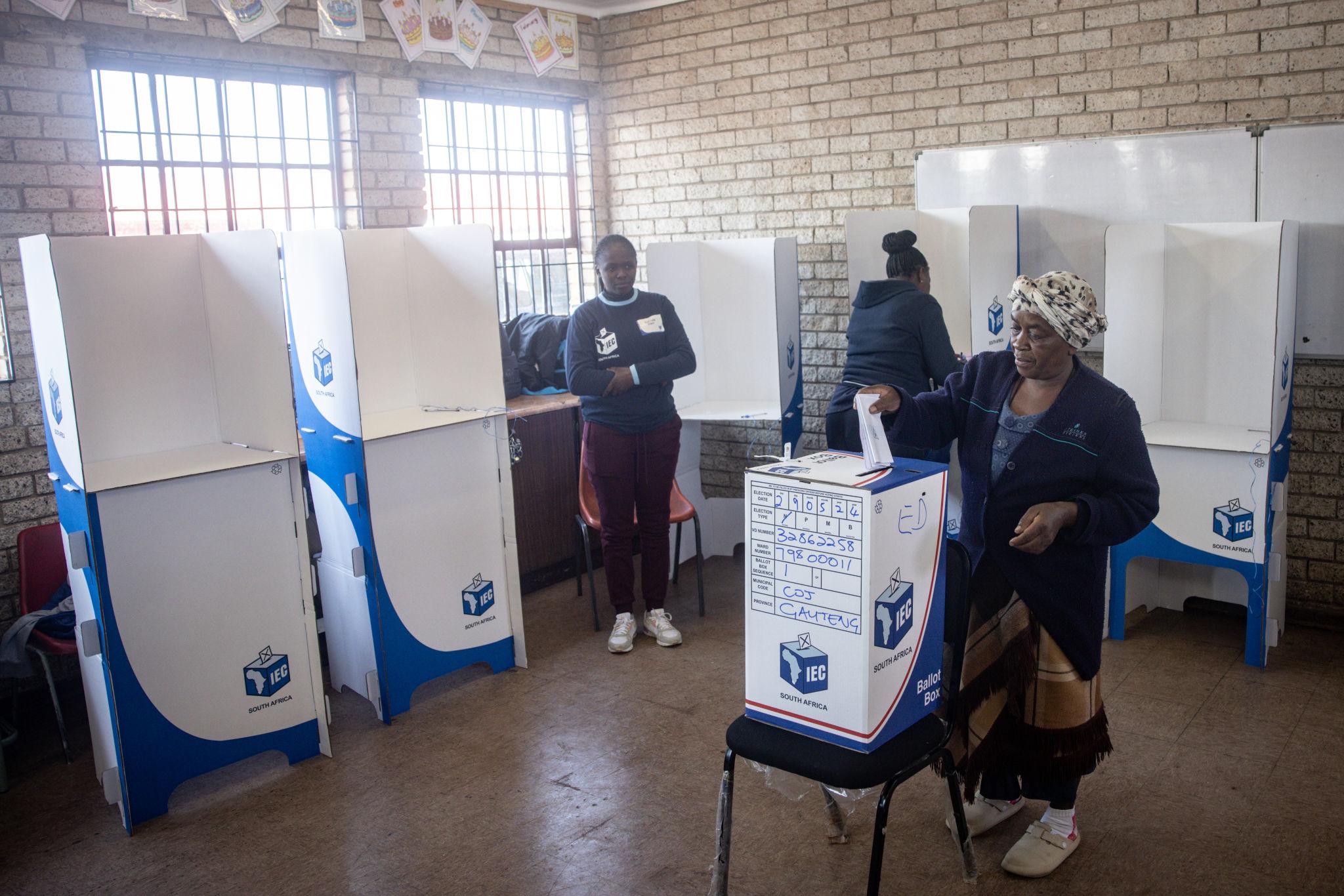
“South Africa’s mixed municipal electoral system could produce an imbalance between the number of ward seats won by a political party and its overall share of the vote, particularly if votes are divided among many competing parties. The Electoral Commission of South Africa (IEC) says existing safeguards limit the problem, while ActionSA and other political figures have raised concerns about proportional representation, coalition formation and the possibility of future legal challenges.”
South Africa’s 2026 Local Elections Raise Questions About Fair Representation in Municipal Councils
Electoral system faces scrutiny ahead of November vote
South Africa’s local government elections are approaching amid renewed debate about whether the country’s municipal electoral system can adequately translate votes into political representation. A report published by The Citizen on 14 October 2026 highlights concerns that electoral overhang could create differences between political parties’ overall vote shares and the number of council seats they ultimately obtain.
The elections are scheduled for 4 November 2026, when voters will choose representatives responsible for municipal governance, local services and community development. The debate matters because the distribution of council seats influences coalition negotiations, mayoral appointments and decisions about municipal budgets. Although the Electoral Commission of South Africa (IEC) maintains that existing safeguards are adequate, some political representatives believe the rules deserve further examination.
Understanding electoral overhang
Electoral overhang occurs when a political party wins more constituency-based seats than its overall share of the vote would ordinarily justify under a proportional representation system.
South Africa’s municipal electoral arrangements combine ward representation with proportional representation (PR). Ward councillors are elected directly by voters in their respective wards, while PR seats help reflect parties’ broader electoral support.
According to The Citizen’s report by Hein Kaiser, fragmentation among competing political parties could make an imbalance more apparent during the November elections. A party could win a ward without securing a majority of votes if its opponents divide their support among several candidates.
For example, a candidate receiving 30% of the vote could defeat competitors whose combined support reaches 70%. If a party repeatedly wins wards under similar circumstances, it might secure a larger proportion of council seats than its overall vote share would suggest.
This is a hypothetical illustration rather than a prediction of the election results. Nevertheless, it demonstrates the mathematical challenge facing electoral systems that combine direct constituency elections with proportional representation.
How the municipal system distributes seats
Under the arrangements described by The Citizen, municipal councils allocate half their seats to ward councillors and half to proportional representation councillors. The two components are intended to balance direct local representation with parties’ broader electoral support.
The IEC has acknowledged that overhang is theoretically possible. However, commission spokesperson Kate Bapela said the system contains safeguards intended to limit its impact.
Parties that win more wards than their proportional entitlement would ordinarily receive no additional PR seats. The IEC argues that the 50% ward allocation places a limit on the extent to which ward victories can influence a council’s overall composition.
The central question is whether that safeguard remains sufficient when party competition becomes increasingly fragmented. The outcome depends on the distribution of ward victories, each party’s overall support and the number of seats available for proportional allocation.
The debate therefore concerns more than the number of seats won by an individual party. It also concerns whether the resulting council continues to reflect voters’ collective choices while preserving the principle that ward councillors should represent their communities directly.
Ekurhuleni illustrates the possible consequences
The Citizen report uses Ekurhuleni Metropolitan Municipality to illustrate how an imbalance might develop.
The municipality has a 224-member council, consisting of 112 ward seats and 112 PR seats. In the hypothetical example, a party receiving 25% of the relevant vote would ordinarily qualify for approximately 56 seats under proportional allocation.
However, if that party won 78 wards, its ward victories alone would give it almost 35% of the council. That would create an overhang of approximately 22 seats compared with the illustrative proportional entitlement.
If the council remained the same size, the other parties would collectively occupy the remaining seats, despite receiving 75% of the vote in this hypothetical scenario.
ActionSA representative Michael Basch argued that such a discrepancy could have practical consequences for democratic representation. In a closely divided council, the difference in seat allocation could affect which parties form a governing coalition, who becomes mayor and which political groupings influence the municipal budget.
These figures are an illustration of the mechanism, not an account of actual results or a forecast of which parties will govern Ekurhuleni after the election.
Coalition politics adds another dimension
The issue is particularly relevant in municipalities where no single party secures enough seats to govern independently.
Coalition arrangements require parties to negotiate agreements, select leadership and establish working majorities. When council seats are distributed proportionally, a party’s representation generally provides an important starting point for those negotiations.
An overhang could complicate that process by giving one party a greater share of council seats than its overall vote share might suggest. In a narrowly balanced council, even a modest difference could influence coalition arithmetic.
However, an electoral overhang would not automatically determine which party governs. Coalition outcomes also depend on negotiations, political agreements and whether participating parties can maintain a majority.
Political analyst Theo Neethling told The Citizen that the risk was not unique to South Africa. Other countries have introduced compensatory seats or expanded legislative bodies to address imbalances between constituency victories and proportional representation.
South Africa faces its own institutional constraints, including the need to preserve the positions of councillors legitimately elected in individual wards.
Johannesburg faces additional constraints
Johannesburg presents another consideration because its metropolitan council has 270 members, the statutory maximum identified in the report.
Bapela said the IEC could not independently increase the number of PR seats to correct an overhang. Increasing proportional representation would require corresponding changes to ward representation under the existing framework, potentially undermining the balancing purpose of the system.
The commission maintains that current legislation is adequate and that the 50% ward allocation limits the extent of possible distortion.
Critics, however, argue that the absence of additional compensatory seats could leave some councils with a composition that does not adequately reflect the electorate’s overall preferences.
The disagreement illustrates a wider institutional challenge: electoral rules must accommodate direct community representation without allowing constituency outcomes to overwhelm proportional representation.
Any change would need to consider the legal framework, council size, administrative feasibility and the protection of voters’ existing rights.
Political parties call for scrutiny
ActionSA has indicated that it may consider a constitutional challenge if an electoral imbalance affects representation after the elections. Basch has also supported reviewing the relevant legislation, while arguing that changes should not be introduced immediately before the November vote.
That distinction is important. Changing election rules shortly before polling could create uncertainty for political parties, candidates, election administrators and voters. A review after the election would allow policymakers to examine actual results and assess whether the existing framework has produced significant disparities.
The Democratic Alliance has also raised questions about maintaining proportionality while protecting directly elected ward councillors. Its Ekurhuleni mayoral candidate, Khathutshelo Rasilingwane, told The Citizen that communities should retain direct representation without allowing ward victories to disconnect council composition from the overall vote.
These arguments identify a shared institutional question, even where political parties differ on the preferred solution: how can municipal elections preserve accountability to individual communities while ensuring that the final council reflects the wider electorate?
No constitutional challenge arising from a specific post-election result has yet been established by the report. Any future litigation would depend on the election outcome, the relevant legal arguments and decisions by the competent courts.
Electoral administration and public confidence
The debate over proportionality comes as the IEC prepares for the November elections. Electoral credibility depends not only on the accurate counting of ballots but also on clear rules, consistent administration and public confidence in the translation of votes into representation.
The commission must administer the electoral process within the applicable legal framework. Political parties, meanwhile, need to understand how ward and PR allocations work, communicate their positions accurately and explain to supporters how election results translate into council seats.
Disagreements about electoral rules should be addressed through lawful processes and evidence. If a party believes that a result has exposed a structural problem, the relevant calculations, statutory provisions and potential remedies would need careful examination.
Voters also benefit from understanding the distinction between winning a ward, winning a municipality outright and obtaining enough council seats to participate in a governing coalition. These are related but different outcomes, and each has implications for municipal leadership.
What the debate means for voters
For residents, electoral representation is connected to everyday municipal responsibilities, including water provision, sanitation, roads, waste collection, electricity distribution where applicable, and local planning.
The composition of a municipal council influences how representatives negotiate priorities and approve spending. Consequently, the relationship between votes and seats is not merely a technical question for electoral specialists.
Nevertheless, the existence of a possible overhang does not establish that a particular election will be unfair or that any political party will benefit. Actual results must be examined before conclusions can be drawn about the scale of any imbalance.
The November elections will provide the relevant evidence for assessing how the current arrangements operate under the political conditions prevailing in each municipality.
What happens next?
South Africa’s 2026 municipal elections will test the practical operation of a system designed to combine ward accountability with proportional representation. The IEC says existing safeguards are sufficient, while political representatives have called attention to circumstances in which the balance could become strained.
Any subsequent review would need to consider whether compensatory seats, legislative amendments or other mechanisms could address substantial discrepancies without undermining directly elected ward representation.
For now, the immediate priority is to conduct the elections under the rules currently in force. After the results are known, researchers, political parties and lawmakers will be better positioned to assess whether electoral overhang has materially affected representation.
The outcome of that assessment could inform future discussions about municipal electoral reform. Ultimately, the challenge is to ensure that the system preserves direct links between councillors and communities while maintaining a credible relationship between the votes citizens cast and the councils established to govern in their name.



