




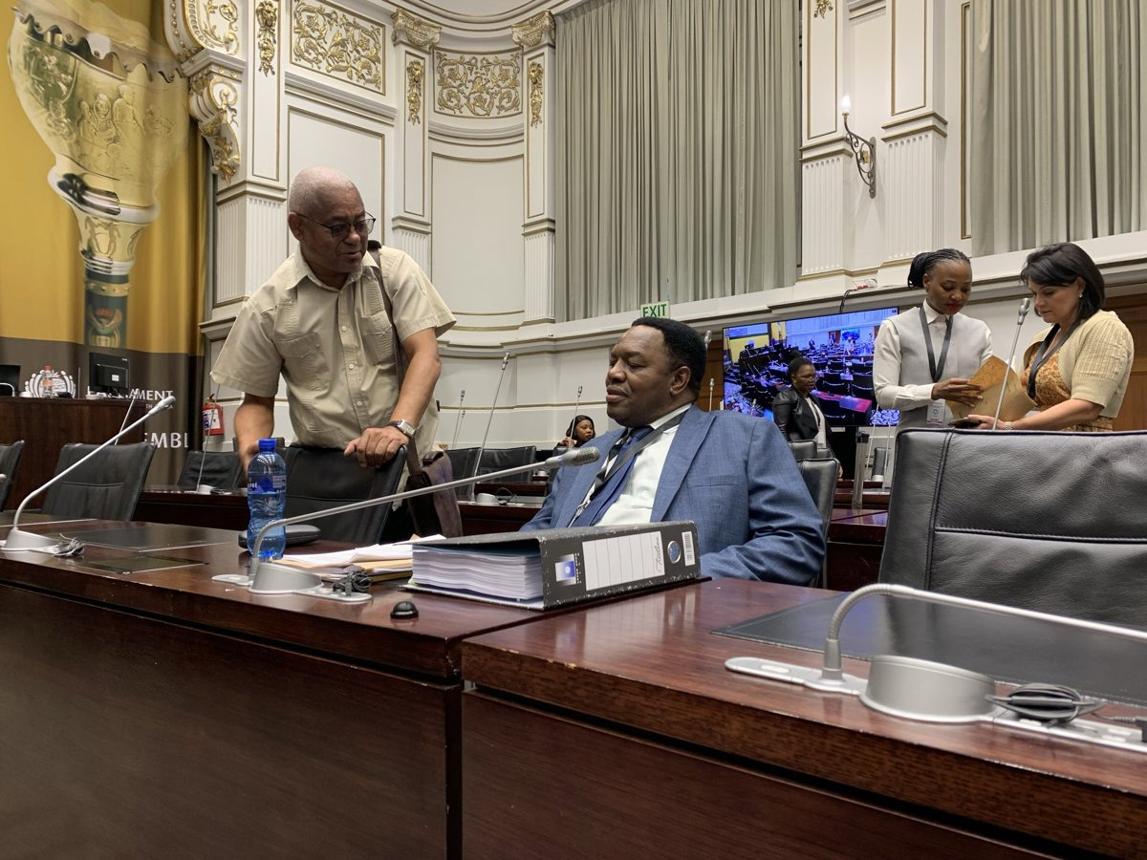
“South Africa’s parliamentary Ad Hoc Committee investigating allegations of criminality, corruption and political interference in the criminal justice system is calling for further investigation into claims that organised criminal interests may have infiltrated prosecutorial structures. The committee is also considering institutional and policy reforms aimed at strengthening police procurement, protecting policing operations from inappropriate interference and improving accountability across the criminal justice system.”
Parliament Pushes for Criminal Justice Policy Reforms
South Africa’s debate over the future of its criminal justice system has entered an important policy phase, with Parliament’s Ad Hoc Committee investigating allegations of corruption, political interference and criminal infiltration considering a series of institutional reforms. The developments reported on 2 October 2026 follow extensive deliberations by committee members over what should happen after the inquiry concludes.
One of the central issues now being considered is an investigation into allegations that organised criminal interests may have infiltrated prosecutorial structures. Committee members have supported a recommendation that the National Director of Public Prosecutions (NDPP) should inform Parliament’s Justice Portfolio Committee about the process that will be followed to investigate the allegations.
The issue is significant because the effectiveness of South Africa’s criminal justice system depends not only on police investigations, but also on prosecutors being able to assess evidence, make independent decisions and pursue criminal cases through the courts. Any confirmed interference within prosecutorial structures could therefore have implications extending beyond individual cases to the broader functioning of the justice system.
The committee’s discussions are taking place while South Africa continues to deal with allegations surrounding political influence, police operations and organised crime. The inquiry was established following allegations involving the criminal justice system, including claims raised by KwaZulu-Natal Police Commissioner Lieutenant-General Nhlanhla Mkhwanazi.
Focus on the National Prosecuting Authority
According to Eyewitness News, political parties represented on the committee have submitted recommendations concerning reforms that could affect the wider criminal justice system. The African National Congress submission, as read by committee chairperson Soviet Lekganyane, proposed that the NDPP provide a confidential report to the Justice Portfolio Committee concerning allegations that prosecutions may have been compromised by organised criminal interests.
The proposal also calls for the report to identify the process followed in investigating the allegations and the measures taken to protect prosecutions that could have been affected.
The confidentiality element is important because investigations involving organised crime can contain information concerning witnesses, intelligence operations, investigative techniques and ongoing criminal cases. Public disclosure of sensitive information before investigations are completed could potentially interfere with law-enforcement operations.
The Madlanga Commission is facing a similar challenge. On 2 October, evidence leaders requested that evidence from an undercover Crime Intelligence officer, referred to as “Witness S”, be heard privately. The request was linked to concerns that publicly revealing sensitive information could expose informants or alert people allegedly being monitored.
Procurement Reform Emerges as Another Policy Priority
The committee’s work has also placed government procurement within policing under scrutiny. Political parties reportedly agreed that police procurement systems should be strengthened to reduce opportunities for political interference.
The discussion follows controversy surrounding decisions affecting police operations, including a directive associated with the disbandment of the Political Killings Task Team.
According to Eyewitness News, committee members said that the directive concerning the task team was irrational on most points and that legislative and policy safeguards should be introduced to prevent future executive decisions from improperly affecting police operations.
This proposal represents a broader policy question: how should executive authority and operational independence interact within policing?
South Africa’s constitutional system places policing within an executive framework, while operational policing responsibilities are carried out by professional law-enforcement structures. The committee’s recommendations could therefore contribute to a debate over how decisions affecting investigations, specialised units and policing priorities should be made and documented.
Why Institutional Safeguards Matter
Policy reforms arising from the inquiry could focus on establishing clearer procedures for decisions that affect investigations and specialised police units.
Such safeguards could include stronger documentation requirements, clearer accountability mechanisms, independent oversight and defined procedures for reviewing decisions that could disrupt major investigations. The exact reforms, however, will depend on Parliament’s final recommendations and any subsequent legislative or executive action.
The broader objective is to ensure that criminal investigations are governed by transparent institutional processes rather than individual decisions that cannot easily be reviewed.
The South African government has already indicated that strengthening law-enforcement institutions is part of its broader response to corruption concerns. In May, Acting Police Minister Firoz Cachalia told Parliament that government intended to implement systemic reforms while awaiting the final recommendations of the Madlanga Commission. He identified Crime Intelligence, detective services, forensic capabilities and procurement and supply-chain management among areas requiring attention.
The Madlanga Commission and Parliamentary Inquiry
The parliamentary process is taking place alongside the Madlanga Commission of Inquiry, which is investigating criminality, political interference and corruption within the criminal justice system.
President Cyril Ramaphosa extended the commission’s final reporting deadline to 16 November 2026, while the evidence deadline was set for 2 October. The extension was intended to allow the commission to complete matters within its terms of reference.
The two processes have different institutional roles. The commission is an executive-established inquiry with a mandate to investigate allegations and make findings and recommendations, while Parliament’s Ad Hoc Committee is conducting its own inquiry and preparing recommendations for consideration through the parliamentary process.
The overlap means that developments from one process may provide information relevant to the other, although evidence and findings still have to be considered through the appropriate legal and institutional procedures.
Proposed Changes Could Affect Policing and Prosecution
The current discussions are not limited to one police department or one investigation. They potentially involve the relationship between police services, prosecutors, intelligence structures and political leadership.
Parliament is also considering wider changes to policing legislation. The South African Police Service Amendment Bill, introduced in June 2026, proposes changes concerning the National Commissioner, provincial commissioners, professionalisation, integrity testing, lifestyle audits, specialised units, intelligence structures and disciplinary arrangements.
These legislative developments provide additional context for the current policy debate.
If Parliament ultimately supports new safeguards, the implementation stage will be important. Legislation or policy changes need to be translated into operational procedures, training, oversight systems and measurable accountability mechanisms. Institutional reform therefore involves more than passing new rules.
Public Accountability and Transparency
Another issue raised by the committee’s deliberations is the balance between transparency and operational confidentiality.
Parliamentary oversight requires public accountability, while intelligence and organised-crime investigations sometimes require confidential handling of information. The request for private testimony from the Crime Intelligence witness illustrates this tension.
The committee’s recommendation concerning prosecutorial infiltration similarly proposes a confidential report to the Justice Portfolio Committee. This would allow lawmakers to receive information while limiting the immediate public disclosure of sensitive details.
The challenge will be ensuring that confidentiality does not become a substitute for accountability. Effective oversight requires appropriate access to information, clear reporting procedures and mechanisms for determining whether allegations have been properly investigated.
What Happens Next?
The Ad Hoc Committee is continuing to deliberate on its draft report and recommendations. Political parties have submitted proposals concerning institutional reforms, including measures affecting prosecutors and police procurement.
The committee’s final recommendations will need to be considered within Parliament’s broader legislative and oversight processes. Some recommendations could require administrative changes, while others may require amendments to existing laws or the introduction of new legislation.
Meanwhile, the Madlanga Commission is approaching the end of its evidence-gathering phase, with its final report expected in November.
Together, these developments place criminal justice policy firmly on South Africa’s political and institutional agenda.
The immediate significance of the committee’s work is therefore not simply the allegations being investigated, but the policy questions arising from them: how police operations should be protected from inappropriate interference, how procurement should be governed, how allegations involving prosecutors should be investigated, and how Parliament and other oversight institutions should monitor the criminal justice system.
For South Africa, the eventual impact will depend on what happens after the inquiries conclude. Recommendations will have to be converted into enforceable rules, institutional procedures and oversight mechanisms if they are to produce lasting changes.
For now, Parliament’s deliberations signal that the country’s response to the criminal justice crisis is moving beyond individual allegations toward questions about policy, institutional design, accountability and governance.



