




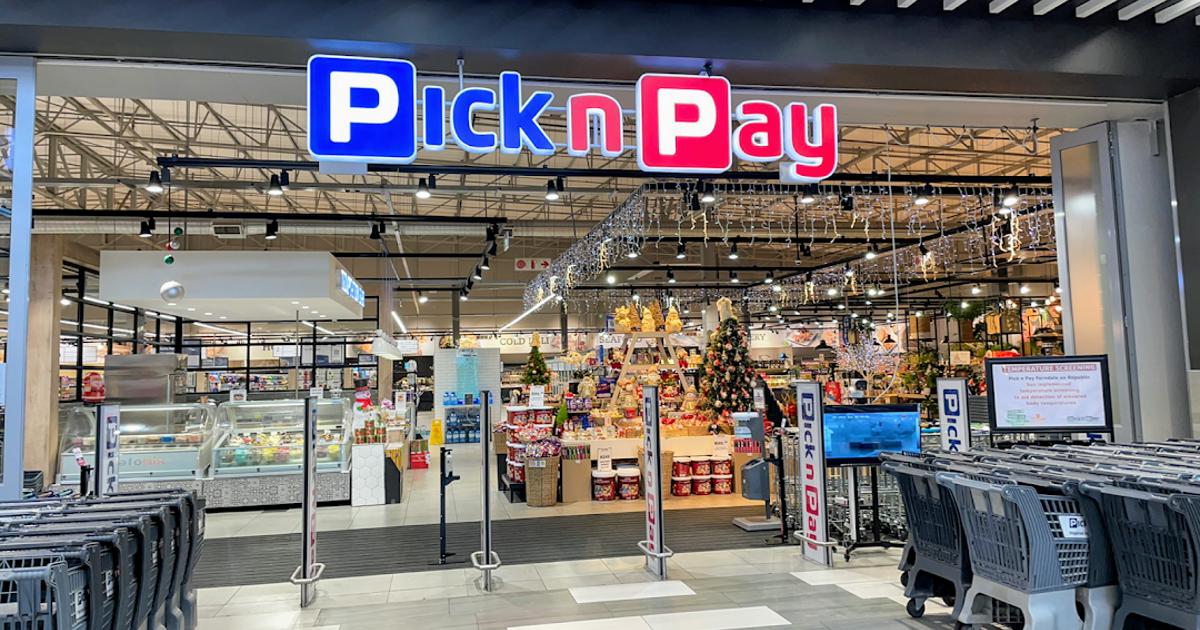
“Pick n Pay reduced its headline loss for the first half of its financial year by 31.9% to R299 million, while trading profit rose 58.1% to R490 million and group turnover increased 2.4% to R60.5 billion. Its value-focused Boxer business remained a major growth driver, demonstrating how pricing, product selection, operating efficiency and consumers’ search for affordability can influence competition in South Africa’s grocery market.”
How Pick n Pay’s turnaround reflects changing consumer behaviour in South Africa
A changing grocery market
South Africa’s grocery retail sector is facing a demanding economic environment in which household budgets, product prices and competition are shaping purchasing decisions. For many consumers, choosing where to shop is increasingly influenced by the cost of everyday essentials, promotional offers and the ability to stretch limited disposable income. Against this backdrop, Pick n Pay’s latest financial results offer an important case study in microeconomics: the study of how households and individual businesses make decisions when resources are limited.
According to Reuters’ report published on 26 October 2026, Pick n Pay reduced its headline loss for the 26 weeks ended 30 August 2026 to R299 million, compared with R439 million in the corresponding period a year earlier. Trading profit rose 58.1% to R490 million, while group turnover increased 2.4% to R60.5 billion. The performance reflected improvements in gross margins, product mix and supply-chain operations, alongside strong growth at its Boxer discount-retail subsidiary.
These results matter beyond the company’s balance sheet. They illustrate how a retailer’s performance depends on consumer preferences, price sensitivity, competition, operating costs and the efficient allocation of resources.
2. The economics behind the turnaround
Microeconomics examines how firms respond to market conditions and how consumers allocate their income among competing needs. Grocery retail provides a particularly clear example because customers purchase products frequently and can often compare prices across competing stores.
A retailer must balance several objectives: attracting customers, maintaining competitive prices, managing supplier costs, controlling operating expenses and generating sufficient revenue to remain profitable.
Pick n Pay’s improved financial results suggest that its turnaround strategy is beginning to produce measurable benefits. Its stronger trading profit indicates improved performance from its underlying retail operations, although the results alone do not prove that every part of the business has recovered.
The distinction between turnover and profit is important. Turnover measures sales revenue, while profit reflects what remains after relevant costs are accounted for. A retailer can increase sales without improving profitability if expenses rise faster than revenue. Conversely, better purchasing terms, reduced waste, more efficient distribution and a stronger product mix can improve profits even when sales growth remains modest.
For Pick n Pay, the combination of higher turnover, improved gross margins and a smaller headline loss points to progress on several of these fronts.
3. Boxer demonstrates the importance of price competition
One of the most significant elements of the reported results was the contribution of Boxer, Pick n Pay’s value-focused retail business. Reuters reported that Boxer achieved turnover growth of 6.3%, while the group’s core Pick n Pay business remained broadly flat.
This difference highlights the role of market segmentation in microeconomics.
Market segmentation occurs when businesses target different groups of customers according to their needs, preferences and willingness to pay. Some shoppers prioritise convenience, premium products or a broad selection. Others place greater emphasis on obtaining essential goods at the lowest possible cost.
A value retailer can appeal to consumers who are highly sensitive to price changes. If shoppers believe that two stores offer sufficiently similar products, they may prefer the one that allows them to purchase more within the same budget.
However, price is not the only consideration. Consumers may also evaluate product quality, store location, transport costs, product availability, payment options and the time required to shop.
Boxer’s reported growth suggests that its positioning is resonating with customers, although the available results do not establish that affordability alone explains the increase. Store expansion, product availability, promotions and execution may also contribute.
For the wider industry, the implication is clear: retailers need to understand what their customers value rather than rely exclusively on historical brand loyalty.
4. Household budgets are influencing purchasing decisions
The pressures facing retailers are closely connected to the financial decisions made by households.
On 25 October, Daily Maverick published an analysis of South Africa’s retail sector that described consumers cutting back on shopping and restaurant meals as living costs weigh on household finances. The article highlighted the uneven performance of consumer-facing companies and the importance of competitive pricing in attracting customers.
Earlier reporting by Newsday, drawing on NielsenIQ South Africa’s Consumer Outlook: Guide to 2026, found that consumers were reducing spending on restaurants, takeaways, entertainment and selected non-essential groceries.
These trends demonstrate the microeconomic concept of a budget constraint. Households have limited income and must decide how to divide it among food, housing, transport, electricity, healthcare, education and other expenses.
When essential costs increase, families may reduce spending on products they regard as less necessary. They may also switch brands, purchase smaller quantities, compare prices more frequently or change retailers.
For grocery businesses, this behaviour creates both risks and opportunities. Customers may become less willing to pay premium prices, but retailers offering a credible combination of value, availability and quality can attract additional demand.
Nevertheless, lower prices do not automatically guarantee commercial success. A business must also ensure that its costs are sufficiently controlled to sustain its pricing strategy.
5. Inflation adds pressure to everyday shopping
Price movements are another important part of the story.
Statistics South Africa reported that annual consumer inflation increased to 4.5% in September 2026, compared with 4.4% in August and 4.3% in July. Transport inflation, housing and utilities, and insurance and financial services were among the major contributors to the overall rate.
Although the headline inflation rate measures the broader consumer basket rather than grocery prices alone, rising transport and household expenses can reduce the money available for discretionary purchases.
Transport costs also matter for retailers themselves. Moving goods from suppliers to distribution centres and stores requires fuel, vehicles, labour and logistics infrastructure. If these expenses increase, businesses may face pressure to raise prices, accept lower margins or find operational savings.
The effect on consumers depends on how costs are transmitted through the supply chain. A retailer may absorb some increases, negotiate with suppliers, adjust its product mix or pass some of the additional expense on to shoppers.
These decisions illustrate the relationship between production costs, market demand and price setting. A company with strong purchasing power and efficient distribution may have more flexibility than a smaller competitor with limited bargaining power.
For Pick n Pay, improving supply-chain performance is therefore potentially important not only for profitability but also for maintaining competitive prices.
6. Gross margins and operating efficiency
Reuters reported that Pick n Pay’s gross margin increased by 0.7 percentage points to 18.8%, with improvements attributed to a better product mix and supply-chain improvements.
Gross margin represents the proportion of sales revenue remaining after the cost of goods sold is deducted. A higher margin can indicate better purchasing terms, a more profitable product mix, lower product costs or stronger pricing relative to costs.
However, margins must be interpreted carefully in a competitive grocery market. Raising prices may increase revenue per item, but it can also discourage customers from purchasing if cheaper substitutes are available.
Retailers must therefore consider the relationship between price and quantity demanded.
When demand is price-elastic, a relatively small price increase can produce a proportionally larger reduction in the quantity sold. When demand is less elastic, customers may continue buying similar quantities despite a price change. The degree of elasticity varies by product and depends on factors such as necessity, brand loyalty and the availability of substitutes.
Basic staple foods may be difficult for households to eliminate, but consumers can still change brands or stores. Premium products and non-essential purchases may be more vulnerable to reduced demand.
A retailer seeking sustainable profitability must therefore consider both its margin per item and the volume of goods sold.
7. Store expansion and the economics of competition
Pick n Pay’s results also highlight the relationship between store networks and competition.
Reuters reported that the company-owned South African supermarket business achieved like-for-like sales growth of 2.4%, while the group continued working to address underperforming stores and regain customers.
Like-for-like sales compare performance at comparable stores, helping analysts distinguish changes in existing operations from growth generated by opening additional locations.
Store networks can create economies of scale. Larger retailers may spread distribution, technology, purchasing and administrative costs across more outlets. They may also negotiate more favourable terms with suppliers because of their purchasing volumes.
However, expansion also requires capital. New stores involve rental commitments, equipment, inventory, staffing and other expenses. If a location attracts insufficient customer demand, the additional investment can weaken returns.
This creates a central managerial challenge: retailers must determine where expansion will generate enough additional revenue to justify its costs.
The competitive consequences extend beyond major chains. Independent supermarkets, spaza shops and smaller grocery businesses also serve South African communities. Their advantages may include convenient locations, personal relationships and flexible product offerings, although their purchasing and distribution costs may differ from those of large chains.
Competition consequently takes place through several dimensions, including price, convenience, product selection, service and availability.
8. What the results mean for consumers
For consumers, a stronger retailer can potentially mean more competitive promotions, improved product availability and better shopping experiences. Nevertheless, improved corporate results do not necessarily translate directly into lower prices.
The outcome depends on how a business allocates the benefits of greater efficiency. Savings could support lower prices, increased investment, debt reduction or improved profitability. Competitive pressure can encourage retailers to pass some efficiencies to customers, but the extent will depend on market conditions.
Consumers can improve their purchasing decisions by comparing the unit prices of equivalent products, planning purchases around household needs and distinguishing genuine discounts from temporary promotional claims.
Comparisons should also account for quality and quantity. A cheaper package is not always the less expensive option if it contains substantially less product.
Retailers, meanwhile, must avoid strategies that undermine customer trust. Transparent pricing, accurate promotions and reliable product availability can help maintain long-term customer relationships.
9. Risks to the recovery
Despite the encouraging reported results, Pick n Pay’s recovery remains subject to several uncertainties.
First, pressure on household budgets could restrict sales growth, particularly for discretionary categories. Second, higher fuel and distribution costs could erode the benefits of operational improvements. Third, intense competition may require additional discounts that reduce margins.
The company’s core Pick n Pay business also remains an important consideration. Its broadly flat turnover indicates that the improvement is not uniform across the group. Continued progress will depend on attracting customers, improving store performance and ensuring that the value proposition is competitive.
Furthermore, one half-year reporting period cannot establish whether the turnaround will be sustained. Future results will need to show whether improved margins, operating profit and customer demand continue over time.
The wider retail sector is also affected by employment conditions, consumer confidence, credit costs and the evolution of inflation. Any deterioration in household purchasing power could change buying patterns again.
10. Implications for South Africa’s grocery industry
Pick n Pay’s performance offers lessons for businesses throughout the retail economy.
Companies need to understand their target customers, maintain efficient operations and respond quickly to changing demand. For smaller businesses, this could mean concentrating on essential products, controlling inventory, reducing waste and building relationships with local customers.
For large retailers, the challenge is to combine scale with flexibility. Centralised purchasing and distribution can lower costs, but individual stores must still respond to local preferences and competitive conditions.
Policymakers also have an interest in effective competition. Markets that allow consumers to compare alternatives and businesses to compete on merit can encourage efficiency and innovation. At the same time, competition policy must consider barriers to entry, supplier relationships and the ability of smaller firms to participate.
The objective is not simply to ensure that retailers sell at the lowest possible price regardless of cost. Rather, it is to support a market in which businesses can operate sustainably while consumers have meaningful choices and access to essential goods.
11. Conclusion: Value and efficiency will shape the next phase
Pick n Pay’s latest financial results provide evidence of progress in its turnaround, with a smaller headline loss, stronger trading profit and continued growth at Boxer. The improvement also demonstrates how supply-chain efficiency, product mix and competitive positioning can influence business performance in a price-sensitive market.
The wider economic environment remains challenging. Inflation, transport expenses and constrained household budgets continue to influence what consumers purchase and where they shop.
From a microeconomic perspective, the key issue is how effectively retailers match their prices, products and operating models to consumers’ changing needs. Businesses that deliver credible value while managing costs may be better positioned to attract customers and maintain profitability.
For South African shoppers, the competitive environment may create opportunities to compare prices and seek better value. For retailers, however, the recovery will depend on more than short-term sales growth: it will require sustained efficiency, customer confidence and the ability to respond to changing market conditions.



