




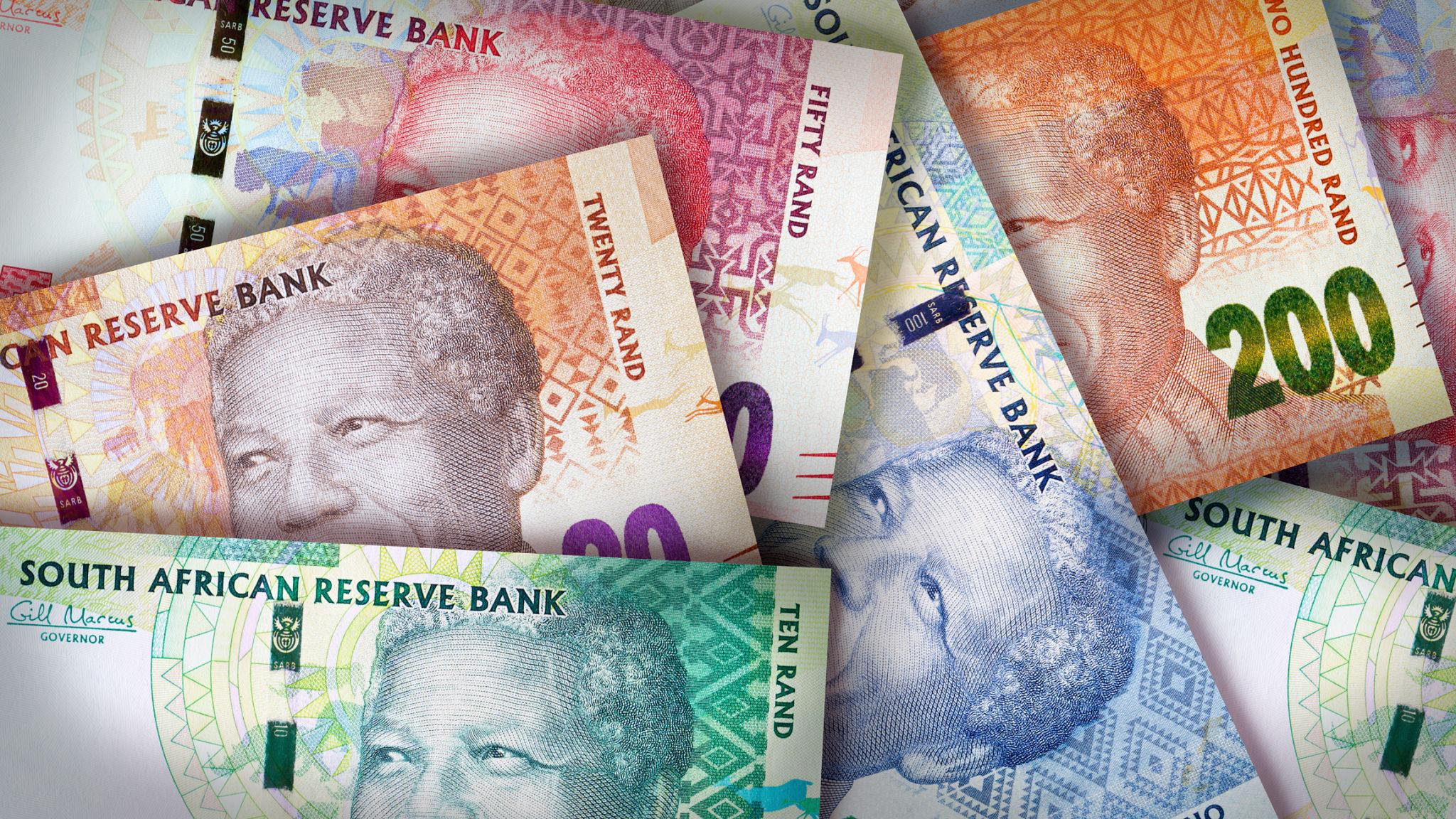
“The South African rand traded broadly unchanged against the US dollar on Monday, 26 October 2026, as investors awaited domestic economic indicators, including money supply, private-sector credit, trade-balance and budget-balance figures, alongside producer inflation data. Market attention was also focused on the US Federal Reserve’s forthcoming policy decision, with global interest-rate expectations likely to influence emerging-market currencies, South African government bonds and investor appetite for local assets.”
South African Rand Holds Steady as Investors Await Economic Data and US Federal Reserve Decision
Rand stability reflects a cautious financial market
South Africa’s financial markets began the week in a cautious mood on Monday, 26 October 2026, as investors assessed the country’s economic outlook and prepared for an important decision by the United States Federal Reserve. The South African rand traded relatively steadily against the US dollar, reflecting a market environment in which traders were waiting for fresh information before making significant investment decisions.
According to Reuters reporting published on Monday, the rand traded at approximately R16.6125 to the dollar at 06:02 GMT, remaining little changed from its previous close. South Africa’s benchmark government bond maturing in 2035 was also relatively stable, with its yield at approximately 8.635%. These figures indicate limited early-session movement, rather than a decisive improvement in investor confidence.
The currency’s performance matters because South Africa depends on international trade, foreign investment and imported goods. Movements in the rand can affect the cost of fuel, machinery, medicines and other imported products. They can also influence inflation expectations, corporate profitability and the returns international investors receive when converting South African assets back into foreign currencies.
Consequently, traders are watching both domestic economic indicators and international monetary policy. The combination of these factors will help determine whether the rand maintains its relative stability or faces renewed pressure in the coming trading sessions.
US Federal Reserve decision becomes a central market focus
One of the most important developments influencing South African financial markets this week is the Federal Reserve’s scheduled policy meeting on 28 October 2026.
The Federal Reserve determines monetary policy in the United States, the world’s largest economy. Its interest-rate decisions influence borrowing costs, international capital flows, bond yields and the relative attractiveness of currencies around the world.
Reuters reporting carried by Business Recorder indicated that market participants largely expected the Federal Reserve to leave interest rates unchanged at the upcoming meeting. However, expectations of a possible rate increase in December remained a consideration for traders, according to the report’s cited market indicators.
For South Africa, the implications extend beyond the immediate currency exchange rate. When US interest rates are relatively attractive, international investors may prefer dollar-denominated assets, particularly when global uncertainty increases. This can reduce demand for emerging-market investments, including South African government bonds and equities.
Conversely, expectations of lower US interest rates can improve the relative appeal of emerging markets by reducing the opportunity cost of investing in assets outside the United States. Nevertheless, currency movements are never determined by interest rates alone. Investors also consider economic growth, political developments, commodity prices, inflation and the perceived risks associated with individual countries.
The Federal Reserve’s communication will therefore be important alongside its actual decision. Investors will look for clues about the likely direction of monetary policy in the months ahead.
Domestic economic data could shape investor sentiment
Alongside developments in the United States, South Africa faces a busy period of economic data releases that could provide a clearer picture of domestic financial conditions.
According to the 26 October Reuters report, investors are monitoring money supply, private-sector credit, the trade balance, the government budget balance and September producer inflation. These indicators measure different aspects of the economy, ranging from the availability of credit to businesses and households to the relationship between exports and imports.
Money-supply figures help economists understand changes in the amount of money circulating through the economy. Although an expansion in money supply can support economic activity, its implications depend on whether it reflects productive lending, rising incomes, changes in savings or other financial developments.
Private-sector credit is equally important. It provides information about borrowing by households and businesses and can help reveal whether consumers are financing purchases, companies are investing or lenders are becoming more cautious.
Stronger credit growth may indicate improving confidence and economic activity. However, excessive borrowing can create financial vulnerabilities, particularly when interest rates remain elevated and household budgets are under pressure.
Trade-balance figures will also attract attention because South Africa’s external accounts influence demand for foreign currency. Stronger export performance relative to imports can support foreign-exchange inflows, although the overall effect on the rand depends on commodity prices, international demand, capital flows and other economic factors.
Meanwhile, the government budget balance offers insight into public finances. Investors assess whether government revenue is sufficient to cover expenditure and whether borrowing requirements are manageable.
A better-than-expected fiscal position can improve confidence in the government’s ability to service its debt. By contrast, deteriorating public finances can raise concerns about future borrowing, bond yields and the potential pressure on taxation or public spending.
Producer inflation remains important for monetary policy
September producer inflation is another key indicator scheduled for attention during the reporting period.
Producer inflation measures changes in prices received by domestic producers or paid at earlier stages of production, depending on the specific index. These price movements can influence the costs businesses face before products reach consumers.
When production costs increase, companies may respond by raising selling prices, reducing profit margins or adjusting investment plans. The eventual impact on consumer inflation depends on factors such as competition, demand, exchange-rate movements and businesses’ ability to absorb additional costs.
For South Africa, producer inflation is particularly relevant because businesses can be exposed to imported fuel, transport expenses, machinery and intermediate goods. A weaker rand may make certain imports more expensive, while higher international commodity prices can increase costs even if the currency remains relatively stable.
However, producer and consumer inflation do not necessarily move together. Companies may absorb higher costs when demand is weak, while productivity improvements or lower prices for other inputs can offset increases elsewhere.
The Reserve Bank must therefore assess a range of indicators when determining monetary policy.
In its September 2026 Monetary Policy Committee statement, the South African Reserve Bank increased the policy rate to 7.25%, citing inflation concerns and a challenging global environment. The bank also highlighted rising fuel prices and persistent services inflation, while noting that food inflation had fallen substantially.
The latest economic releases will help markets evaluate how these pressures are developing, although individual data points will not necessarily determine the central bank’s next decision.
Government bond yields provide another signal
The relative stability of South Africa’s benchmark 2035 government bond on Monday offers another indication of the cautious market environment.
Government bond yields reflect several factors, including expectations for inflation, interest rates, economic growth, fiscal sustainability and the risk investors associate with lending to a government.
When bond prices fall, yields generally rise. Higher yields can make government borrowing more expensive because new debt may need to be issued at less favourable rates. They can also affect the pricing of corporate debt, mortgages and other financial products.
The reported yield of approximately 8.635% on the 2035 benchmark bond showed that the market had not experienced a major early-session shift at the time of the report.
Nevertheless, a stable yield on a single trading morning does not guarantee that bond markets will remain calm throughout the week.
Investors could adjust their positions after the Federal Reserve announcement, the release of domestic economic statistics or unexpected developments in global markets.
For the South African government, maintaining investor confidence is important because public borrowing helps finance expenditure and refinance existing obligations. More favourable borrowing conditions can create greater room for productive spending, while persistently elevated yields can increase debt-servicing costs.
Bond-market performance is therefore closely connected to broader debates about fiscal discipline, economic growth and the sustainability of public finances.
Implications for businesses and households
Currency stability has practical consequences for businesses and consumers across South Africa.
Import-dependent companies may benefit when the rand avoids sharp depreciation because exchange-rate stability makes it easier to forecast the cost of foreign purchases. Businesses that import equipment, electronic products, industrial inputs or pharmaceutical supplies can use more stable currency conditions to plan budgets and manage supplier contracts.
However, stability does not automatically mean that imported goods will become cheaper. The exchange rate is only one component of the final price, alongside international prices, shipping, insurance, taxes and domestic distribution costs.
Fuel remains particularly important because South Africa is exposed to international energy prices and exchange-rate movements. A weaker rand or rising oil prices can increase the local cost of imported energy, potentially affecting transport, food distribution, manufacturing and household expenditure.
For consumers, these changes can reduce disposable income if wages fail to keep pace with rising costs. Higher transport and food expenses may also leave households with less money available for savings, debt repayments and discretionary purchases.
A stronger or more stable rand can help moderate some imported inflation pressures, but it cannot eliminate price increases caused by domestic factors or higher international commodity prices.
Borrowers and savers also have reason to monitor monetary policy. Interest-rate expectations can influence lending costs, deposit returns and investment valuations, although the effect on individual financial products depends on banks’ pricing decisions and the terms of existing agreements.
International risks remain significant
South Africa’s financial outlook cannot be assessed independently of the global economy.
International commodity prices, geopolitical developments and investor demand for emerging-market assets can influence the rand even when domestic economic conditions have not changed significantly.
A separate Reuters report on global currency markets published on 26 October described subdued trading ahead of a busy week of central-bank decisions and major corporate earnings announcements. The report highlighted the importance of interest-rate expectations and global market sentiment in determining currency movements.
For South Africa, these external influences can sometimes outweigh domestic developments over short periods. An international investor may reduce exposure to emerging markets because of changing global risk appetite, for example, even if South Africa releases encouraging economic data.
The opposite can also occur. Strong demand for emerging-market assets or favourable commodity-price movements may support the rand despite domestic economic challenges.
This interaction makes currency forecasts uncertain. Traders must continuously reassess the balance between local fundamentals and international developments rather than relying on a single indicator.
Outlook for the coming trading sessions
The immediate outlook for the rand will depend on how investors interpret the latest domestic data and the Federal Reserve’s policy announcement.
If South African economic indicators suggest stronger activity, manageable inflation and improving fiscal conditions, they could support investor confidence. However, disappointing results or signs of renewed inflationary pressure could complicate the outlook.
The Federal Reserve decision may influence the direction of global capital flows, particularly if policymakers communicate a different outlook from what investors currently expect. Unexpected changes in interest-rate guidance can trigger rapid adjustments in currencies and bond markets.
Investors will also need to distinguish between short-term market reactions and longer-term economic fundamentals. A currency can strengthen temporarily because of global market conditions without indicating a lasting improvement in domestic productivity or economic growth.
Similarly, a short-lived depreciation does not necessarily mean that the underlying economy has deteriorated.
For South Africa, durable financial stability will depend on a combination of credible monetary policy, sustainable public finances, stronger investment, reliable infrastructure and improved economic growth.
Conclusion
The rand’s relative stability on 26 October 2026 reflects a cautious pause as investors prepare for an important week in domestic and international finance. The forthcoming South African economic releases will provide additional information about credit conditions, trade, public finances and producer prices, while the Federal Reserve’s decision could influence global investment flows and emerging-market currencies.
For households and businesses, the key issue is whether this stability can translate into more predictable costs, manageable inflation and improved confidence. For policymakers, the challenge is to preserve financial stability while supporting stronger economic growth.
Although the rand’s performance remains sensitive to global events, the combination of domestic data and international monetary policy will provide important signals for investors assessing South Africa’s financial outlook in the days ahead.
The central message is that currency stability is useful, but it is not sufficient on its own. Sustained improvements in economic performance, inflation management and fiscal credibility will be essential if South Africa is to build lasting confidence in its financial markets.



