




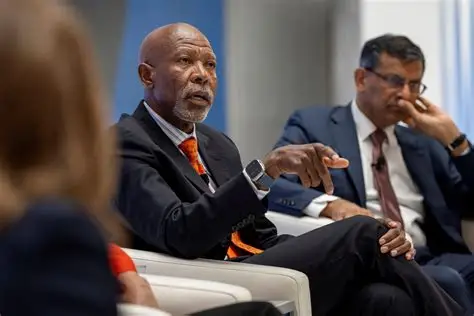
“South Africa’s economic environment is facing unprecedented levels of policy uncertainty, with businesses and investors expressing concern over inconsistent government decisions and regulatory delays. Analysts warn that this uncertainty is undermining confidence, slowing investment, and threatening long-term growth prospects.”
Policy uncertainty has long been a thorn in South Africa’s economic landscape, but recent developments have pushed it to new highs. Business leaders, investors, and policymakers alike are grappling with the consequences of inconsistent government actions, regulatory bottlenecks, and shifting political priorities. This article explores the roots of the current uncertainty, its impact on the economy, and potential pathways to restore confidence.
Historical Context
South Africa’s business environment has historically been shaped by a mix of progressive policies aimed at transformation and structural challenges rooted in inequality and inefficiency. Over the past decade, however, policy inconsistency has become more pronounced. From energy regulation to taxation frameworks, businesses have struggled to plan long-term strategies in the face of unpredictable government decisions.
Current Drivers of Uncertainty
Several factors are driving the current spike in policy uncertainty:
- Energy Policy Instability: Eskom’s ongoing struggles and shifting government strategies around renewable energy versus coal have left investors unsure about the future of energy supply.
- Taxation and Fiscal Policy: Frequent changes in tax structures, coupled with debates over wealth taxes and corporate levies, have created confusion for businesses.
- Regulatory Delays: Projects such as Transnet’s fuel pipeline expansion have faced years of delays, undermining confidence in government capacity to deliver infrastructure.
- Political Dynamics: Coalition politics and factional battles within the ruling party have led to inconsistent policy messaging, further eroding trust.
Impact on Business Confidence
The South African Chamber of Commerce and Industry’s Business Confidence Index has shown sharp declines in recent months. Companies are hesitant to commit to new investments, fearing sudden regulatory changes or policy reversals. Foreign investors, too, are adopting a wait-and-see approach, with capital inflows slowing significantly compared to regional peers.
Case Studies
- Mining Sector: The halt in manganese smelter production due to power costs highlights how policy uncertainty in energy regulation directly affects industrial output.
- Financial Services: FirstRand’s fintech bet, Optasia, has soared on the JSE, but analysts caution that inconsistent regulatory oversight could dampen future growth.
- Infrastructure Projects: Transnet’s pipeline delays illustrate how regulatory inefficiency can inflate costs and undermine investor confidence.
Broader Economic Consequences
Policy uncertainty has ripple effects across the economy:
- Investment Slowdown: Both domestic and foreign investors are reluctant to commit capital.
- Job Creation Challenges: Without investment, job growth stagnates, exacerbating unemployment.
- Currency Volatility: The rand has experienced heightened volatility, reflecting investor nervousness.
- Growth Prospects: Economists warn that South Africa’s GDP growth could fall below regional averages if uncertainty persists.
Government Response
Officials acknowledge the problem but have offered mixed solutions. Some advocate for stronger centralization of policy decisions, while others push for decentralization and private-sector involvement. The lack of consensus itself adds to the uncertainty.
Expert Opinions
Economists argue that clarity and consistency are key to restoring confidence. “Policy uncertainty is the silent killer of investment,” one analyst noted, emphasizing that even well-intentioned reforms lose impact if they are not implemented consistently.
Pathways Forward
To address the crisis, South Africa could consider:
- Clear Energy Roadmap: Establishing a transparent, long-term energy policy that balances renewables and traditional sources.
- Regulatory Efficiency: Streamlining approval processes for infrastructure and business projects.
- Fiscal Stability: Providing predictable tax frameworks to allow businesses to plan effectively.
- Political Consensus: Building cross-party agreements on key economic policies to reduce volatility.
Conclusion
South Africa’s policy uncertainty is more than a temporary challenge—it is a structural issue that threatens long-term growth and stability. Addressing it requires decisive leadership, transparent communication, and consistent implementation. Without these, the country risks losing its competitive edge in the global economy.



