




“South Africa’s trade account fell into a ZAR1.8 billion deficit in May 2026, reversing a strong surplus trend, as gold and platinum group metals exports dropped sharply. Analysts caution that while the broader trade outlook remains constructive, the economy’s external buffer is increasingly vulnerable to commodity price swings and rising fuel costs.”
South Africa’s trade performance has long been a barometer of its economic resilience, reflecting the delicate balance between commodity exports and essential imports. The latest data from May 2026 revealed a ZAR1.8 billion deficit, the first since January 2025, sparking debate among economists, policymakers, and industry leaders about the sustainability of the country’s external position.
Drivers of the Deficit
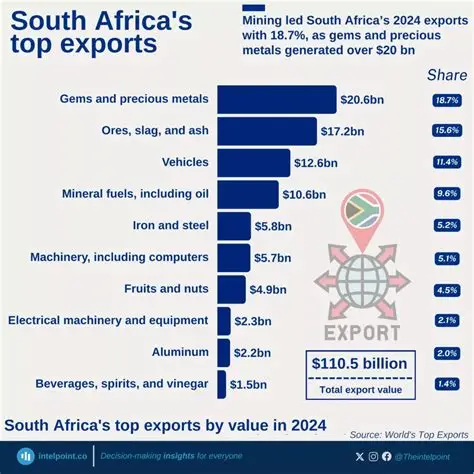
- Precious Metals Decline: Gold and platinum group metals (PGMs) exports fell by ZAR11.1 billion, largely due to shipment timing and weaker global prices.
- Fuel Imports: A persistently heavy fuel bill compounded the shortfall, underscoring South Africa’s dependence on imported energy.
- Motor Industry Weakness: Vehicle and component exports dropped more than 20% in Q1 2026, reflecting structural challenges in manufacturing and logistics.
Broader Trade Context
- China Trade: Mining exports continue to dominate, but manufacturing-led imports from China keep the bilateral deficit wide.
- US Trade: Despite tariff risks under President Trump’s administration, South Africa’s balance with the US remains modestly positive.
- African Partners: Regional trade remains mixed, with agricultural exports showing some growth but still too small to diversify meaningfully.
Structural Challenges
- Port Inefficiencies: Congestion and delays at major ports undermine competitiveness.
- Skills Shortages: The motor industry faces a lack of skilled labor, limiting its ability to scale.
- Policy Constraints: Ideological barriers prevent small businesses from expanding into export markets.
Positive Signals
- Mineral Sales Surge: Despite weaker gold prices, overall mineral sales values hit record highs in April 2026, boosting tax revenues and fiscal stability.
- Credit Rating Upgrades: South Africa’s sovereign bonds have seen outlook improvements, thanks to successive budget surpluses.
Outlook
Economists expect some rebound in June, as shipment timing normalizes and fuel costs ease slightly. However, the reliance on commodities leaves South Africa exposed to global price volatility, making structural reforms in manufacturing, logistics, and energy diversification critical for long-term stability.



