




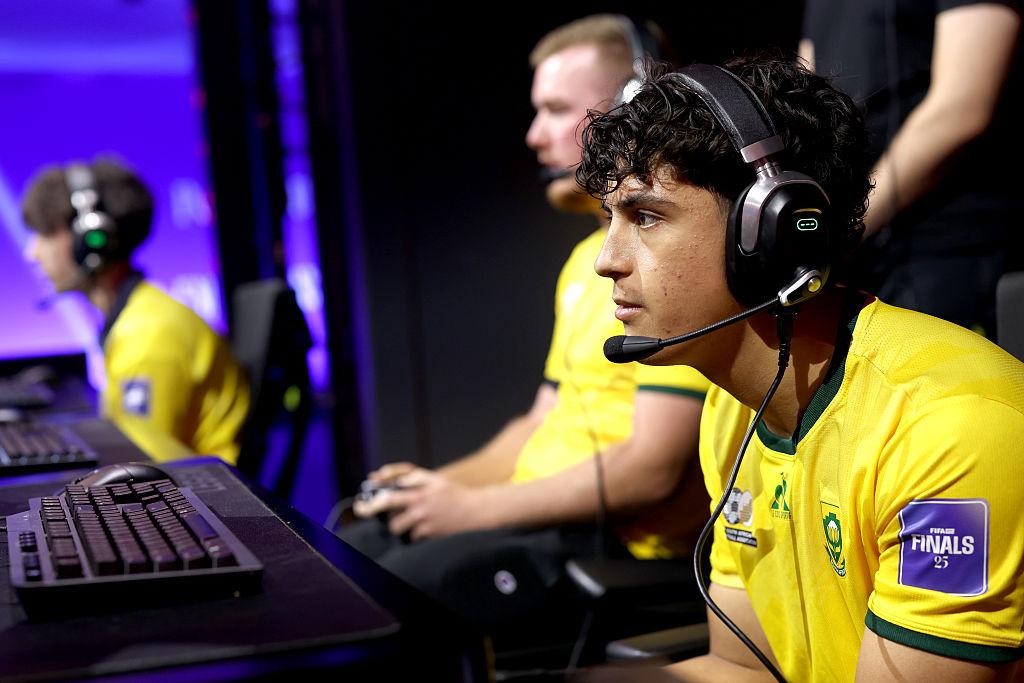
“South Africa is competing at the FIFAe World Cup 2026 featuring Rocket League in Jeddah, Saudi Arabia, after qualifying through the African continental championship alongside Morocco. The national squad comprises David “2Die4” Morgenrood, Gareth “Snowyy” Spiers and Brayden “gunz” Keith, with Nicholas “cpZebra” Fourie serving as coach, placing South African esports talent on an international stage.”
South Africa’s international esports opportunity
South Africa’s participation in the FIFAe World Cup 2026 featuring Rocket League marks an important moment for the country’s competitive gaming community. As the international tournament begins on 20 October, attention turns to the players representing the country and their ability to compete against some of the strongest national teams in the world.
The tournament is scheduled to take place at the Abadi Al Johar Arena in Jeddah, Saudi Arabia, running until 25 October. According to Esports Central, 16 countries are expected to compete in the championship, creating a significant opportunity for South Africa to demonstrate its ability in a rapidly developing international esports discipline.
For South African supporters, the event represents more than another gaming competition. It highlights the increasing connection between traditional sporting organisations, professional gaming, digital entertainment and national representation.
Rocket League combines football-inspired competition with rocket-powered vehicles, demanding accurate control, quick decisions, coordinated teamwork and tactical awareness. Although players compete through controllers and screens rather than on a conventional football pitch, the demands of high-level competition are considerable.
South Africa’s qualification therefore provides a valuable opportunity to measure local talent against international opposition while increasing the visibility of the country’s esports industry.
The players carrying South Africa’s hopes
The South African team named for the championship includes David “2Die4” Morgenrood, Gareth “Snowyy” Spiers and Brayden “gunz” Keith. Nicholas “cpZebra” Fourie is listed as the team’s coach.
The three players will need to combine individual mechanical ability with effective teamwork. In Rocket League, individual skill can create opportunities, but sustained success often depends on positioning, communication, resource management and the ability to anticipate teammates’ movements.
Players must continually decide when to challenge for the ball, when to defend, when to rotate away from an attacking position and when to conserve their boost. A single mistimed challenge can expose the goal, while a well-coordinated passing play can change the direction of a match within seconds.
These demands make coaching and preparation important parts of the competitive process. The coach can help the squad examine opponents, identify recurring weaknesses and maintain a coherent approach when matches become difficult.
Nevertheless, the precise contributions of individual players, the final match results and the team’s eventual finishing position should be established through official tournament updates rather than assumptions made before competition concludes.
How South Africa qualified
South Africa earned its place at the World Cup through the FIFAe Continental Championship 2026 Africa. The team secured qualification alongside Morocco, giving both countries an opportunity to represent the African region at the global event.
The qualification process is significant because it demonstrates that South African esports players can progress through organised competitive structures rather than relying exclusively on informal gaming communities.
Continental competition provides a pathway through which players can test their skills, build experience and pursue international opportunities. It also gives national associations and other stakeholders a clearer framework for identifying talent.
South Africa’s presence in the tournament offers an opportunity to strengthen the country’s reputation within the wider Rocket League community. However, qualification alone does not guarantee a successful World Cup campaign. The team must still perform consistently against opponents who have also earned their places.
The challenge becomes especially demanding when teams encounter unfamiliar playing styles. Some opponents may favour aggressive challenges, while others may prioritise defensive positioning and controlled possession. Adapting quickly can be as important as executing established strategies.
For South Africa, the tournament provides an opportunity to demonstrate tactical flexibility, composure and the benefits of sustained preparation.
Understanding the tournament format
The published tournament guide outlines a group stage scheduled for 20–21 October, followed by playoffs on 24–25 October. The 16 participating countries are divided into two groups of eight. The group-stage format is a double round robin, with the top four teams from each group progressing to the knockout stage. Playoff matches are scheduled as best-of-seven series.
During the group stage, teams need to accumulate enough points to finish among the leading four in their respective groups. Consistency is crucial because a single strong performance may not compensate for repeated losses across a demanding schedule.
The double round-robin format also gives teams opportunities to recover from setbacks and assess their opponents over multiple encounters. Nevertheless, each match matters, particularly when several teams are competing for a limited number of playoff places.
The knockout stage presents a different test. Under a best-of-seven format, teams must win four games to take a series. This allows more room for tactical adjustments than a single-game elimination, but it also requires sustained concentration.
A team that loses an early game may adjust its approach, change its rotations or improve communication. Equally, opponents can study those adjustments and respond.
For South Africa, progressing beyond the group stage would provide another opportunity to demonstrate its competitive level. The final outcome, however, depends on the matches themselves.
Why Rocket League is important for esports
Rocket League occupies an interesting position within competitive gaming because its central objective is immediately understandable. Teams attempt to score goals, prevent opponents from scoring and use coordinated movement to control the match.
That accessibility can help new viewers understand the action without needing extensive knowledge of complicated game systems. At the same time, high-level play involves advanced aerial control, rapid recoveries, carefully timed challenges and sophisticated teamwork.
The contrast between simple objectives and difficult execution makes Rocket League attractive to competitive players and spectators alike.
International tournaments can also help audiences discover players who may otherwise remain known mainly within specialist gaming communities. A national team gives supporters a familiar identity to follow, potentially encouraging more people to explore the game.
For South Africa, this visibility could benefit local tournaments, gaming organisations, aspiring professionals and content creators. It may also help businesses understand the opportunities associated with esports sponsorships and digital audiences.
These benefits are potential outcomes rather than guaranteed results. Converting international exposure into long-term growth requires continued competition, accessible development programmes and sustained investment.
The importance of grassroots development
South Africa’s international campaign is taking place alongside broader developments in the domestic esports scene.
An Eyewitness News report published on 19 October highlighted the achievements of Seth Solomons and the CDV Wolves Prime, a three-player Rocket League team from Curro Durbanville High School in Cape Town. The report said the team had won consecutive high-school championships in 2025 and 2026.
The example illustrates how organised school competition can provide young players with opportunities to develop their abilities in a structured environment.
Competitive gaming requires more than time spent playing. Players must learn to communicate effectively, manage pressure, analyse mistakes and cooperate with teammates. School leagues can provide an environment in which those skills develop alongside academic responsibilities.
The same report quoted Telkom’s senior manager for content and gaming, Johann von Backstrom, discussing the value of grassroots development in creating a pipeline of talent for larger teams.
That pathway is important because international representation cannot depend on a small group of established competitors indefinitely. A healthy esports ecosystem needs new players, coaches, organisers, analysts and production professionals entering the scene.
Schools, clubs, tournament organisers and sponsors can each contribute to building that ecosystem. However, development programmes must provide realistic opportunities for participants to improve without presenting professional gaming as a guaranteed career.
Domestic tournaments create more opportunities
South African tournament organiser Mettlestate is also offering a series of Cash Cups during the week of 19–25 October.
Esports Central reported that the schedule includes an EA FC Mobile Cup on 20 October, a Fortnite duos competition on 21 October, an EA FC 26 Cup on 22 October and a Clash Royale Cup on 24 October. The published information states that these tournaments are free to enter and offer prize pools that depend on participants’ Premium status.
Although these competitions involve different games from the FIFAe Rocket League championship, they illustrate the breadth of South Africa’s competitive gaming landscape.
Accessible tournaments allow players to experience organised competition without immediately entering international championships. They can also help participants learn tournament rules, prepare for match schedules and develop confidence against unfamiliar opponents.
Regular competitions may create opportunities for content production, community building and sponsorship. Their long-term value depends on reliable organisation, fair competition and the ability to retain participants.
For aspiring players, the most useful approach is to combine regular practice with tournament experience, constructive feedback and realistic goals.
Challenges facing South African esports
Despite these opportunities, South African esports still faces practical challenges.
Reliable internet connectivity, suitable gaming equipment, access to training environments and the cost of maintaining competitive systems can influence participation. Players outside major centres may also find it harder to access organised events or connect with experienced teams.
International travel and tournament preparation can introduce additional logistical demands. National representation requires more than individual ability; players need appropriate support, clear selection processes and access to relevant competitive information.
Sponsors and institutions can help address some of these barriers, but investment should be matched by transparent governance and measurable development objectives.
Inclusivity is equally important. The Eyewitness News report on school esports highlighted the potential for online competition to create opportunities for women, children and people with disabilities.
Making that potential a reality requires accessible participation pathways, appropriate safeguarding, respectful communities and consistent responses to harassment.
Competitive gaming should also be balanced with education, physical activity, sleep and general wellbeing. Sustainable development depends on helping players improve without encouraging unhealthy training habits.
What South Africa’s campaign could mean for the future
South Africa’s FIFAe World Cup appearance provides a valuable opportunity to connect international competition with domestic development.
Strong performances could attract additional attention to Rocket League and encourage more players to participate in organised esports. Even without a podium finish, the experience of competing against international opponents can offer lessons that benefit players and coaches in future tournaments.
Supporters should follow verified fixtures, results and official broadcasts to understand how the team progresses. Tournament coverage can also help introduce new audiences to the tactical depth of Rocket League and the work involved in preparing national representatives.
At the same time, domestic organisations can use the attention surrounding the World Cup to highlight local tournaments and development initiatives. Schools, clubs and community organisers have an important role in turning interest into opportunities for participation.
South Africa’s presence in Jeddah is therefore both a competitive challenge and a chance to showcase the country’s gaming talent.
Conclusion
The FIFAe World Cup 2026 featuring Rocket League places South Africa among 16 nations scheduled to compete in Jeddah from 20–25 October. With David “2Die4” Morgenrood, Gareth “Snowyy” Spiers and Brayden “gunz” Keith representing the country, and Nicholas “cpZebra” Fourie coaching the squad, South Africa has an opportunity to demonstrate its abilities on the international stage.
The campaign also draws attention to the wider foundations of esports: grassroots development, school competitions, accessible tournaments, coaching and community support.
Ultimately, the importance of the event extends beyond the final standings. It offers a chance to strengthen recognition of South African competitive gaming and encourage the development of future talent. The team’s actual performance will be determined on the field of play, but its participation already provides a focal point for a growing esports community.



