




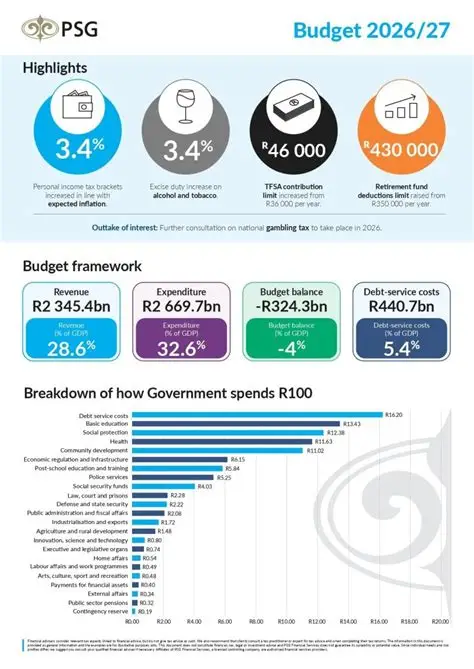
“Finance Minister Enoch Godongwana’s 2026 Budget Speech projects debt stabilisation in 2025/26 and GDP growth of 1.6% in 2026, supported by infrastructure investment and fiscal reforms. The budget balances fiscal prudence with social protection, offering tax relief, expanded grants, and targeted reforms in energy and logistics.”
South Africa’s 2026 Budget Speech, delivered by Finance Minister Enoch Godongwana, arrives at a pivotal moment for the nation’s economy. With debt levels hovering near 78% of GDP, subdued growth forecasts, and mounting social pressures, the government has unveiled a fiscal plan aimed at stabilisation, reform, and inclusive growth. This article explores the key elements of the budget, its implications for macroeconomic stability, and the challenges ahead.
Debt Stabilisation
- Debt-to-GDP projected to peak at 78.9% in 2025/26 before declining below 75% within five years.
- This marks the first stabilisation in nearly two decades, welcomed by rating agencies and investors.
- Debt-servicing costs currently absorb 5% of GDP, but are expected to ease gradually.
The stabilisation of debt is critical for restoring investor confidence and reducing fiscal vulnerability. South Africa’s debt trajectory has long been a concern, with rising borrowing costs crowding out social and infrastructure spending. The new fiscal framework signals a commitment to sustainability.
Growth Outlook
- GDP growth forecast at 1.6% in 2026, rising to 2% by 2028.
- Growth remains constrained by infrastructure bottlenecks and logistics inefficiencies.
- Reforms in energy, transport, and municipal governance are expected to unlock productivity gains.
While modest, the growth outlook reflects cautious optimism. The government’s emphasis on structural reforms highlights recognition that fiscal measures alone cannot drive long-term prosperity.
Tax Relief and Revenue Gains
- Stronger tax collection enabled withdrawal of a proposed R20 billion tax increase.
- Inflation-linked personal income tax relief, higher savings limits, and VAT threshold relief for small businesses introduced.
- These measures aim to ease household financial pressure while encouraging investment.
Tax relief is politically significant, offering respite to households facing inflationary pressures. It also signals confidence in revenue collection improvements.
Infrastructure Investment
- Over R1 trillion allocated to public infrastructure projects, including energy, logistics, and municipal upgrades.
- Expanded public-private partnerships will play a central role in financing and execution.
- Infrastructure-led growth positioned as cornerstone of medium-term strategy.
This investment is expected to stimulate growth, create jobs, and address long-standing structural weaknesses. However, execution risks remain high, given past delays and inefficiencies.
Social Spending
- Social grants increased, ensuring protection for vulnerable households.
- The “social wage” remains a priority, funded through targeted savings rather than broad tax hikes.
- Reflects government’s commitment to balancing fiscal prudence with social equity.
Social protection remains politically and economically vital, especially amid high unemployment and inequality. The budget attempts to strike a balance between fiscal discipline and inclusivity.



