




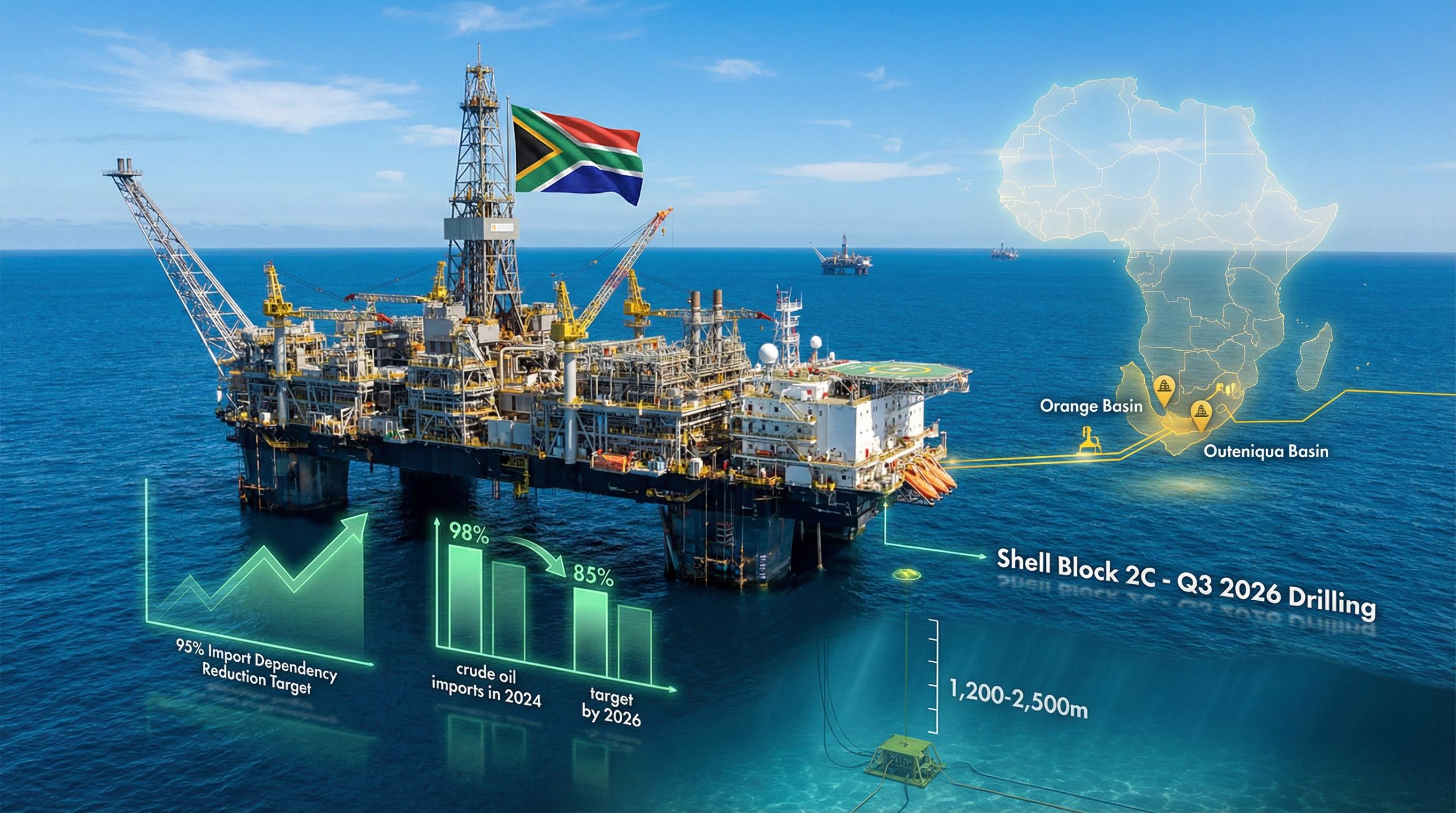
“South Africa’s Constitutional Court has set a precedent by blocking offshore oil exploration, prioritizing environmental protection and community rights. At the same time, Gauteng residents endured a 13-hour blackout amid grid maintenance, while President Ramaphosa announced accelerated renewable energy reforms and Eskom reported its strongest performance in six years.”
South Africa’s energy sector is undergoing a dramatic transformation, marked by a convergence of legal rulings, infrastructure challenges, and ambitious reforms. On August 15, 2026, three major developments reshaped the national energy narrative: the Constitutional Court’s landmark decision against offshore oil exploration, Gauteng’s prolonged blackout, and Eskom’s operational turnaround. Together, these events highlight the tension between fossil fuel dependency, renewable energy expansion, and the urgent need for infrastructure modernization.
1. Constitutional Court Blocks Offshore Oil Exploration
The Constitutional Court’s ruling against offshore oil drilling along South Africa’s coastline is a watershed moment. The judgment emphasized environmental protection, community rights, and regulatory compliance, effectively halting exploration projects that had been criticized for threatening marine ecosystems and coastal livelihoods.
- Impact on Industry: Energy companies now face stricter compliance hurdles, while environmental groups celebrate a victory for sustainable development.
- Global Context: The ruling aligns with international trends where courts increasingly intervene to enforce climate commitments.
This decision underscores South Africa’s pivot away from fossil fuels, reinforcing its commitment to a Just Energy Transition that balances economic growth with ecological sustainability.
2. Gauteng’s 13-Hour Power Outage
Residents and businesses in Gauteng endured a scheduled 13-hour blackout to allow critical grid maintenance. The outage highlighted the fragility of South Africa’s municipal infrastructure, compounded by theft and vandalism of power assets.
- Community Response: Protests erupted in Johannesburg, linking electricity disruptions with broader frustrations over water outages and municipal failures.
- Economic Cost: Extended outages disrupted commerce, reduced productivity, and eroded investor confidence.
The blackout illustrates the urgent need for infrastructure modernization and better protection of energy assets against criminal activity.
3. Ramaphosa’s Energy Transition Push
President Cyril Ramaphosa reaffirmed South Africa’s commitment to a Just Energy Transition, announcing reforms that have unlocked more than R100 billion in renewable energy investment.
- Renewable Growth: Installed capacity has risen to nearly 16 GW, with another 32 GW expected by 2030.
- Household Adoption: Rooftop solar installations surged by 86% in three years, reaching 675,000 households.
This surge in renewable adoption reflects both government incentives and consumer frustration with unreliable grid supply.
4. Eskom’s Operational Turnaround
Eskom reported its strongest Energy Availability Factor (EAF) in six years, improving to 67.24% year-to-date. This represents a 7.19% improvement from the previous year and a return of approximately 5.9 GW of generating capacity to the grid.
- Coal Fleet Performance: More than 85% of the coal fleet is operating at EAF levels between 70% and 92%.
- Reduced Outages: Average unplanned outages declined by 28.3% year-on-year, equivalent to the capacity of a major power station.
- System Reliability: Eskom now maintains 3,360 MW in cold reserve, providing assurance of system adequacy.
This turnaround reflects the success of Eskom’s Generation Recovery Plan, which emphasizes reliability, sustainability, and reduced reliance on diesel generation.
5. Electricity Tariff Pressures
Despite operational improvements, households continue to face rising electricity costs. In 2026, Eskom Direct customers absorbed an 8.76% increase, while municipal customers faced a 9.01% residential increase.
These increases highlight the financial strain on consumers, even as Eskom stabilizes its operations.
Conclusion
South Africa’s energy landscape is at a crossroads. The Constitutional Court’s ruling signals a decisive shift away from fossil fuels, while Ramaphosa’s reforms accelerate renewable adoption. Eskom’s operational improvements provide hope for stability, yet tariff hikes and infrastructure fragility remain pressing challenges.
The convergence of these developments underscores the complexity of South Africa’s energy transition: balancing environmental sustainability, economic growth, and social equity.



