




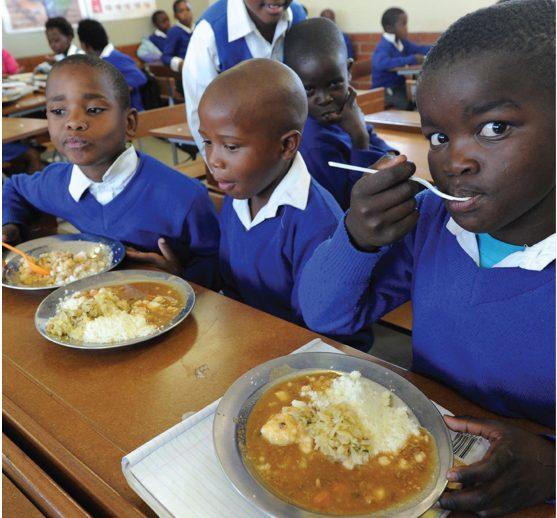
“South Africa’s National School Nutrition Programme is facing renewed scrutiny after an investigation found that only 1,616 of 8,889 surveyed school kitchens across six provinces had the required Certificate of Acceptability. The findings highlight gaps involving kitchen infrastructure, food-handler training and environmental-health inspections, while the evidence does not mean that uncertified kitchens are necessarily serving contaminated food.”
South Africa’s National School Nutrition Programme (NSNP) is confronting an important food-safety challenge: many school kitchens serving meals to millions of learners do not have the required Certificate of Acceptability. A September 25 investigation found that, among 8,889 school kitchens surveyed across six provinces, only 1,616 had the certificate, raising questions about infrastructure, training and inspection capacity rather than proving that the meals themselves are contaminated.
The National School Nutrition Programme is one of South Africa’s most significant nutrition interventions. It provides meals to learners in poorer public schools, with the government saying its purpose is to support learning, attendance, concentration, wellbeing and healthy eating habits. According to the latest investigation, the programme feeds about nine million learners in roughly 20,000 schools and has a 2026/27 allocation of about R10.3 billion. It also supports employment for approximately 62,000 food handlers.
The latest concern is not simply about whether children receive food. It is about whether the environments in which that food is prepared consistently meet food-safety standards. That distinction matters because a school meal can be nutritionally valuable while still being exposed to risks if kitchens lack refrigeration, clean preparation areas, safe storage, adequate water or effective temperature control.
Figures presented to Parliament and reported by Explain.co.za showed that only 1,616 of 8,889 surveyed kitchens had the required Certificate of Acceptability. The certificate is issued after an environmental health practitioner assesses a food-handling premises against applicable hygiene requirements. It is intended to provide independent assurance that food preparation, storage, hygiene and contamination-control practices meet prescribed standards.
The figures should not be interpreted as meaning that 82% of the surveyed kitchens were serving contaminated food. Rather, the absence of certification means that the required independent verification was missing. That distinction is important for parents, learners and communities because certification is a safeguard, not a direct measure of whether every meal served from an uncertified kitchen is unsafe.
The scale of the programme makes the issue significant. A school meal may be an important part of a child’s daily food intake, especially in households experiencing food insecurity. The Department of Basic Education says the NSNP is designed to give learners energy, support concentration and improve participation in lessons. Its guidance describes meals as including protein, vegetables or fruit and a carbohydrate or starch component.
Food safety therefore sits alongside nutrition as a basic requirement of an effective school feeding system. A meal must not only contain useful nutrients; it also needs to be prepared, stored and served in conditions that reduce the risk of foodborne illness.
The investigation identified large differences between provinces. In Limpopo, for example, only 167 certificates were recorded among 3,472 schools participating in the programme, according to the parliamentary figures cited by Explain.co.za. That is fewer than 5% of the schools in that provincial figure set.
Several factors appear to contribute to the certification gap. The Department of Basic Education has pointed to inadequate kitchen infrastructure and shortages of environmental health practitioners. Some schools cook outside or use traditional three-legged pots over open fires. Such arrangements can make it harder to meet modern requirements for food preparation, storage, hygiene and contamination control.
Funding structures are another part of the problem. According to the investigation, the department has explained that the nutrition programme’s conditional grant is primarily intended to put money “on the plate of food” rather than finance major kitchen infrastructure upgrades. This creates a practical challenge: schools may have funding to provide meals but lack a dedicated mechanism to repair, expand or equip kitchens sufficiently for certification.
The people preparing the food are also central to the discussion. At one school visited for the investigation, a parent and food handler described routine practices including handwashing, cleaning surfaces, checking expiry dates and separating raw meat. However, she also said she had not received formal food-safety training from the department before starting the work.
That example does not establish that the school’s food was unsafe. Instead, it illustrates the difference between good individual practice and a system that formally supports workers with training, equipment and supervision. Food handlers are expected to manage large quantities of food, often under time pressure, so reliable training and suitable equipment can make a meaningful difference.
Inspection capacity is another major issue. Environmental health practitioners are responsible for inspecting food-handling premises, but the investigation cited Public Protector findings showing severe staffing shortages in Gauteng. When inspection capacity is limited, schools may wait longer for assessments and problems may not be identified quickly. Strengthening inspection systems is therefore part of protecting children’s nutrition and broader health.
The NSNP remains an important part of South Africa’s response to child hunger. Government information says the programme targets learners in poorer public schools and provides a daily nutritious meal. It also incorporates nutrition education and supports school vegetable gardens, linking school feeding with longer-term healthy eating and food-security goals.
The food-safety concerns should therefore be understood as a systems issue within a programme that has a major nutritional role. The practical challenge is to ensure that its reach is matched by safe facilities, trained food handlers, regular inspections and appropriate oversight.
There are several possible areas for improvement. First, schools need kitchens that can meet food-safety requirements. That includes adequate preparation space, reliable refrigeration, suitable storage containers, clean water and equipment that can be properly cleaned and maintained.
Second, food handlers need structured training. Basic knowledge about hand hygiene, cross-contamination, food temperatures, storage, cleaning and personal protective equipment should be reinforced through practical instruction and periodic refresher training.
Third, environmental health services need enough personnel to conduct inspections and follow up when problems are found. Certification should be part of an ongoing system rather than a once-off administrative exercise.
Fourth, funding responsibilities need to be clear. If schools are expected to meet standards that require infrastructure improvements, there must be a realistic pathway for those improvements to be financed. Otherwise, schools can remain caught between nutritional delivery targets and physical conditions that make full compliance difficult.
Finally, communities and parents have a role in oversight. The Department of Basic Education encourages school communities to support nutrition programmes, protect school resources, participate in food gardens and report problems. Communication can help parents understand both the value of the meals and the steps being taken to keep them safe.
That role makes safe delivery especially important.
The issue also highlights a wider lesson about nutrition policy. Good nutrition is not only about calories, vitamins, minerals or balanced menus. It includes the complete food system through which a meal reaches a child. Food procurement, preparation, storage, hygiene, serving and monitoring all affect whether a nutrition programme achieves its intended health benefits.
For millions of South African learners, school meals can be an essential source of nourishment during the school day. Ensuring that those meals are prepared in safe, properly equipped and regularly inspected kitchens is therefore an important part of protecting children’s health.
As South Africa continues to invest billions of rand in school feeding, the latest findings put attention on the infrastructure and public-health systems behind the food served on school plates. The certification gap does not prove widespread contamination, but it does show that independent food-safety assurance is not yet consistently in place across the surveyed kitchens. Closing that gap would strengthen the link between school nutrition, food safety and child wellbeing.



