




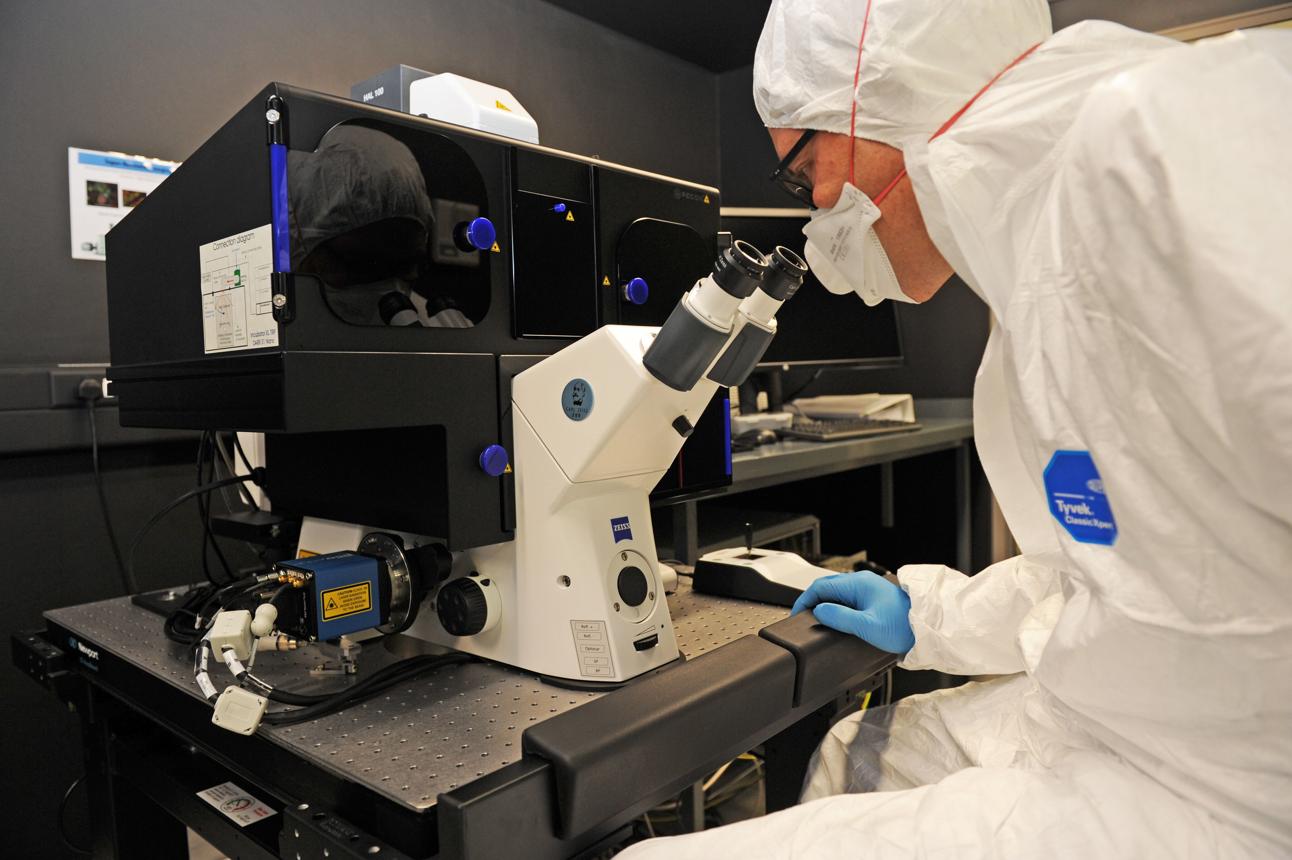
“The University of Cape Town is leading a four-year, approximately R95 million pan-African research programme that will give scientists access to advanced microscopy, machine learning and specialized training to investigate tuberculosis, malaria, Buruli ulcer and other infectious diseases. The openScopes AIDDiA programme is designed to strengthen African-led medical research by making sophisticated imaging technology available closer to patients and research sites, with tuberculosis among its first major areas of investigation.”
UCT-led programme aims to transform infectious disease medicine in Africa
A major new South African-led medical research initiative is seeking to improve understanding of some of Africa’s most serious infectious diseases by bringing advanced laboratory technology closer to the scientists and patients affected by those diseases.
The University of Cape Town (UCT) is leading the openScopes Advancing Infectious Disease Discovery Research in Africa (AIDDiA) programme, a four-year research initiative valued at approximately R95 million. Funded by the Wellcome Trust, the programme brings together research institutions from South Africa, Kenya, Uganda, Côte d’Ivoire and the United Kingdom.
At the centre of the initiative is a relatively straightforward idea: African researchers investigating diseases that disproportionately affect African populations need access to advanced scientific equipment where the diseases occur.
The programme will combine advanced microscopy, machine learning, specialised training, research protocols and locally maintainable technology. Researchers will use these tools to examine diseases including tuberculosis (TB), malaria and Buruli ulcer, while also investigating neglected and emerging infections.
The development has particular relevance for medicine because understanding how infectious organisms behave inside patients can influence how scientists investigate diagnosis, treatment and drug resistance.
Tuberculosis is an early priority
Tuberculosis will be one of the first major tests for the programme. South Africa continues to carry a substantial TB burden, making improved research into the disease particularly important for the country’s health system.
According to the TimesLIVE report, TB HIV Care estimates that South Africa experiences about 249,000 new TB cases and 54,000 deaths annually. In the Western Cape, more than 17,100 people began TB treatment within seven days of diagnosis between April and August 2026, while more than 205,600 TB tests were conducted during the first five months of the province’s 2026/27 financial year.
The new research programme is not simply about identifying whether someone has an infection. Instead, scientists will investigate what happens at a much smaller scale.
Researchers will use advanced imaging to study mycobacteria at the single-cell level and examine how TB bacteria interact with their environment, respond to treatment and withstand immune pressure. Such information can help scientists understand why infections persist and how drug resistance develops.
Drug-resistant TB remains a significant medical challenge because treatment can become more complicated when bacteria are no longer susceptible to commonly used medicines. Understanding resistance mechanisms therefore forms an important part of research into future treatment strategies.
Bringing advanced technology closer to patients
One of the programme’s central objectives is to address an infrastructure gap in African biomedical research.
Advanced microscopes and other imaging systems can be expensive to purchase, operate and maintain. In some research environments, sophisticated equipment is concentrated in major laboratories, while scientists working closer to patients may have fewer opportunities to use it.
This can create a situation in which researchers collect clinical samples locally but have to send them to laboratories elsewhere for advanced analysis. According to UCT, this can slow research and limit the development of local scientific expertise.
openScopes AIDDiA is designed to change that model by developing microscopy systems that can be deployed, repaired and upgraded within African research institutions.
The programme will develop two main types of open-source microscopes: travellerScopes and microbeScopes.
The travellerScopes are mobile systems intended to move between research locations. This could allow researchers outside major scientific centres to gain access to advanced imaging without having to transport every sample to a distant laboratory.
The more advanced microbeScopes will be installed at four African partner institutions and customised according to local research priorities. Because the technology is modular and open source, researchers can potentially modify and maintain the equipment locally rather than depending entirely on overseas manufacturers.
Five countries involved in the research network
The consortium brings together five major partners: UCT in South Africa, the Kenya Medical Research Institute (KEMRI), Mbarara University of Science and Technology (MUST) in Uganda, the Centre Suisse de Recherches Scientifiques (CSRS) in Côte d’Ivoire, and Imperial College London.
Each African institution will contribute to research connected to diseases of particular local importance.
UCT will focus heavily on TB, while CSRS will work on Buruli ulcer. MUST will investigate malaria, while KEMRI will focus on neglected and emerging infections. Imperial College London will contribute to technology development and optimisation.
This arrangement means that the programme is not built around a single disease or one laboratory. Instead, it creates a network in which equipment, methods, expertise and data can be shared.
That approach could be particularly relevant to medicine because infectious diseases do not respect national borders. Pathogens can spread between communities and countries, while changes in treatment response or drug resistance can have consequences beyond the location where they are first identified.
Machine learning adds another layer
Microscopy is only one part of the research strategy.
The programme also incorporates machine learning and artificial intelligence-based image analysis. Researchers will need computational systems capable of processing and interpreting the large quantities of information generated by advanced imaging.
Dr William Wasswa of MUST is leading work on image analysis and machine learning. According to UCT, the project is developing data-management pipelines and computational tools from the beginning rather than treating image analysis as a separate stage after the research has been completed.
This could become particularly valuable when scientists are studying thousands of individual cells.
A microscope can produce detailed images, but researchers still need to determine what those images mean. Machine learning can help identify patterns that may be difficult or time-consuming to detect manually.
In TB research, one potential application is examining drug resistance at the level of individual bacteria. The aim is to connect detailed biological observations with information that could ultimately improve scientific understanding of treatment resistance.
However, the research programme is still a scientific investigation rather than a new medicine or treatment that patients can access immediately. Any future medical applications would require additional research, validation and appropriate regulatory processes.
Building African scientific capacity
Another important element is training.
The programme is intended to leave researchers with not only microscopes but also the knowledge required to operate, maintain and improve them. Training materials will be developed in English and French, helping researchers across both anglophone and francophone African countries participate in the network.
This matters because sophisticated medical research depends on people as much as equipment.
A laboratory may have an advanced microscope, but its scientific value depends on researchers who can prepare samples, operate the equipment, interpret images, manage data and translate observations into meaningful research questions.
The programme’s model therefore combines technology development with skills development.
The longer-term objective is to establish a sustainable African bioimaging community capable of continuing research beyond the initial four-year funding period.
Why local research matters for medicine
The programme’s focus reflects a broader issue in global health research.
The infectious diseases being targeted are responsible for hundreds of millions of cases globally. UCT says a 2024 World Health Organization report cited by the programme estimated that the targeted diseases collectively account for more than 292 million cases and 1.7 million deaths, with more than 90% of cases occurring in Africa.
Local research can provide information about pathogens under the conditions in which patients actually experience disease.
For example, researchers studying TB in South Africa can investigate local samples, treatment patterns and resistance characteristics. Scientists studying malaria in Uganda can concentrate on the parasite and transmission conditions relevant to their communities.
This does not mean international collaboration becomes less important. Instead, the AIDDiA model combines international expertise with research capacity located closer to affected populations.
Potential implications for future treatment research
The initiative could eventually contribute to several areas of medicine, although its immediate purpose is scientific discovery rather than direct patient treatment.
A better understanding of how pathogens survive, interact with human cells and respond to medicines can help researchers identify potential targets for future drugs.
Similarly, improved understanding of resistance could inform research into treatment strategies for infections that no longer respond adequately to existing medicines.
The use of machine learning could also accelerate analysis by helping researchers process complex microscopy data more efficiently.
Nevertheless, it is important to distinguish between research potential and established clinical outcomes. The programme does not mean that a new TB or malaria treatment is already available. Its significance lies in creating scientific infrastructure and knowledge that may support future discoveries.
A new model for African biomedical research
The openScopes AIDDiA initiative also represents an attempt to rethink how medical research infrastructure is distributed.
Rather than concentrating advanced technology in a small number of laboratories, the programme seeks to establish a network of institutions capable of conducting sophisticated research locally.
That could reduce dependence on external laboratories, improve scientific collaboration and allow researchers to investigate diseases using equipment designed for their own environments.
The modular nature of the technology is particularly relevant. Researchers can potentially repair or upgrade open-source systems locally, reducing some of the logistical challenges associated with proprietary equipment.
For South Africa, the programme places UCT at the centre of a major regional effort to advance infectious disease research. For the wider continent, it provides a framework for combining biomedical science, engineering, artificial intelligence and researcher training.
Conclusion
The UCT-led openScopes AIDDiA programme is one of the latest major developments in South African medical research, bringing together advanced microscopy, machine learning and African scientific expertise to investigate infectious diseases.
With TB among its first priorities, the four-year programme will seek to provide researchers with technology that can examine pathogens at increasingly detailed levels while building local expertise in imaging and data analysis.
The initiative involves institutions in South Africa, Kenya, Uganda, Côte d’Ivoire and the United Kingdom and is funded through a £4.4 million Wellcome Trust grant. UCT reports that the programme is the only project in the latest Wellcome Bioimaging Technology Development Awards round to be led from outside the UK.
Its immediate contribution will be to research rather than patient treatment. However, by giving African scientists greater access to advanced tools for studying TB, malaria, Buruli ulcer and other infections, the programme could help generate evidence needed for future advances in diagnostics, medicines and strategies for tackling drug resistance.
The broader message is that medical discovery can be strengthened when sophisticated research tools are placed closer to the communities affected by disease. For South Africa and the wider African research community, the programme represents a substantial investment in locally led infectious disease science.



