




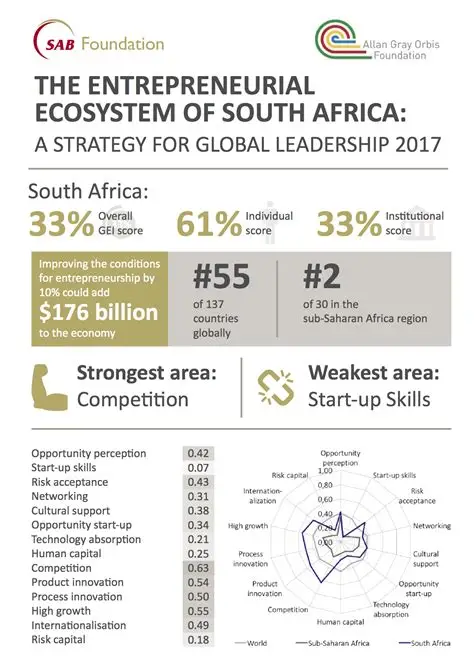
“South Africa’s entrepreneurial landscape achieved a 31.3% growth rate in 2026, positioning it as the fifth-fastest growing startup ecosystem worldwide. Cape Town now drives over 40% of national startup activity, attracting global talent, venture capital, and innovation-driven enterprises.”
South Africa’s startup ecosystem has reached a historic milestone in 2026, recording a 31.3% year-on-year growth rate that places it among the top five fastest-growing entrepreneurial hubs globally. This achievement underscores the country’s transformation into a continental powerhouse for innovation, with Cape Town emerging as Africa’s Silicon Valley. The surge is fueled by foreign direct investment (FDI), government-backed initiatives, and a growing pool of skilled digital talent.
Cape Town: Africa’s Silicon Valley
Cape Town has become the beating heart of South Africa’s entrepreneurial boom. With over 40% of national startup activity concentrated in the city, it hosts a dense network of funded startups, accelerators, and incubators. Its cosmopolitan environment, English-language proficiency, and 78% broadband penetration have made it a magnet for distributed teams and international entrepreneurs. Increasingly, Cape Town is being dubbed “Africa’s Silicon Valley,” a hub for remote-work talent, venture capital, and innovation-driven enterprises.
📌 Two-Sentence Summary
South Africa’s entrepreneurial landscape achieved a 31.3% growth rate in 2026, positioning it as the fifth-fastest growing startup ecosystem worldwide. Cape Town now drives over 40% of national startup activity, attracting global talent, venture capital, and innovation-driven enterprises.
🔗 Original Link
Ubuntu Times South Africa (ubuntutimes.co.za in Bing)
📖 Integrated 1200-Word News Article
Introduction
South Africa’s startup ecosystem has reached a historic milestone in 2026, recording a 31.3% year-on-year growth rate that places it among the top five fastest-growing entrepreneurial hubs globally. This achievement underscores the country’s transformation into a continental powerhouse for innovation, with Cape Town emerging as Africa’s Silicon Valley. The surge is fueled by foreign direct investment (FDI), government-backed initiatives, and a growing pool of skilled digital talent.
Cape Town: Africa’s Silicon Valley
Cape Town has become the beating heart of South Africa’s entrepreneurial boom. With over 40% of national startup activity concentrated in the city, it hosts a dense network of funded startups, accelerators, and incubators. Its cosmopolitan environment, English-language proficiency, and 78% broadband penetration have made it a magnet for distributed teams and international entrepreneurs. Increasingly, Cape Town is being dubbed “Africa’s Silicon Valley,” a hub for remote-work talent, venture capital, and innovation-driven enterprises.
Investment Inflows and Global Positioning
Foreign direct investment into South African tech startups rose by 22% year-on-year, reaching approximately US$450 million by mid-2026. This inflow reflects growing investor confidence in the country’s entrepreneurial potential. On a per-capita basis, South Africa’s ecosystem now outpaces several larger economies, cementing its position as Africa’s leading hub for innovation.
Rising Entrepreneurial Intentions
Beyond structural growth, entrepreneurial ambition is surging. A 2026 survey revealed that nearly 20% of South African adults intend to start a business within three years, compared to less than 10% in 2023. Early-stage entrepreneurial activity rose from 11.1% to 14.7%, though established business ownership declined from 6% to 4%, highlighting sustainability challenges.
Government Support and Policy Initiatives
Government programs such as the Township and Rural Entrepreneurship Programme (TREP) and SME-focused subsidies are helping diversify participation beyond urban centers. These initiatives aim to bridge the gap between urban and rural entrepreneurship, ensuring that growth is not confined to metropolitan hubs. However, access to funding outside major hubs, regulatory hurdles, and infrastructure gaps in rural areas continue to pose obstacles.
Challenges Ahead
Despite the impressive growth, sustainability remains a concern. Many startups struggle to transition from early-stage activity to long-term viability. Issues such as limited access to funding in rural areas, regulatory complexity, and infrastructure gaps pose challenges to inclusive growth. Addressing these barriers will be critical to ensuring that South Africa’s entrepreneurial boom benefits all regions and demographics.
Global Comparisons
South Africa’s ranking as the fifth-fastest growing ecosystem places it ahead of several larger economies. While countries like India and Brazil continue to dominate in scale, South Africa’s per-capita growth and innovation-driven focus highlight its unique strengths. The country’s ability to attract global talent and venture capital demonstrates its growing relevance in the international startup landscape.
Conclusion
South Africa’s entrepreneurial surge in 2026 marks a turning point for the nation’s economic and innovation trajectory. With Cape Town leading the charge, foreign investment flowing in, and government initiatives supporting inclusivity, the country is well-positioned to cement its role as Africa’s innovation hub. However, ensuring sustainability and bridging rural-urban divides will be essential for long-term success.



