




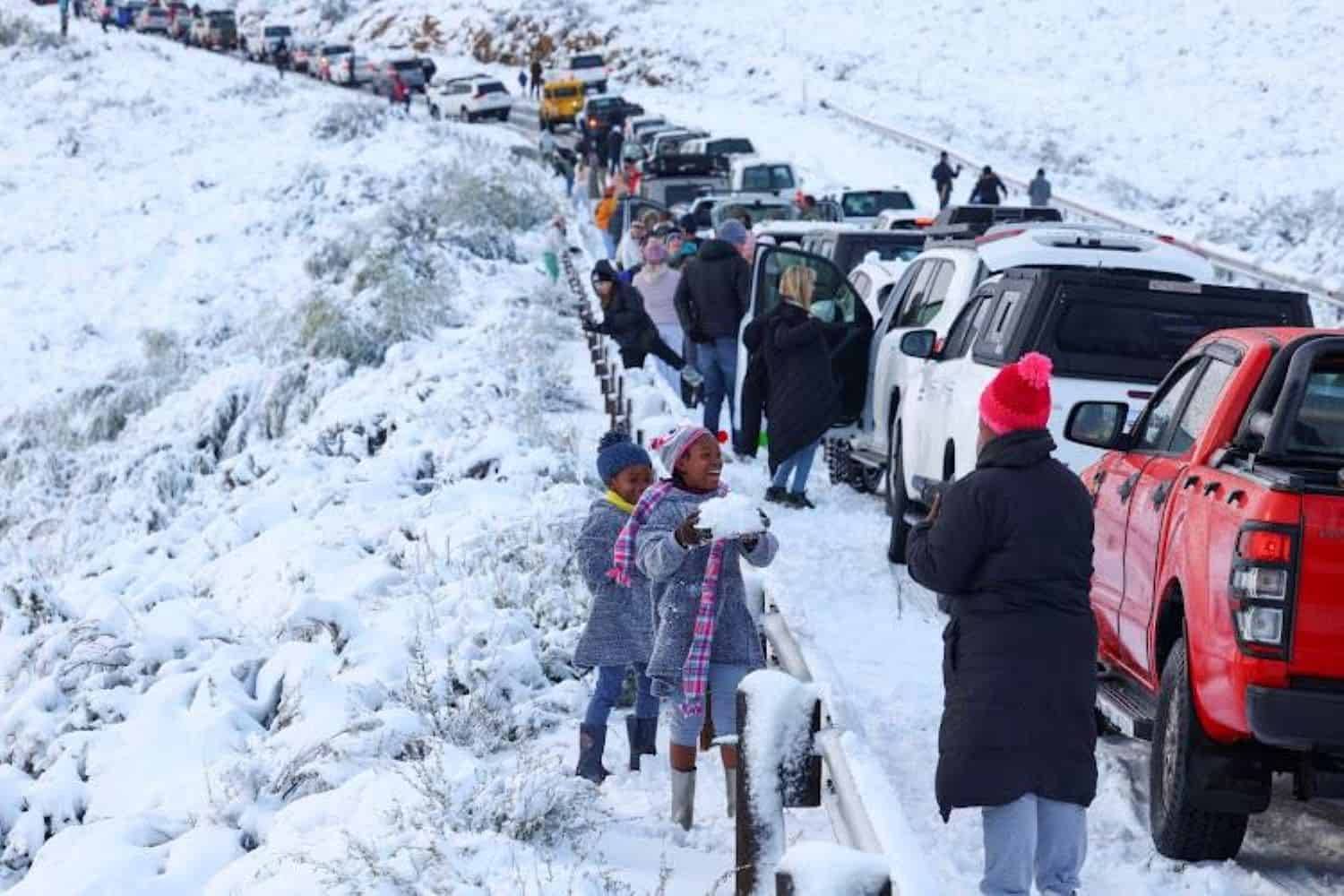
“Heavy snowfall, sleet, and black ice have closed key national routes in KwaZulu‑Natal, the Eastern Cape, and the Free State, leaving motorists stranded and forcing diversions. Authorities warn of treacherous conditions on mountain passes and urge drivers to delay travel, reduce speed, and carry emergency supplies.”
South Africa’s transport system faced severe disruption today, August 19, 2026, as winter weather conditions intensified across multiple provinces. Snowfall, sleet, and black ice combined to close major national routes, stranding motorists and forcing authorities to implement emergency measures. The Road Traffic Management Corporation (RTMC) and provincial agencies have issued urgent warnings, advising against non‑essential travel and stressing the importance of safety precautions.
KwaZulu‑Natal Impact
KwaZulu‑Natal has been one of the hardest-hit provinces. The N3 between Estcourt and Harrismith was closed due to hazardous conditions, with Van Reenen Pass particularly treacherous because of black ice. Sections near Midmar and Howick were also shut down. The R617 between Kokstad and Underberg was blocked after a truck became stranded, forcing traffic diversions via the R56. Authorities reported congestion and delays as emergency crews worked to treat road surfaces with brine to reduce ice formation.
Eastern Cape Closures
In the Eastern Cape, multiple mountain passes and national routes were completely closed. The N6 (Penhoek Pass) between Komani (Queenstown) and Jamestown, the N9 (Lootsberg Pass) between Graaff‑Reinet and Middelburg, and the R58 (Barkly Pass) between Elliot and Barkly East were all shut down. Regional passes such as Boesmanshoek between Sterkstroom and Molteno also became impassable. These closures have severely disrupted travel and logistics, particularly affecting freight operators and long-distance travelers.
Free State Conditions
The Free State also experienced significant disruption. The stretch of the N3 approaching Van Reenen Pass and Harrismith was deemed hazardous, with sleet and rain reported between Warden and Mooi River. Snowfall was observed in areas such as Swinburne, adding to the danger. Emergency crews sprayed brine across lanes to reduce black ice formation, but authorities warned that conditions remained unstable.
Government and RTMC Response
The RTMC issued a clear warning: “Motorists are urged to exercise extreme caution in these conditions.” Officials emphasized the risks of black ice, reduced visibility, and stranded vehicles. Provincial governments coordinated with road agencies to deploy emergency crews, close hazardous routes, and provide updates to the public. The emphasis has been on delaying journeys, reducing speed, and carrying emergency supplies such as blankets, food, and water.
Economic and Social Impact
The closures have had ripple effects across the economy. Freight operators faced delays in transporting goods, particularly agricultural produce and industrial supplies. Tourism was also affected, with travelers unable to access mountain passes and scenic routes. Local businesses in towns reliant on passing trade reported reduced activity. Socially, families traveling for school holidays or work commitments were stranded, highlighting the vulnerability of communities to extreme weather events.
Safety Recommendations
Authorities recommend the following for motorists:
- Avoid non‑essential travel until conditions improve.
- Follow official diversions and avoid attempting closed routes.
- Reduce speed and maintain safe following distances.
- Carry emergency supplies including blankets, food, water, and first-aid kits.
- Check weather and traffic updates before departure.
Long-Term Considerations
The disruption underscores the need for improved winter preparedness in South Africa’s transport system. Investment in road maintenance, weather monitoring, and emergency response capacity will be critical. Climate variability has increased the frequency of extreme weather events, making resilience planning essential for both government and private operators.
Conclusion
South Africa’s transport network has been severely tested by today’s winter storm. With major routes closed and motorists stranded, authorities continue to urge caution and patience. The incident highlights both the vulnerability of infrastructure to extreme weather and the importance of coordinated emergency response. As conditions gradually improve, the focus will shift to reopening routes and restoring normal travel, but the lessons learned will shape future transport resilience strategies.



